Logo

Concept of time and music

Shailaja Khanna |

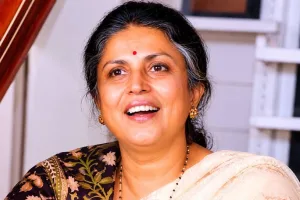
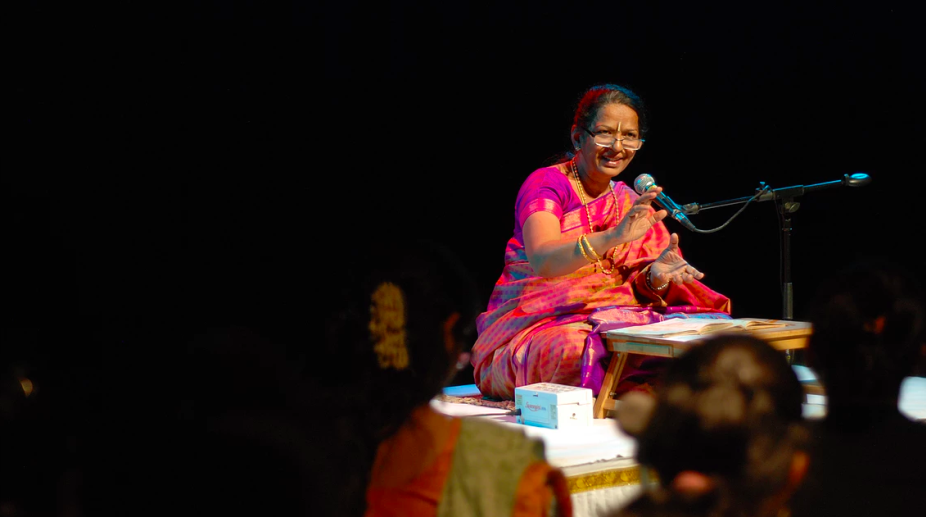
It was indeed a rare honour to have had an opportunity to chat with a learned Sanskrit scholar, Prof T S Satyavathi, who is also a proficient Carnatic vocalist. She has spent her life delving into forgotten Sanskrit treatises, translating them, editing others’ works ~ indeed scholarly work of an unmatched value for future generations. She expounds on her subject with the clarity of a master; abstract terms and concepts sound so easy from her! Excerpts:

Please tell us about the subject of your doctorate.

I chose the ‘Manasulhaasa’, a12th century encyclopedia on music with 100 chapters, in two volumes. There are only three copies of this text available. I have translated the chapters on music into Kannada too.

It refers to itself as ‘Jagatacharya pustakam’ (world’s learned text). Someswara the third, a Chalukyan king, himself wrote it. Many later writers refer to him, as his work is regarded as having great practical relevance; even Tygaraja refers to him. He ascended the throne when he was 40 and the time before was spent on amassing knowledge.

In his treatise, I dealt with the three chapters that deal with the 64 arts. He makes the point that 50 Ragas are actually in wide use at a time, so he gives details of those; today many of the Ragas have changed structures even though the names are the same. The work lists several compositions, different talas, murchana, prabandh (composition), prabandh dosh (defects in enunciation of compositions), vrinda gaan (chorus music) and seven types of gamakas.

The work also describes all extant instruments, how they were constructed, how to hold them and play them. Vocalists’ posture, how to sing, audience tastes and much more is dealt with. One particularly interesting description relates to an actual concert held in his court ~ it describes exactly where the male singer sits, where the female singer sits, the Mridangam, the flautist ~ interestingly, there is no Veena acompanyist ~ who sits to the left of the musicians, who at the right, front and who sits behind.

The text says music is not for entertainment, and amusement, but for education. It took me seven long years to do my Phd on just this one text!

Why are you not translating more works on music in Sanskrit? Are there not many which are still not translated?

There are so many, literally hundreds. The first, the Natya Shastra, a 2nd century AD work has six chapters out of 36 on music. Brihadheshi’s work, a 7th century AD work, talks of parent Ragas, their offsprings, their note structures and so on. Once the Sangeeta Ratnakar by Sarangdeva came into the picture, all other Sanskrit texts receeded into the background. They were forgotten. Though, in fact, I feel Sangeeta Ratnakar is not as practical today as Someswara’s work; yes it is very comprehensive and 380 Ragas are written about but not even one is relevant today! My point is, the relevance of what these texts say on the subject of Ragas is limited as the Ragas have changed over the centuries.  So what an ancient text is saying on the shape or note structure of a Raga, even if the name of the Raga is the same today, is not valid; as the notes have changed!

People at large have lost interest in Sanskrit, because you are not able to relate the contents to today. The texts are not clear, there are corruptions, you cannot make out whether it’s this word or another, one has to literally deconstruct the text!! I have struggled so much just with one text.

What are you working on now?

Today, my subject of interest is time in music. I feel this is worth researching into, as it has practical relevance today. Time plays a very important role in the presentation of music. The amount of time you pause between notes can completely change the feel of the Raga. A Raga is identified by its note structure, which is to be sung within an optimum time frame. Yes, of course, it’s a subjective thing, but still the rules matter. Which note to start on is just one aspect of Raga presentation.

The concept of time in ‘Anibadh’ (without tala constraints) sangeet is even more important, but is relevant even in Nibadh (composed) sangeet. Time plays a very important role; a composition that is to be rendered at a particular speed, must be only at that speed, neither faster nor slower. If you don’t sing it within the correct time frame, if you stretch it too much it becomes a different Raga, or it loses its impact. If you sing it too fast, or even too slow, you are losing the essence of the composition, in fact, the very essence, the colours of the swara (note).

A particular speed of articulation will be particular to a singer; it’s like a ‘bani’. Speed or time marks the style of a singer too. How long you are singing in the higher octave, how long in the lower octave ~ music is so linked with the concept of time!

In music, the combination of speeds is very relevant; speed itself means time. The combination of drut, madhya and vilambha (fast medium and slow tempo) ~ how you combine these speeds when you articulate a cluster of notes, one sanchar. How long should this take? This was the subject of my lecture at the Madras Music Academy on 26 December, when I was honoured by the Academy as well.

The writer specialises in music, musicians and matters musical).
‘I took music for granted’

Rupanwita Bhattacharjee |

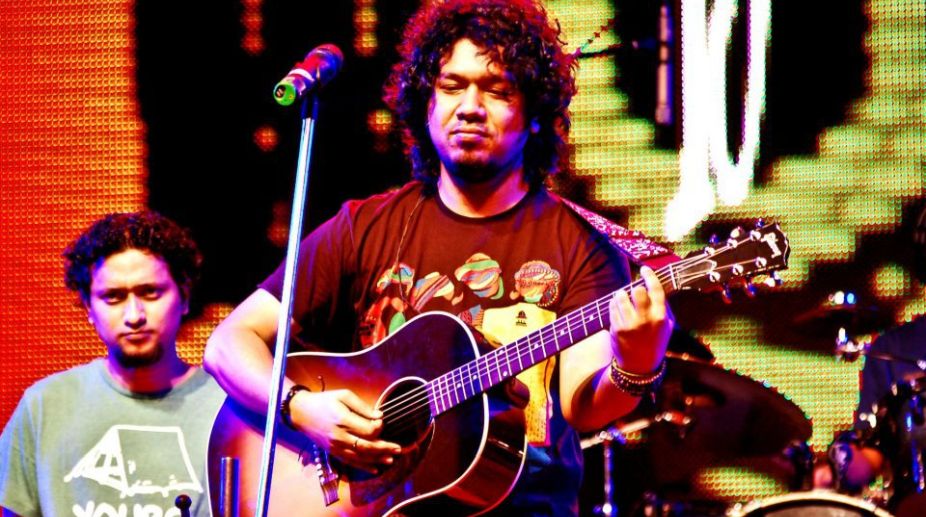
An Indian singer, composer and record producer from Assam, Angarag Mahanta, known by his stage name Papon loves experimenting with different sounds. Having been born into a family of music, he was destined to be a part of the larger musical family.

In 2007, he started his own electronic folk-fusion band, “Papon and the East India Company” and performed at various music festivals around the world. The Moh Moh Ke Dhage singer was in Kolkata recently to launch the city’s first Forever 21 at South City mall. Excerpts from an interview:

Q. You’ve already made your debut in acting for an Assamese movie. How about doing films for Bollywood?

I am still in talks with Nagesh Kukunoor regarding a film he spoke to me about. I am quite intrigued by the process of acting, of taking on another character or personality which I am not like in real life.

Q. Your greatest inspiration in folk music has been your parents. Your father was a folk singer himself. Anybody else you’d like to talk about in terms of taking inspiration from? Do you have a favourite folk artist?

I am inspired by things I read, hear. Good music, not just folk music inspires me — it could be someone new, someone legendary. There are no particular inspirations.

Q. If not a singer, what else would you have become?

I used to paint a lot when I was really young, and this lead to perspective drawings. Initially, maybe because I took music for granted, it did not excite me as much. But then just as I was getting into it, my cousin who couldn’t follow music as he chose architecture told me that to understand and practice music is a gift of God, and that it was far superior to anything else one can learn in life. So, here’s where I am. Today, I feel that if I hadn’t found music, I would have become a farmer. I would still like to become a farmer.

Q. Shed light upon your stage name Papon. Most Bengalis and Assamese have a pet name. Was this your pet name or is it a name you gave to yourself?

It’s my pet name, and also easier to remember.

Q. What can your fans expect in the years to come? What are the current projects you are working on?

A lot of things happened in 2017 that I didn’t plan and whatever I had planned will now come out in 2018, so there’s lot in store this year. I am getting into composing music for a Bollywood project. That’s a new direction for me and I am also looking forward to working on my ghazal album, which while I don’t know when I will finish. I am also thinking of collaborating with a few international artists so let’s see how things go.

Q. You started a band “Papon and The East India Company”. Do you have plans surrounding the band in terms of performances or releasing songs?

The band is now called Papon. It’s the same band, same set of boys. We decided to change the name to cut down any confusion when it came to bookings and the styles of music that we play. The band is in cold storage as of now, but they still play with me.

Classical fusion

Sudipta Chanda |

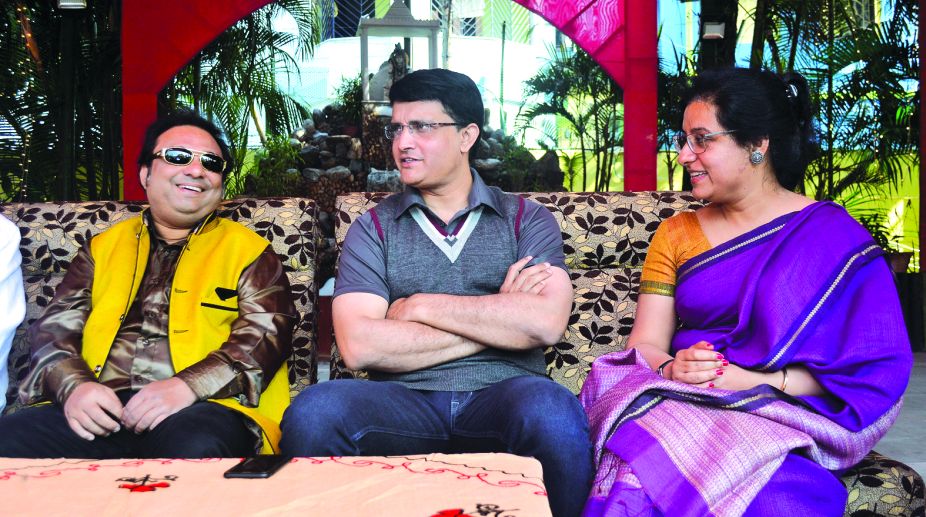
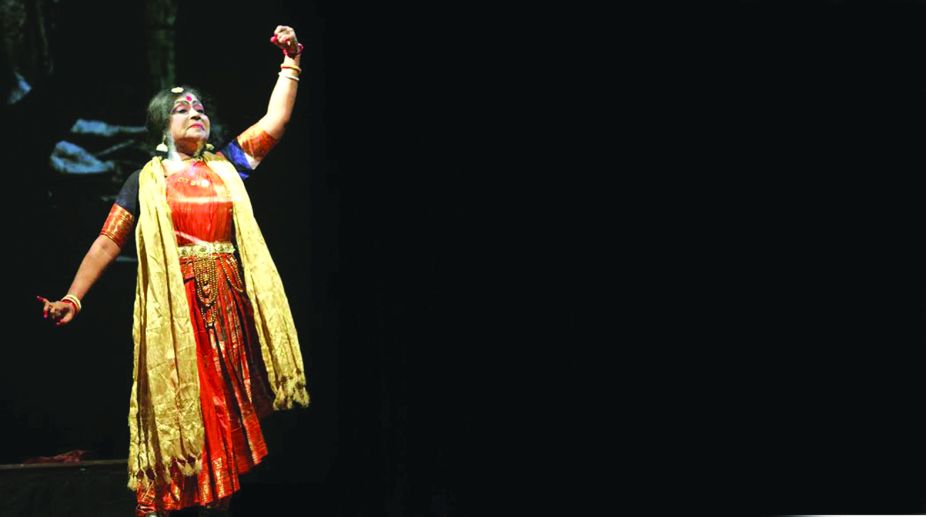
Percussion maestro Prodyut Mukherjee released his latest musical venture named Rhythm Express – Music For Dance with the presence of cricketer Sourav Ganguly recently. It features Odisi boltan by noted Odisi exponent Dona Ganguly who lent her voice for the first time to any audio projects.

The melody has been composed by Grammy Award winner Vishwamohan Bhatt. Concept and direction of the presentation has been conceived and executed by Mukherjee.

The album encompasses a vast spectrum of musical genres ranging from traditional Hindustani to South Indian classical notes and extending beyond the boundaries of India.

It contains four tracks, namely, Within You, Without You, Rhythm Express and Pleasure. The album offers global musical influences adapting African, Latin American, Jazz and Blues and traditional Western classical notes.

Mukherjee, during his foreign tours has been influenced by many rhythm styles and incorporated them in Rhythm Express.

“I wanted to present Indian classical music in fusion form. Dona is the best Odissi dancer I have known. No one matches up to her level of perfection when it comes to dance. The idea of the album is to promote Indian classical music before a wider audience,” Mukherjee said.

An episode of classical affair

Barnana H Sarkar |

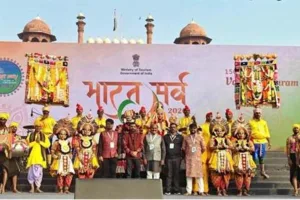
The Eastern Zonal Cultural Centre, ministry of culture, Government of India presented Parv Bharatiyam- a nine day festival of music and dance at its Bharatiyam Cultural Multiplex in Salt Lake City, Kolkata, recently. They have showcased well known dancers, musicians and troupes brought out classical acts that included several classical dance forms and tribal songs.

The programme was commenced by the scholarship holders of Gaudiya Nritya Bharati who performed Bhavaprita Nanda Ojha’s Saraswati Bandana, a performance solely devoted to the Goddess of Knowledge.

Dr Mahua Mukerjee, a PhD holder in botany who has redeemed the classical dance form of Bengal through her 40 years of consistent hard work, performed the act Buddha Charita by Asavaghosa following the 100 year tribute to the First World War.

The performance was an amalgamation of shloka and dialogu e to present the tale of Prince Siddhartha’s transformation on attaining moksha to become Gautam Buddha. The act bore two aspects, one of which built in the fact that Buddhism is the proliferation of peace in the crumbling social structure of violence.

The other is associated with Buddha’s travel across Greater Bengal (The Bengal before partition) during the early eight to twelfth century. Although there are multiple differences of opinion when it comes to Buddha’s journey in Bengal, the fact is to be considered that the various monasteries which stand across the present Bengal and the neighbouring states (which were once a part of Bengal) substantiate the presence of Buddhism in the region.

While the script of the act was directed by Mukherjee, the music was arranged by Ayan Mukherjee and Subhadeep Chakraborty with Amitava Mukherjee on the vocals. Almost as a sustained extension of the theme, Mamata Shankar and her ballet troupe performed the various stages of love in a human’s life. The translucent exhibition portrayed love in its most genuine and heartless form which is a mother’s love for her child, the love which two friends share where there is no loss or gain, only happiness, and the love which two individuals experience when they are attracted to each other.

The tale brought in the aspect of war which disfigures all facets of affection and care and leaves behind a barren land of hatred and violence. Man, however, might attain the ultimate serenity once he/she redeems him/herself to the infinite divine sanction. The performance, which was visually spectacular, was a standalone proof of the fact that Shankar has carried on the legacy of her parents Uday Shankar and Amala Shankar. Parv Bharatiyam also hosted several folk dances from across the country such as Bodo, Rava, Kashmiri Dance, Rai and Chhau.

Promoting the dying art of mime

Jayasri Mitra |

There are a number of cultural festivals held all over the country presenting a variety of theatres. But the art of mime never gets priority in those fests.

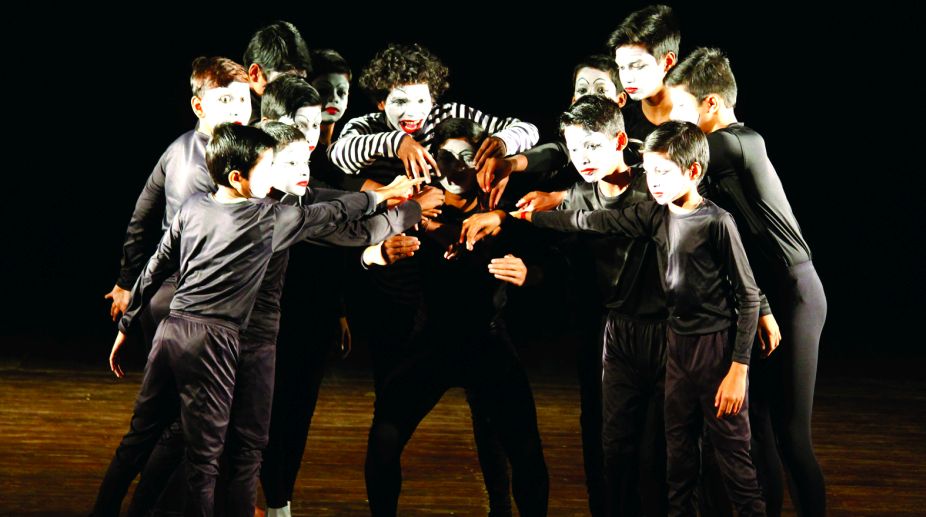
Recently people were enthralled by the this art form of theatre at the four day National Cultural Festival organised by Rangtal Theatre (Halisahar) at Aikatan auditorium in Naihati.

Ratan Chakraborty, director of Rangtal theatre, has been a professional mime artiste for the last 27 years and founded this group to nurture this rare form of theatre. For the last seven years he has been organising this festival, inviting groups from different states to showcase the art form of mime and puppet along with normal theatre.

This year’s festival included Mime and Puppet shows and Theatre presentations from Bangladesh, Tripura, Madhya Pradesh (Bhopal) and different parts of West Bengal, including his own productions of Rangtal Theatre.

His mime shows, ‘Charley’s Love’ and ‘Palowan’, proved that even without speech the presentations can charm the viewers by facial expressions, body language, movements and activities which can be very engaging. In the former show, Charley’s love stole the heart of a girl (Tandra Chakraborty), but he finally lost the strength in the hands with which he had initially offered flowers to her. Ultimately, the girl herself offered the same flower to Charley’s inactive hands. Emotional incidents enacted with expertise gave evidence of powerful acting without the aid of words.

With similarly fine artistry, the show ‘Palowan’ established the truth that physical strength of the so-called palowans (thugs) is not the last word. Apparently, even a weak person can conquer the strong and as a result, his love gets accepted by the desired one. Through apt lighting, music and humorous situations, the presentation was noteworthy.  Rakesh Saha, Rana Ghosh, Tandra Chakraborty and Ratan Chakraborty (the husband – wife duo) did justice to fulfill the demands of production.

Their students’ performance ‘Mulyabodh’ led by the little Trisha Chakraborty gave a message to keep the city clean, through comic scenes. Little Drama Group of Tripura (directed by Gautam Saha) presented the mime show ‘Bhoy’ (fear), which indicated that dishonest people are always afraid, but once they come out of their unfair practices, they can enjoy life. Very soothing western music played throughout the show maintained the spirit of the theme. Gautam Saha played the character of ‘Fear’.

Bangladesh’s (Gajipur, Dhaka) mime production ‘Death of Humanity’ by Mukta Mancha Nirbak Dal, directed by Shahidul Hasan Shamim had a unique blend of thought and technique. A blind man (portrayed by the director) gained his vision through prayer, yet he damaged his eyes with a knife upon witnessing the horrors of global brutality, which he was ignorant about earlier due to his blindness.

The rape scene, with red costumes and red hued lights, was conducted in an artistic manner. Pictures of global inhumanity, including the Rohingya problem, displayed on the background screen, enhanced the authenticity of the theme. At the end the blind person picked up the newborn child from the dustbin, whom the raped woman had left behind, establishing the victory of humanity.

As for the flute heavy soundtrack, the music gradually became louder to keep parity with the strong flavour of the subject.

The concluding day’s last presentation was a play named ‘Re-Phoolsajja’ by the group ‘Naihati Samay 1400’. It was a fully enjoyable comedy directed by Anup Biswas. Set in a police station, the reunion of a couple, who had divorced on the very night of phoolsajja, unfolded hilariously to the delight of the crowd. The set, costumes, props and music – all the aspects matched the jovial spirit of the production.

Two puppet shows (Rod Puppet) were also part of this festival. Tripura’s ‘Sita Aaj o Kaal’ showed the contrast between timid women of the past and today’s bold, independent women who have the strength to protest against mistreatment.

The Department of Culture, Govt. of India must be appreciated for concerted efforts to preserve and promote such uncommon and rare art forms.

Tradition versus strong winds of change

Meena Banerjee |

All roads led to Nazrul Manch to see the handsome “God of table” Ustad Zakir Hussain, also known for his onstage warmth, wit and humour, in the final session of the Swara Samrat Music Festival organised by Shree Ranjani Foundation Trust as a star-accompanist to flautist Rakesh Chaurasia.

The fest, dedicated to Swara Samrat Ustad Ali Akbar Khan, a diehard traditionalist groomed by his father Baba Alauddin Khan, proved that the present state of metropolitan confinement is affecting several important aspects of Indian musical tradition.

Chaurasia, nephew-disciple of Pandit Hariprasad Chaurasia, treated raga Bageshri with staccato note-oriented alap and gatkari, shorn of its raga-ness.

The veteran tabla maestro offered special effects from an electronic hand-sonic, placed behind the pair of tabla. It was evident that the musical thoughts of an iconic figure like the Ustad is now determined by urban culture and he is packaging Indo-Western music to lure the Westernised younger generations, who abhor what they do not understand but get easily allured by the thrilling rhythm based trendy melody.

Converse to traditional Indian concept the staccato movements coerce the ragas into mere scales. Ultra-high speed utterings’of sol-fa patterns often miss accurate notes; but the speed makes them so short-lived that only a discerning ear can detect the failings.

The other star-musicians of the fest, vocalist Kaushiki Chakraborty (raga Multani, Yaman tillana and Majh Khamaj thumri with Subhankar Banerjee (tabla) and Rupashree Bhattacharya (harmonium) and sitarist Purbayan Chatterjee (raga Marwa, Majh Khamaj with Pandit Anindo Chatterjee (tabla), are known speedsters and are hot favourites now.

Celeb dhrupad exponents Gundecha Brothers delineated raga Patdeep (sampoorna alap, chautal and fast shooltal compositions with Akhilesh Gundecha (pakhawaj)) with the sensibilities of Dagar Tradition with a stamp of their own.

The mandolin jugalbandi between U Rajesh and Snehashish Majumdar, ably supported by SV Ramani (mridangam) and Ojas Adhiya (tabla), also portrayed a rhythm oriented raga Charukeshi which could do better with more attention on sur.

Traditional fervour 

The traditional values of raga-music were devotedly and splendidly presented by Pandit Ulhas Kashalkar (raga Chayanat, slow jhumra and medium teental) followed by a soulful, haunting Bageshri, ably supported by Pandit Suresh Talwalkar’s musical broad-faced tabla. Gourab Chatterjee (harmonium) shadowed the Master unobtrusively. Despite the unwarranted delay earlier, discerning listeners stayed on and requested the erudite maestro to sing a Sohini composition.

Steeped in Jaipur tradition the element of thrill was at its best in Pandit Rajendra Gangani’s kathak recital, superbly supported by Pandit Sanjay Mukherjee’s seasoned tabla. Their “upaj” (instant innovation) based dialogues were electric while the repartees by Mukherjee gifted some beautiful bouquets of bols and tihais with exhilarating finish.

Gangani’s power-packed pieces  were interspersed with the gracefully evocative Shiva-stuti, Ganesh paran, ghhonghat ki gat and Desh thumri. Through excellently explicit footwork he depicted heavy rain, light drizzle and single droplets.

Sarod exponent Ken Zukerman too adhered to the cherished raga-tradition while portraying a reposeful Bhimpalasi alap-jod-jhala, followed by teental gatkari in Madhumalati, a raga created by his legendary Ustad, Ali Akbar Khan, and a Bhoop-maand based sweet dhun.

Sangeet Milon

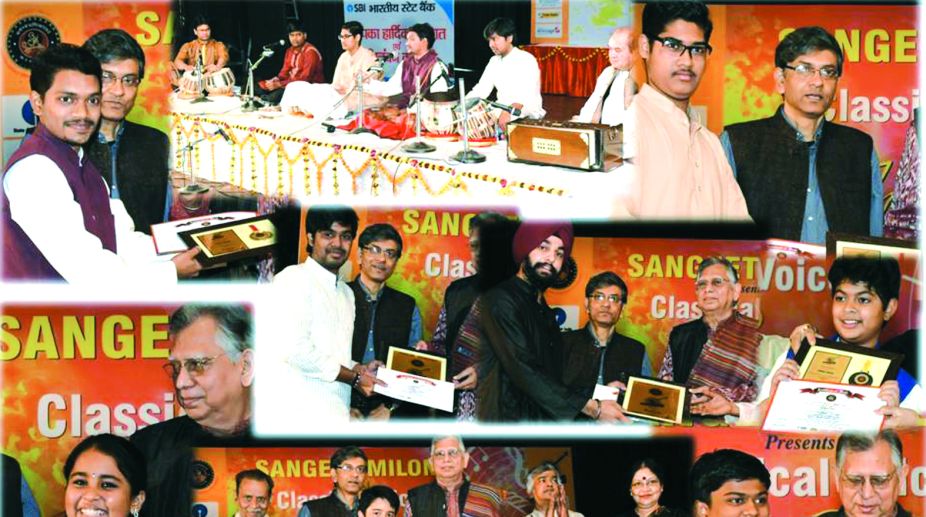
These very traditional values are cherished by Milon Debnath, the beacon of Sangeet Milon, Lucknow, whose sole ambition is to hear little ones sing raga-compositions with love like the way they sing complex film songs. To encourage this among school-goers, “Classical Voice of Lucknow” was conceptualised; and within two years it became a countrywide movement, popularly known as the “Classical Voice of India”, a live audition based contest that unearths amazingly talented young vocalists from all over India since 2013.

Soon, persuaded by Kolkata’s active tabla fraternity, it started another contest “Tabla Nawaz of India” to identify fresh, gifted tabla players.

Despite its bare minimum resources, the organisation covered 22 cities of 12 states in 2017. Through the participants (age group 10-14 years Junior, 15-19 years Middle, 20-24 years Senior and 25-29 years Yuva Kalakar), Sangeet Milon also identifies unknown but dedicated Gurus and extends honour to them.

The finals of both the contests were held at Sant Gadgeji Maharaj auditorium of the regional Sangeet Natak Akademi, Lucknow which saw eminent musicians like Pandits Vidyadhar Vyas, Sarathi Chatterjee (vocals), Parimal Chakraborty (tabla) among several others who evaluated numerous contestants who made it to the finals after topping the city and state level.

Among them Jayantika Dey, Rishav Chakraborty, Dalia Mukherjee, Soubhagya Mohapatra, Sahil Vishe from juniors; Vinayaka M, Upasana Dey, Vasu Gandharva, Asmita Kar, Nishad Harlapur from middle group and Utso Gosh, Akshat Pratap Singh, Vaishnavi Avadhani from seniors displayed immense promise while this year’s “Classical Voice of India” trophy was lifted by Bineet Singh and “Tabla Nawaz of India” trophy by Arun Laha.

Platforms to display their potential

Tapati Chowdhurie |

Solo Margam repertoire as chalked out by the Tanjore Quartet, for a modern day arangetram to test the all round development of a dancer presenting herself for the first time in the proscenium stage, puts both the teacher and the student to a litmus-test. These are self-financed and project the aesthetic benchmarks of a particular group of connoisseurs, the lay audience and the critic.

Recently Kalamandalam Calcutta presented Antara Roy Chowdhury who is in her early teens, for an arangetram. Chowdhury, who had started her training under Kalamandalam Thankamani Kutty’s disciple Jita Roy Chowdhury, was under the tutelage of the senior guru, who showed her ability as an accomplished Nattuvanar, conducting Antara’s performance.

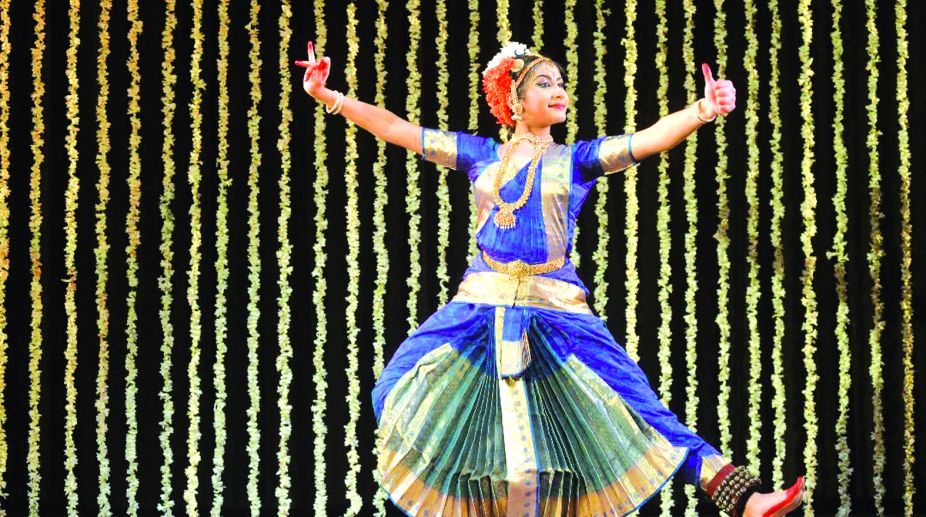
As per tradition Antara genuflected to Ganesha, the deity who facilitates auspicious endeavours, before she embarked on “Alarippu” — a rhythm based composition for paying respects to one and all.

“Bhavayami Raghuramam”, a soul-stirring kriti using seven ragas, composed by Maharaja Swathi Thirunal, a versatile genius and an ardent devotee of Lord Padmanabhaswamy, telling the entire story of the Ramayana in a condensed form, was rather challenging. The dance composition by the intelligent and veteran Guru, kept the young performer in mind. Great deal of effort was exercised by Antara in the piece and that was praiseworthy. The patronising audience enjoyed it.

The second half of the evening saw a spirited rendition of “Shivastakam” in praise of Shiva, the protector, destroyer and creator of everything. “Nader Mudi Mel Irukkum Nag Pambe”, which is popularly known as the snake dance was performed successfully with several yogic postures in keeping with the slithering movement of the pambu or snake. After an arangetram a dancer, armed with all the elements connected with sangeeta embarks upon a professional career in dance.

The fifth year of Margam Festival of dance had a galaxy of dancers carefully chosen to provide the kind of work that is being done by the young dancers of Kolkata. Moumita Chatterjee, who is a Bharatanatyam dancer trained by Guru Kalamandalam Thankamani Kutty has a vision and effortlessly conducted her season of dance and also performed in this festival.

It was a Tamil composition in raagam Hindolam and adi talam. An abhinaya piece from Jaydeva’s Geeta Govinda “Yahi Madhava ,yahi Kesava” was thoughtfully chosen. This expressive piece deals with the disloyalty of Krishna. This requires a great deal of nurturing, which perhaps was a bit of a short coming. Chatterjee ended her recital with Tillana.

Samrat Dutta gave a solo Bharatnatyam presentation at Margam — an evening of classical dance organised by Udok Performing Arts at Gyan Manch. A senior disciple of professor C V Chandrasekhar,  had initially started his training under Kalamnandalam Smt Thankamani Kutty. His presentation consisted of Pushpanjali with an Allaripu set to sankirna chapu talam in ragam “Nattai”, which was followed by shiva stuti Shankara Rudra Roop Dikhlao — a rudra  tandava  piece in Ragam Shankaravarnam — a composition of Guru professor CV Chandrasekhar, set to ragam Shankara and Adi talam.

The speciality of this piece was that a hindusthani bhajan was set to a hindusthani ragam “Shankara” in Hindi. Samrat Dutta has been an ardent practitioner of Bharatanatyam for the last three decades and is possessed with the pristine style. His Tatta Adavus were good and rendered his pieces with pleasing ardhamandalis which is a recurring motif of the style. Well practised Karanas made his piece a visual delight.

Ramakrishna Chattopadhyay, a disciple of Guru Khagendranath Barman of Kalakshetra style performed Ganesh Dhyanam followed by a Keertanam (Gangabataranam) in ragam: Rebati and talam adi. Through this Keertanam the dancer expressed the descent of Ganga as an abhinaya piece. Gangavataran by Bhagirath from Heaven to Earth Composed by Guru Ganga Thampi was a grippingly told tale.

The act of entrapping Ganga from devastating the earth was spectacular. The Tillana in raagam Madhubanti and adi talam composed by Guru Lila Samson rounded of his short recital. His description pursues the Kalakshetra style of Bharatanatyam which he has imbibed with a certain degree of proficiency. Odissi dancer Arnab Bandopadhya pursuing the Guru Kelucharan Mohapatra style of Odissi performed Krishna Tandava in Raag Aravi and taal ektaali.  Nachonti Range Sri Hari, Sakala Gop Nariraago Punaro Uthi was a composition of the legendary Guru Kelucharan Mohapara while the music was by Bhubaneswara Misra.

Ardha Nariswara describing Shiva and Parvati as inseparable from each other, written by Adi Shankaracharya, which has risen to the stature of timeless classicism, made all the more memorable by Guru Kelucharan Mohapatra’s translation of it in the language of Odissi vocabulary and which never seizes to charm rasikas, was presented with meticulous care. The music of the piece was by Raghunath Panigrahi. Arnab has acquired the sculpturesque quality of the form.

Milan Adhikari and Anindyo Roy students of Abhoy Pal graced the Margam Festival.  Their presentation of Trimurtanjali to Shiva and his sons Kartikeya and Ganesha preceded “Shankara Shri Giri naada prabhu” by Maharaja Swathi Thirunal in raagam Hamsadhwani. They played their part well.

Stories of women take the spotlight

The Straits Times/ ANN |

If Harvey Weinstein was watching the Golden Globes — an event where he was a major player for decades — in private somewhere, he got confirmation that he is still a pariah in Hollywood. He was booed four minutes into the show.

A tide against sexual misbehaviour is sweeping through Hollywood, whipped up by allegations of sexual misconduct by folk such as film producer Weinstein and actor Kevin Spacey, and Sunday’s event reflected the new clamour for change, with many wearing black.

Seth Meyers, hosting the Globes for the first time, took the plunge from the outset, referring to “the elephant not in the room” when he opened the NBC broadcast by saying: “Good evening, ladies and remaining gentlemen.”

He later said of Weinstein: “Don’t worry, he’ll be back in 20 years when he’s the first person booed during the ‘In Memoriam’ segment.”

Oprah Winfrey, in receiving the Cecil B. DeMille Award for lifetime achievement, defiantly shouted that “a new day is on the horizon” towards the end of her eight-minute speech.

“When that new day finally dawns, it will be because of a lot of magnificent women, many of whom are right here in this room tonight, and some pretty phenomenal men,” she said.

It was lost on few that Winfrey was accepting an award named for a man who helped cement a culture of male domination in Hollywood. Indeed, after she exited the stage, actress Natalie Portman arrived to present the best director prize and said: “Here are the all-male nominees.”

Guillermo del Toro won for The Shape Of Water which, however, lost out to Three Billboards Outside Ebbing, Missouri for best movie. Three Billboards won four Globes in all, laying down the marker for film to beat in the upcoming Oscars.

The movie is about a mother who goes to extremes to keep police focused on her daughter’s murder. Elsewhere, stories about women in dystopian saga The Handmaid’s Tale and drama Big Little Lies also resonated, winning the top television honours. The Handmaid’s Tale, based on Margaret Atwood’s novel, won best TV drama and best actress for its lead star Elisabeth Moss, who dedicated her win to the veteran author.

Big Little Lies, about the lives of a group of women living in an affluent California coastal town, swept the best limited series/TV movie category. Its stars Nicole Kidman, Alexander Skarsgard and Laura Dern won for acting. This Is Us star Sterling K. Brown was named best dramatic actor, the first time in Globes history that a black man had won that prize.

“You wrote a role for a black man that could only be played by a black man,” Brown said in his speech, thanking This Is Us creator Dan Fogelman.

“I am being seen for who I am, and being appreciated for who I am, and it makes it that much more difficult to dismiss me or dismiss anybody who looks like me.”

But several movies received nothing, including Steven Spielberg’s newspaper drama The Post, which was nominated for six prizes. Call Me By Your Name, Get Out, Mudbound and All The Money In The World were also ignored.

Before the ceremony, NBC and the givers of the Globes, the Hollywood Foreign Press Association, had tried to assure viewers that the event would be as frothy as ever. Not quite. On the red carpet, eight actresses walked hand in hand with activists who focus on sexual harassment and gender inequality.

But in the ballroom, the ceremony in many ways felt like business as usual. Stars, producers and studio executives schmoozed in frantic fashion during commercial breaks and straight through some awards.

The vibe even approached carefree — as if Hollywood felt it had exculpated itself with the serious talk on the red carpet and Meyers’ sharp-edged jokes during his monologue.

Reaction on social media was mixed. Some people cheered actresses for turning the red carpet into more than a parade of dresses while others recoiled.

“A group of elitists, who live behind walls and gated communities, protected by security with firearms, who kept secrets on sexual assaults for decades, that pretend to have the moral high ground,” conservative activist Scott Presler tweeted in a post that was retweeted more than 4,000 times.

And it was notable that many of the men who won awards did not mention the current soul-searching that Hollywood is undergoing regarding sexual harassment and the role of women in entertainment.


What’s in store?

Clarisse Loughrey |

For women in film, 2017 was a year of great pain, but also of hard-earned triumph. The conversation on sexual abuse came to the forefront as long-embedded scars were finally revealed in full, with the #MeToo movement still growing each day in strength. The pain was numbing in expansiveness, yet there was also the sensation of breath finally being let out.

We move forward now: with the Time’s Up initiative seeing 300 women who work in film, television, and theatre banding together to create a legal defence fund to help survivors of sexual harassment, champion legislature to punish companies who tolerate harassment, and work towards gender parity in Hollywood leadership. This feels like true mobilisation, driven by renewed, sustained hope that things can and will change for the better.

Cinema seemed to reflect that hope too: 2017 was the year of Wonder Woman crossing No Man’s Land, Rey wielding her lightsaber, Valkyrie’s rainbow-framed strut – larger-than-life pop culture images that spoke to true power. It was a year, also, in which the top three highest-grossing films were all female-led: Star Wars: The Last Jedi, Beauty and the Beast, and Wonder Woman. The last time that occurred was in 1958.

Patty Jenkins became a hero of her own after Wonder Woman became the highest-grossing film directed by a woman of all time. There’s been setback after setback, but these individual victories are important. They are the rallying call to keep fighting. How far will we get in 2018?

Though Marvel’s yet to deliver a solo outing for a female superhero (we must wait another year for Captain Marvel), the studio is at least giving shared billing between Ant-Man and the Wasp for 2018. Evangeline Lilly’s Hope van Dyne was pretty much relegated to tough girl love interest in the first film, so it’ll be interesting to see just how far the character’s allowed to develop for this installment, and whether she’ll really get her moment to shine.

However, what feels particularly hopeful about 2018 is the opportunity to finally give black female comic book heroes sometime in the spotlight, off the back of Tessa Thompson’s scene-stealing performance in Thor: Ragnarok last year. Hollywood’s “feminist victories” will remain forever hollow if their inclusion is limited only to white women. Black Panther’s cast brings an unbeatable squad in the form of Lupita Nyong’o, Danai Gurira, Letitia Wright, and Angela Bassett. Meanwhile, Deadpool 2 will introduce Zazie Beetz’s Domino; who’s never given much distinct character development in the comics, meaning there’s a lot of leeway with where the sequel could take her.

What would be especially great to see is someone with enough wisecracks to compete with the Merc with a Mouth himself, since Atlanta’s already proven Beetz has the comedic chops for it.

Outside of the world of spandex, Disney has a few opportunities to land some major box office hits with female-led films. A Wrinkle in Time saw Ava DuVernay become the first black woman to direct a live-action film with a $100 million budget, adapting Madeleine L’Engle’s novel about a young girl who journeys to save her astrophysicist father after discovering he’s held captive on a distant planet, with the help of a trio of astral travellers: the goddess-like Reese Witherspoon, Oprah Winfrey, and Mindy Kaling.

A team-up, to note, that might only be outdone in star power by Ocean’s 8, which boasts Cate Blanchett, Anne Hathaway, Mindy Kaling (again), Sarah Paulson, Rihanna, Helena Bonham Carter, and Awkwafina.

Studios have been even more stubborn with investing in female-directed projects than they have female-led stories (we can have Rey, but not a single female director in the Star Wars universe), so there’s hope DuVernay, Jenkins, and Nikki Caro (with Mulan, which looks to be delayed until 2019) could be the start of a real breakthrough.

Disney also hopes to follow up Alice in Wonderland’s gargantuan success with The Nutcracker and the Four Realms, with Mackenzie Foy as Clara. And then there’s Alicia Vikander’s Tomb Raider, which jettisoned the character’s original cartoonish guise of the late ‘90s and early 2000s, favouring instead the 2013 reboot game as a source of adaptation, which looked to bring a more emotionally layered, more brutal, and all round grittier female hero to screens.

Hopefully it will translate, though Hollywood’s still deep under the curse of doomed video game adaptations. If not, Red Sparrow’s Jennifer Lawrence and Proud Mary’s Taraji P. Henson will be doing great on screens, too.

Lara Croft isn’t the only pop culture icon returning to screens, however. Barbie will finally get her own live-action film, with Anne Hathaway as its star and Alethea Jones in the director’s chair; teaming up to examine how the pressures of perfection impact women.

Meanwhile, Jamie Lee Curtis returns to the Halloween franchise, we’re getting a new Lisbeth Salander (Claire Foy) in The Girl in the Spider’s Web, and Mary Poppins Returns, with Emily Blunt. 2018’s Oscar season also has an exciting mix of female-led films in the running, with the likes of Three Billboards Outside Ebbing, Missouri, The Shape of Water, and I,Tonya all with a chance of picking up awards. Most importantly, Greta Gerwig’s Lady Bird has been picking up steam on the awards trail. If she wins Best Director, she’d be only the second female director to have done so, after Kathryn Bigelow for 2009’s The Hurt Locker. And then there’s Dee Rees with Mudbound, another potential contender.

Looking even further into the future, there’s a fascinating slate of female-directed films set for release in 2018 (in the US at least, in the UK you may have to wait until 2019): for example, Chloé Zhao’s The Rider, Jennifer Kent’s The Nightingale, Jennifer Yuh Nelson’s The Darkest Minds, Marielle Heller’s Can You Ever Forgive Me?, Lucrecia Martel’s Zama, Josie Rourke’s Mary Queen of Scots, and Mimi Leder’s On the Basis of Sex.

The world enters 2018 with so much uncertainty. As with every year, it’ll surely end up feeling like an uphill battle for women to be heard, and to be seen. Yet each of these films, in their own way, represents a small victory. Each combine to usher in the tide of a brighter, better future. What we can do is lend these projects the support they deserve.

Court extends singer’s custody in sexual harassment case

IANS | Hyderabad |

A city court on Friday extended, by two weeks, the judicial custody of well-known singer Ghazal Srinivas in sexual harassment case.

He was produced before the Nampally Criminal Court, which extended his remand till January 25.

Srinivas was arrested on January 2 on charges of sexually harassing a woman in the office of Save Temples Organisation here. He was sent to judicial custody till January 12.

The court had also rejected his bail petition on January 5. Meanwhile, the singer moved a fresh bail petition, which will come up for hearing on January 18.

Ghazal Srinivas, whose real name is Kesiraju Srinivas, was arrested on charges of sexually harassing a woman, working as jockey for a web radio ‘Alayavani’ (voice of temples) run by Save Temples Organisation.

Police filed the case against him on the basis of video evidence provided by the 29-year-old complainant, in which she was seen massaging him.

Following the singer’s arrest, Global Hindu Heritage Foundation and Save Temples Organisation suspended him as their brand ambassador.

The 51-year-old, who holds the Guinness World Record for singing in most languages (76) at one concert, has denied the allegations.

IndiGo ladder rams into Mumbai airport building, none injured

IANS | Mumbai |

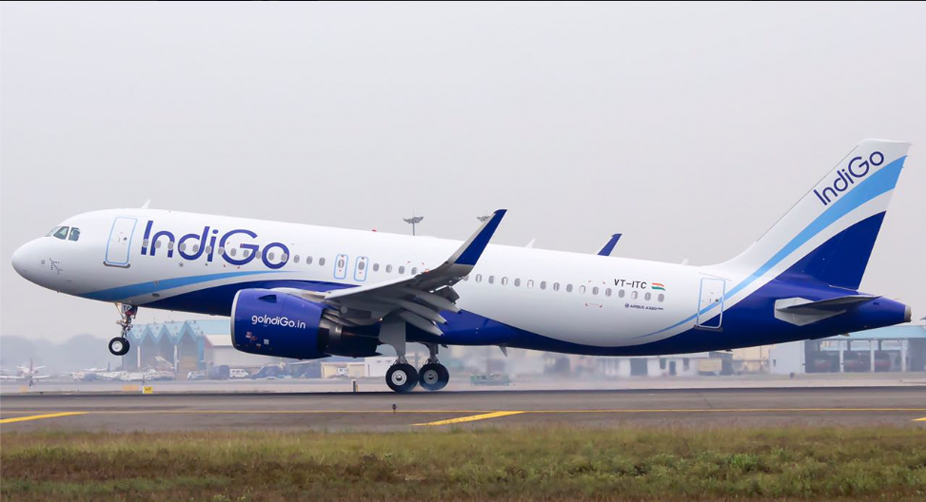
An aircraft ladder being used by IndiGo rammed into Mumbai Airport’s terminal building while it was being moved on Friday morning, the airline said.

No one was injured in the incident that occurred near Bay V20 though the extent of damage to the building or otherwise was not immediately known.

The airline said the matter had been brought to the notice of the Director General of Civil Aviation and airport authorities.

Pending a probe by safety authorities, the towing vehicle’s driver has been placed under suspension till further notice, the airline said. The driver was working for Krystal Aviation Ltd to which the operations had been outsourced.

Haryana to open women’s colleges at 29 places

IANS | Chandigarh |

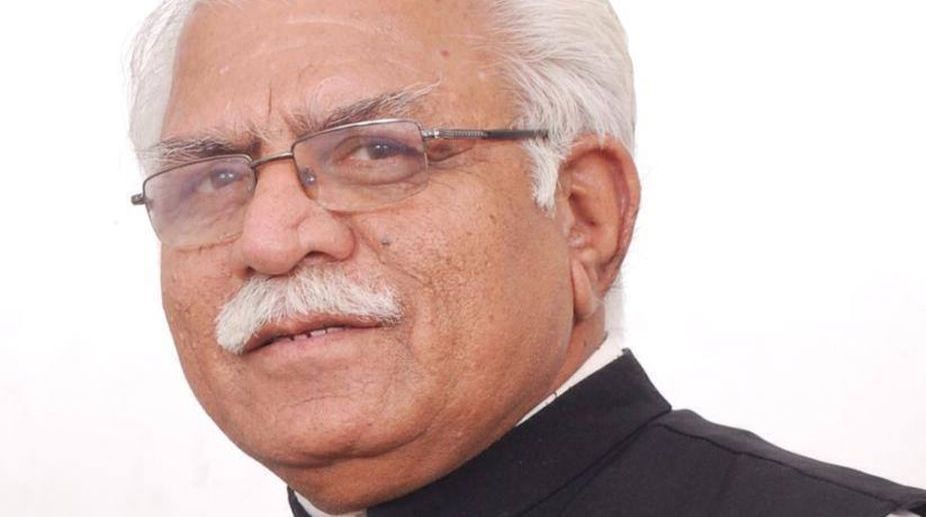
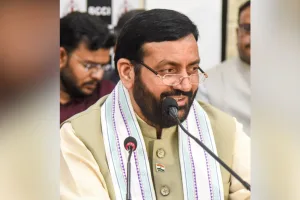
The Haryana government has decided to open new government women’s colleges in 29 different locations this year, Chief Minister Manohar Lal Khattar said on Friday.

“With this, Haryana will become the state to have such colleges at a distance of every 20 km,” he said during a “Meet the CM” programme organised on the occasion of National Youth Day to commemorate the birth anniversary of Swami Vivekananda in Panchkula near here.

“Besides, science stream has been made mandatory in the all the new colleges being set up in the state to promote science subject among the students.”

The Chief Minister said his government was making concerted efforts to promote quality education in Haryana.

“A scheme has been prepared to open women’s colleges within a radius of every 20 km in the state so that our daughters need not travel far to get education. The government has opened some colleges and new ones will be opened in 29 places this year,” Khattar said.

Haryana has a literacy percentage of around 77 per cent (2011 Census). While males have a higher literacy percentage of around 85.5 per cent, female literacy is around 67 per cent.

Haryana has nearly 700 colleges and 25 universities.

Facebook overhauls News Feed to highlight posts from family and friends

IANS |

Facebook is making changes to its News Feed feature that will allow users to see more updates from family and friends than posts from businesses, brands and media, Facebook CEO Mark Zuckerberg has announced.

“One of our big focus areas for 2018 is making sure the time we all spend on Facebook is time well spent. We built Facebook to help people stay connected and bring us closer together with the people that matter to us,” Zuckerberg posted on Facebook late on Thursday.

The CEO said that Facebook has got a feedback from the community that public content – posts from businesses, brands and media – is crowding out the personal moments that lead us to connect more with each other.

“We’re making a major change to how we build Facebook. I’m changing the goal I give our product teams from focusing on helping you find relevant content to helping you have more meaningful social interactions,” he said.

“As we roll this out, you will see less public content like posts from businesses, brands, and media. And the public content you see more will be held to the same standard – it should encourage meaningful interactions between people,” Zuckerberg added.

The CEO said Facebook started making changes in this direction last year and it will take months for this new focus to make its way through all the products.

News Feed will be the first feature that will see the first changes, “where you can expect to see more from your friends, family and groups.”

The update will also prioritise posts that spark conversations and meaningful interactions between people. Facebook will predict which posts its users might want to interact with their friends about, and show these posts higher in feed.

These are posts that inspire back-and-forth discussion in the comments and posts that users might want to share and react to – whether that is a post from a friend seeking advice, a friend asking for recommendations for a trip, or a news article or video prompting lots of discussion.


The social media giant said since the space in News Feed is limited, showing more posts from friends and family and updates that spark conversation will be seen more and public content, including videos and other posts from publishers or businesses, will be shown less.

The impact will vary from Page to Page, driven by factors including the type of content they produce and how people interact with it.

BJP-Trinamool clashes erupt over bike rally

IANS | Kolkata |

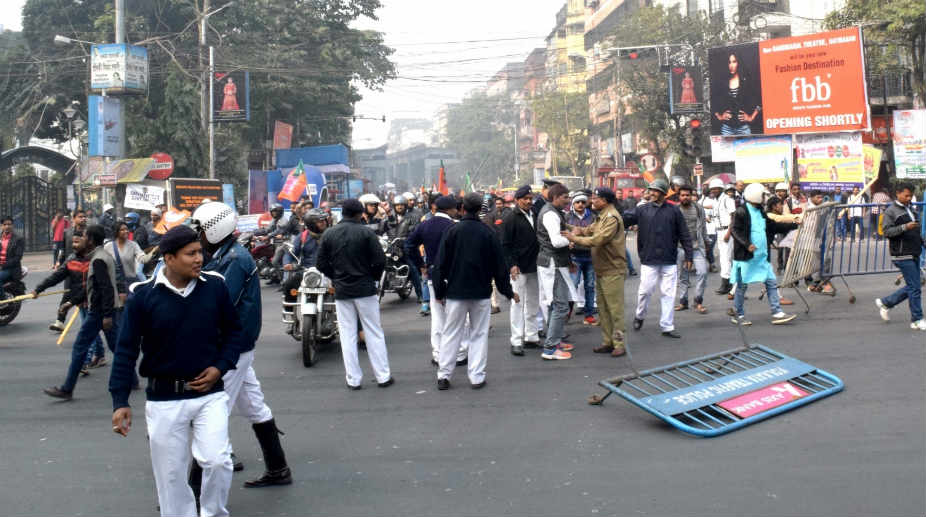
Clashes broke out on Friday between workers of the state’s ruling Trinamool Congress and activists of the Bharatiya Janata Yuva Morcha’s Bengal unit ahead of the latter trying to take out a “Protirodh Sankalp Abhiyan” bike rally in the city.

According to leaders of the Bharatiya Janata Party (BJP) — of which BJYM is the youth wing, the first incident took place near Binani Bhawan in Pathuriaghata Street in central Kolkata and the second outside state party headquarters.

They alleged that some Trinamool workers hurled stones at the BJP members and also attacked them with sticks.

But, denying the allegations, the ruling party in the state accused BJP workers of indulging in vandalism.

“Trinamool workers attacked our workers at several places when they were all set to take out our scheduled bike rally after getting the Calcutta High Court’s order on Thursday,” state BJP chief Dilip Ghosh told reporters.

“First, they attacked our workers at Binani Bhawan and later they assaulted our workers outside the party’s state headquarters. Despite having the court order, we are not being allowed to take out the bike rally,” he said and demanded imposition of President’s Rule in the state.

Ghosh launched a sit-in demonstration in front of Gandhi Statue in the city to protest “the Trinamool high-handedness” and said he would meet Governor Keshari Nath Tripathi to apprise him of the incident and demand President’s Rule in West Bengal.

BJP leader Mukul Roy said: “The opposition is not allowed to exercise its rights and has been continuously coming under the attack of ruling party workers.”

According to him, there was “no democracy in West Bengal” and it had been “proved again and again”.

Taking a dig at the pro-Hindutva party, Trinamool Congress leader and state Minister Subrata Mukherjee alleged that the BJP’s programmes were “provocative”.

“The state government had never said that they would not be allowed to take out the rally. The state did not give permission for such a rally in view of the Gangasagar Mela (fair). They can organise such rallies later and we have no issue. Their programmes are provocative,” he said.

Another state Minister Shashi Panja said the BJP wanted to hijack the birth anniversary celebrations of Swami Vivekananda and was indulging in politics over it.

“BJP workers destroyed public property and beat up local people. They have used the occasion of the birth anniversary of Swami Vivekananda to indulge in hooliganism. They brought their workers from outside to create tension here,” she said.

The vehicle of the special officer, Ravi Shankar Dutta, who was appointed by the Calcutta High Court to monitor BJP’s bike rally, was also damaged.

The BJP Yuva Morcha had decided to take out a bike rally across the state from January 11 to 18 as part of its ‘Pratirodh Sankalp Abhiyan’.

However, the police did not allow them, following which the BJP moved the Calcutta High Court. The court has granted the party permission to organise the rally with certain conditions.

Australians mourn death of 14-year-old cyber bullying victim

IANS | Canberra |

Hundreds of mourners on Friday attended a memorial service for Amy “Dolly” Everett at a Northern Territory school following her death by suicide which her parents said was a result of cyberbullying.

Attendees from across rural Australia wore blue, Dolly’s favorite color, to the funeral in solidarity with her family, reports.

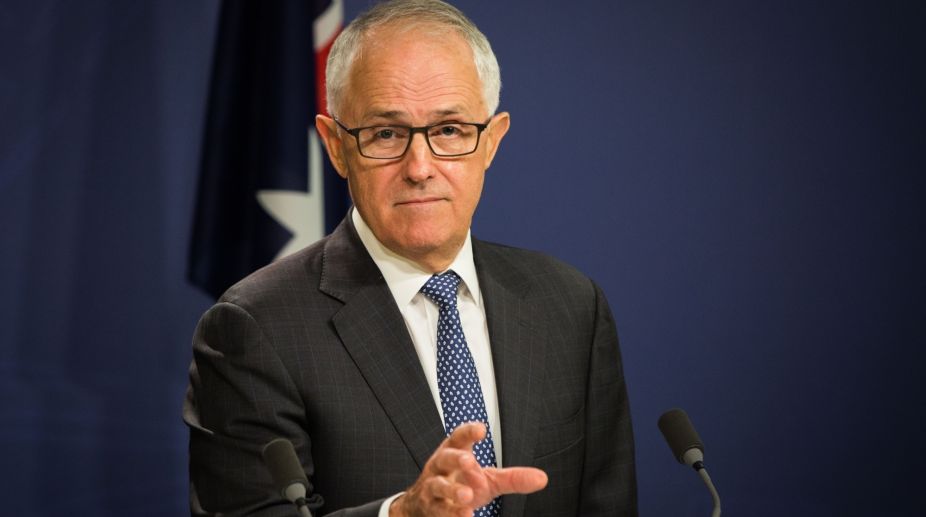
Australian Prime Minister Malcolm Turnbull on Thursday night issued a statement on social media, saying his heart was breaking for the Everett family.

“Dolly’s passing highlights the devastating impact that bullying can have on its victims,” Turnbull said.

“Every step must be taken to reduce the incidence of bullying, whether offline or on, and eliminate it wherever we can.”

A photo of Dolly as a child in an Akubra hat when she was the face of the iconic brand has gone viral since her parents, Tick and Kate Everett, released it as part of a social media campaign to raise awareness of the impact of cyberbullying.

Speaking to media after Friday’s service, Tick and Kate, as well as Dolly’s sister Meg, said they would remember Dolly as “a kind, gentle and loving little girl who loved her animals and cared so deeply for other people less fortunate than her”.

“She was loved by so many and made friends with everyone she came across,” Tick said.

“Dolly saw the good in this world and the good in everybody she met.”

They have said that they hope to establish a trust called “Dolly’s Dream” which would raise awareness about anxiety, depression, and suicide among the youth.

“We don’t want another family to go through what we are going through and our vision is to establish a trust called Dolly’s Dream,” the family said.

“It won’t bring our Dolly back, but it may just prevent the loss of another young life.

“Please just talk to your children and anybody else and remember, speak even if your voice shakes. Stop bullying and be kind and do it for Dolly.”

Earlier on Friday, Northern Territory police confirmed they were investigating the circumstances surrounding Dolly’s death.

Press meet by four judges could have been avoided: AG

IANS | New Delhi |

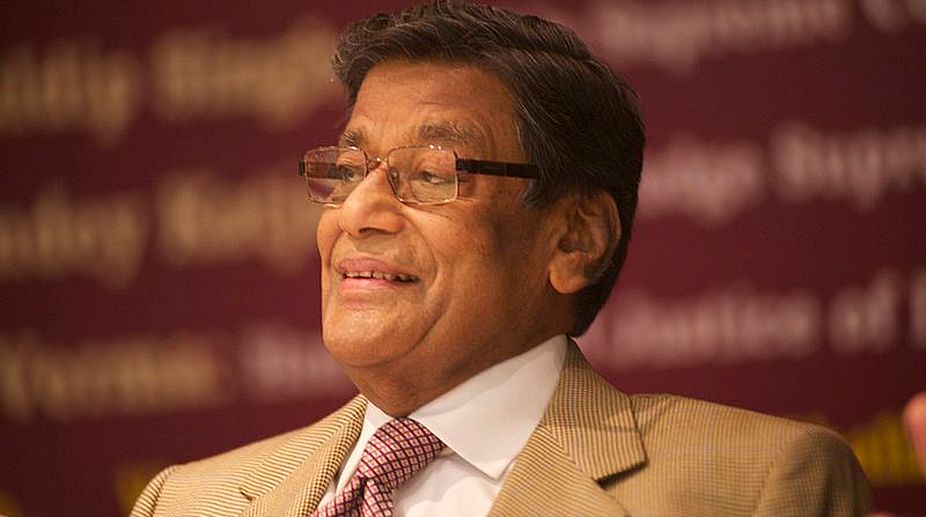
Attorney General KK Venugopal on Friday said that the four senior most judges who took an unprecedented step of addressing the media to accuse Chief Justice Dipak Misra of breaching rules in assigning cases to appropriate benches, could have been avoided and the entire issue would be resolved.

Venugopal said the Supreme Court judges are all statesman with their experience and knowledge and he was hopeful that differences between them will be fully resolved.

At a hurriedly called press conference at his residence, Justice J. Chelameswar and three other colleagues said the Supreme Court administration was “not in order” and their efforts to persuade Chief Justice Misra even this morning “with a specific request” failed, forcing them to “communicate with the nation” directly.

The four judges — Justices Ranjan Gogoi, Kurian Joseph and Madan B. Lokur besides Justice Chelameswar — released a letter they wrote to the Chief Justice a couple of months ago, conceding that he was the master of roster but that was “not a recognition of any superior authority, legal or factual of the Chief Justice over his colleagues”.

December CPI inflation over 5.2%, dashing hopes of RBI rate cut

IANS | New Delhi |

Continuing rise in food and fuel prices pushed India’s annual retail inflation rate over the five per cent-mark in December, official data showed on Friday, putting paid to hopes of an interest rate cut by the RBI in the near future.

According to the data furnished by the Ministry of Statistics and Programme Implementation, December’s consumer price index (CPI) inflation rose to 5.21 percent from 4.88 percent in November.

On a year-on-year (YoY) basis, the CPI inflation last month was higher than the 3.41 percent recorded in December 2016.

The Consumer food price index (CFPI) in December stood at 4.96 percent compared to the 4.42 percent of November 2017.

The annual CPI in rural areas in December ruled higher at 5.27 percent, while in urban India it rose by 5.09 percent.

Retail inflation on a YoY basis edged higher due to a rise in the prices of food items like vegetables, milk-based products, eggs, meat, and fish.

The data showed that vegetables in December became costly by a whopping 29.13 percent, while prices of milk-based products rose by 4.37 percent.

Other notable categories such as cereals became dearer by 2.57 percent and meat and fish recorded a rise of 4.22 percent.

The sub-category of food and beverages during the month under consideration recorded a rise of 4.85 percent over the same period last year.

Among non-food categories, the “fuel and light” segment’s inflation rate accelerated to 7.9 percent in October.

Earlier this month, Finance Minister had told Parliament that the inflation had increased owing to a seasonal rise in vegetable prices and the higher house rent allowances disbursed to government employees under the 7th Pay Commission recommendations.

Inflationary risks forced the Reserve Bank of India (RBI) to hold its key lending rate unchanged for the third time in a succession at 6 percent in its penultimate bi-monthly monetary policy review of the fiscal last month.

Announcing the decision of the monetary policy committee (MPC), the RBI said inflation is expected to range around 4.3-4.7 percent in the second half of the fiscal, including the impact of the increase in house rent allowance.

The central bank said, “two of the key factors determining the cost of living conditions and inflation expectations — food and fuel inflation — edged up in November”.

“The decision of the MPC is consistent with a neutral stance of monetary policy in consonance with the objective of achieving the medium-term target for consumer price index inflation of 4 percent within a band of +/- 2 percent, while supporting growth,” an RBI statement said.