


press trust of india
New Delhi, 11 July
A Delhi court today extended till 19 July the judicial custody of suspended Railway Board Member Mahesh Kumar and Vijay Singla, nephew of former Railway Minister Mr P K Bansal, besides five others in the Rs 10 crore cash-for-post railway bribery case.
Special CBI Judge Swarana Kanta Sharma extended remand of the seven arrested accused after they were produced before it on expiry of their judicial custody.
The court also issued fresh summons to accused M V Murali Krishan, who did not appear before it due to non-service of the earlier summons.
Krishan and C V Venugopal, who appeared in court today in pursuance to its summons, were not arrested by the CBI during the investigation and they were named as accused in the charge sheet filed on 2 July. Venugopal also moved a bail plea.
The court sent Singla, then Member (Staff) of Railway Board Mahesh Kumar, Managing Director of Bangalore-based G G Tronics India Pvt Ltd Narayan Rao Manjunath, middleman Sandeep Goyal, Rahul Yadav, Samir Sandhir and Sushil Daga in judicial custody till 19 July.
Alleged middleman Mr Ajay Garg, who has been accused of being instrumental in fixing the bribe amount for getting a favourable post for Kumar, was granted bail by the court on 8 July. All the 10 accused have been charge sheeted for the offence of criminal conspiracy under the IPC and relevant provisions of the Prevention of Corruption Act.
Singla custody extended



16 dead in Iraq’s restive western province
associated press
Baghdad, 11 July
Insurgents launched a two-day f bloody assault on security force posts in Iraq’s restive Anbar province, killing at least 16 at the start of the holy month of Ramzan, authorities said today.
The killings are the latest in a wave of bloodshed that has left more than 2,600 people dead since April.
The violence, Iraq’s worst in half a decade, is raising fears the country is again returning to the brink
of a civil war pitting its Sunni and Shiite Muslim sects against one another.
The deadliest attack happened at sundown yesterday as Iraqis were marking the end of the first day of Ramzan fasting.
Gunmen launched their assault on the army checkpoint near the town of Barwana, which lies across the Euphrates River from the town of Haditha, about 220 km (140 miles) northwest of Baghdad.
Barwana’s mayor, Meyasser Abdul-Mohsin, said three soldiers were killed and four were wounded in that attack.
The attackers then made their way to a trailer not far away that is used by special oil industry police assigned to protect a nearby pipeline. The men inside were sitting down to have the iftar meal that breaks the daytime Ramzan fast at sunset, Abdul-Mohsin said.
The gunmen shot at the trailer and then set it on fire, the mayor said.
Eleven police officers were left dead, with some of their bodies badly burned and making it difficult to identify, he said.
“This is a crime carried out by terrorists during iftar on the first day of Ramzan,” Abdul-Mohsin said. “It just proves what a cowardly act it is.”
A security official in nearby Haditha gave a similar account and confirmed the death toll. He spoke on condition of anonymity because he was not authorised to release the information.
Insurgents launched more attacks today.
A police station in the Anbar provincial capital Ramadi came under attack by militants in the morning in an assault that left two policemen dead, provincial council member councilman Talib Hamadi and deputy provincial governor Dhari Arkan said.
Ramadi is 115 km (70 miles) west of Baghdad.
‘Aiming for the stars?’
Rae bareli gets women&’s aviation varsity
archana srivastava
archana23srivastava@yahoo.com
Lucknow, 11 July
With an eye on the 2014 parliamentary election, the Congress-led UPA government is raining largesse on Mrs Sonia Gandhi&’s constituency of Rae Bareli, where ironically, despite such earlier beneficence and the hectic touring of the Gandhi clan, the national party was able to bag just one of the seven assembly seats in the 2012 Vidhan Sabha polls.
The Union Cabinet today gave its nod to the setting up of the first ever national aviation university and also the country’s first university for women in the UPA chairperson’s political borough. While the aviation university has been christened the Rajiv Gandhi National Aviation University, the women university has been named after former Prime Minister Indira Gandhi.
The Women varsity will promote the all-round growth and development of women in the country and supplement the government’s efforts towards women empowerment by giving them increased access to employment oriented basic courses and high end research.
The aviation university which will be set up on a 26 acre plot in Fursatganj has an estimated funding of Rs 202 crore. It will be an autonomous body under the administrative control of the Civil Aviation Ministry, the Bill for which is likely to be brought up in the upcoming monsoon session of the Parliament. To be set up in keeping with the recommendations of the MK Kaw committee in 2006, this Central varsity will promote aviation studies, training and research with a focus on emerging areas like aviation management, aviation regulation and policy, aviation history, law, safety etc.
Congress MLA from the Raudrapur constituency in the Deoria district Mr Akhilesh Pratap Singh said both the universities form part of the Congress Vice-President Rahul Gandhi’s vision of making Rae Bareli and its adjoining areas a world class educational hub in northern India, which would attract the best talent from the country. He added the opening of a fashion technology institute, the setting up of an engineering college, a petroleum and automobile institute, and recently the two varsities form part of the educational hub scheme. Both Amethi, represented by Mr Gandhi, and Rae Bareli are close to Lucknow and have a good connectivity with the state capital, he added. The Rajiv Gandhi National Aviation University will not be Rae Bareli’s first brush with the aviation sector.
In 1985, Rajiv Gandhi had laid the foundation of the Indira Gandhi Rashtriya Udaan Akademi (IGRAU), an aviation school under the Ministry of Civil Aviation. The Akademi set up at Fursatganj, just 18 kms from Rae Bareli, offers both commercial pilot licence and commercial helicopter pilot licence courses.
The opening of two new varsities in Rae Bareli has to be seen in conjunction with election 2014. Mrs Gandhi’s daughter, Mrs Priyanka Gandhi Vadra, has been made in-charge of both the Rae Bareli and the Amethi constituencies to oversee the fortunes of the Congress in what are regarded the bastions of the Gandhi clan.
The two Congress bastions received a severe drubbing in the 2012 Vidhan Sabha polls. Of the seven Assembly segments of Rae Bareli, the Congress was able to retain just one (Tiloi). Five went into the Samajwadi Party’s kitty and one to an independent.
Criminal-politicos face music in Bihar
SC ruling disqualifying them has cast shadow on their future
Manoj Chaurasia
cmanoj28@gmail.com
Patna, 11 July
The Supreme Court ruling disqualifying the convicted lawmakers—sentenced to two years of imprisonment or more—from holding offices or contesting elections is set to cast a shadow over the fate of scores of criminal-politicians in Bihar. A latest report of the National Election Watch and Association for Democratic Reforms, Indian civil society groups fighting for electoral reforms in the country, says Bihar currently has 59 per cent lawmakers with criminal antecedents indicating how much the state political scene stands vitiated.
Quite a number of politicians have criminal or corruption cases pending against them, yet they managed to stay in active politics taking advantage of the slow-paced justice delivery system in the country as the court is yet to deliver its final judgment in the case. But the latest verdict in all likelihood is set to bring a pall of gloom on their political life soon.
The latest victim of the SC ruling could be RJD chief Lalu Prasad as the CBI court is soon to deliver its judgment in a fodder scam case in which he is an accused. Although the SC has temporarily given reprieve to Mr Prasad by restraining a trial court in Ranchi from giving verdict in the fodder scam case no RC 20A/96, the trial in the case has just been completed. The trial court was to deliver its judgment later this week on 15 July when the RJD chief filed an appeal in the apex court apprehending he may not get justice as the trial judge is a close relative of Bihar education minister PK Shahi who, after losing the Maharajganj LS polls to a RJD candidate, will try to settle political scores through this case. Mr Prasad is an accused in a total of five fodder scam cases.
Like him, the JD-U&’s MP from Jehanabad Jagdish Sharma too is an accused in the fodder scam case. A serious criminal case is also pending against the newly-elected RJD parliamentarian Prabhunath Singh. Apart from them, there are a number of legislators in the Bihar Assembly against whom several criminal cases are pending in the court, which means they will stand to lose the House membership the moment they are convicted. They include Mr Ranvijay Singh, Mr Manoranjan Singh alias Dhumal Singh, Mr Ajit Kumar, all from the JD-U, Mr Nityanand Rai and Mr Ashok Agrawal, both from the BJP and Mr Kedarnath Singh and Mr Tausif Alam from the RJD.
However, not all politicians are fools and they have taken “preventive” measures well in advance by fielding their wives in the election arena before the court spoils their political career. While some have succeeded, some have not but this has been described by observers as a very smart move. The first one to make this experiment was none other than former Bihar chief minister Prasad who, before going to jail in the fodder scam in 1997, had appointed his wife Rabri Devi as his successor and much to everyone’s surprise, she completed two terms in office before being voted out in the February 2005 Assembly polls.
Like Mr Prasad, several other politicians facing threats to their political career too have fielded their wives in politics. The list includes Veena Devi, wife of criminal-politician Suraj Bhan Singh, Heena Sahab, wife of muscle-flexing politician Mohammad Shahabuddin, Lovely Anand, wife of Anand Mohan, Ranjit Ranjan, wife of Pappu Yadav who only recently was acquitted in the Ajit Sarkar murder case, Nitu Kumari, daughter-in-law of former minister Aditya Singh who faces serious charges like murder, kidnapping and extortion, Aruna Devi, wife of dreaded gangster Akhilesh Singh and Kunti Devi, wife of former RJD legislator Rajendra Yadav.
According to a latest report of NEW-ADR, a total of 141 legislators in the 243-member Bihar Assembly have pending criminal cases that comes to nearly 59 per cent, up by 24 per cent from the past Assembly polls. In 2005, this percentage was just 35. Of 141 MLAs, 85 face serious criminal charges like murder and attempt to murder. The JD-U and BJP have the highest number of lawmakers with criminal cases, followed by the RJD, Independents and others.
World media awaits Royal arrival
press trust of india
London, 11 July
Kate Middleton, the Duchess of Cambridge is due to have a baby any time soon and world media have descended outside a hospital here to cover the royal birth.
Media from around the world have gathered outside the private Lindo Wing of St Mary’s Hospital in central London, where the baby is expected to be born.
Prince William plans to be with his 31-year-old wife when she has their child at the hospital in Paddington, where his mother, Princess Diana, gave birth to him in June 1982.
The cost of a suite at the unit is 6,265 pounds for a one-night stay with no complications and 2,200 pounds for each extra night.
Based on a trouble-free three-night stay, Kate’s bill will top 10,000 pounds and it is possible the Royal couple may have booked more than one suite, the Sun reported.
All rooms have satellite TV, wi-fi, radio and a safe. The wing also offers a “comprehensive wine list.”
A fresh bouquet of flowers are delivered every day and blackout curtains ensure total privacy.
Emergency landing
Jerusalem, 11 July: A Greek plane landed safely in Tel Aviv without anyone being hurt today after issuing a rare mayday call on its approach to Israel’s Ben Gurion international airport. The plane had apparently suffered a hydraulic problem around noon and was forced to take measures for an emergency landing, said airport spokesman. AP
Letters to the Editor
Absurd response to Chinese intrusion
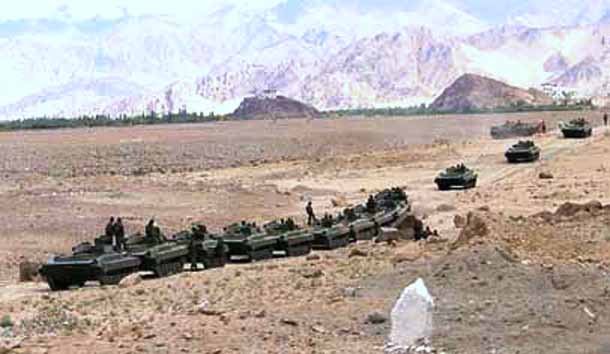
SIR, India’s response to the latest Chinese intrusion into Ladakh was almost comical. However, it was more than compensated by your lead story, "Chinese troops re-enter Ladakh" (10 July). Indeed, the government’s reaction was hilarious. Please note the points of absurdity ~ the area is not accessible from the Chinese side though there are roads leading to the region. But somehow they ~ and not we ~ managed to move in. The cameras didn’t function, and this perhaps facilitated their disappearance. Incidentally, they returned after a protest was lodged. Last year, PLA soldiers were airdropped, and they dismantled the storage tents of our Army and ITBP. What did we do about it?
It is a fact of history that various parts of South Asia have been claimed by China irrespective of the rulers (dynastic, nationalist or socialist) as its ‘lost territory’. It has relentlessly tried to ‘retrieve’ these areas. This once again begs the question ~ what are we doing? Isn’t it comical that we still call India a ‘sovereign’ and ‘independent’ country despite our failure to defend our territory?
Pericles had once said: "Freedom is the sure possession of those alone who have the courage to defend it". Do we belong to that category?
Yours, etc., Sucheta Ghosh, Kolkata, 10 July.
SECURITY OF SHRINES
SIR, The serial explosions in Bodhgaya threatened the sanctum sanctorum of the shrine, considered the holiest in Buddhism. India may not have the Bamiyan Buddhas, but it boasts treasures that are equally priceless. This has been the first terrorist strike in Bihar and the target is a Buddhist shrine, situated at the spot where Gautama Buddha is said to have attained enlightenment. The modus operandi and the timing suggest that the operation was carefully planned so as not to result in severe damage and casualties.
According to the government’s version, it was a terrorist outrage, perpetrated in retaliation to the persecution of Rohingya Muslims by Buddhists in Rakhine district of Myanmar. If the blasts were intended to serve as a warning, there may be more to come. It is obvious that there is little or no coordination between the security agencies of the Centre and Bihar. The protection of shrines is direly imperative. But this is India, where only certain politicians are entitled to Z-plus security.
Yours, etc., Achyut Mukherjee, Howrah, 10 July.
IT’S FREE
SIR, The citizens of India have been promised ‘free food’, ‘free health care’, free education’ , ‘free home’ and so on. I wonder where the money will come from as these are positive ‘dis-incentives’ to work in order to earn one&’s keep. The most surprising aspect of the welfare handouts is that the citizens don’t have ‘job security’ as that will make the political parties insignificant and irrelevant.
Yours, etc., Saroj Mukherjee, Kolkata, 9 July
BLESSING IN DISGUISE
SIR, Romit Bagchi&’s article, “Jyoti Basu: A lost opportunity” (9 July) is a delightful read. But perhaps he has forgotten to mention a point. The CPI-M took the right decision when it prevented Jyoti Basu from becoming the Prime Minister. Swami Vivekananda had once remarked that “religion is the heart of our nation”. But Communists are atheists. They neither believe in god nor in religion. Had Basu become the Prime Minister, he would have been a God-defying PM for a God-loving and God-fearing country. Therefore, what he had called a “historic blunder” was actually a blessing in disguise.
Yours, etc., Aranya Sanyal, Siliguri, 9 July.
CHANGE IN DESIGN
SIR, I was bewildered this morning when I realised that the look of my paper had changed. When I started reading my beloved The Statesman, I had the same feeling of satisfaction that I have enjoyed for more than 20 years. Though "change is the only constant", as they say, I somehow wish to read my old The Statesman, which is distinctly different from the others.
Yours etc. Dipan Roy, Kolkata, 2 July.
Off Limits
Truth the first casualty in CBI-IB slugfest ~ Seema Mustafa
The Ishrat Jahan encounter case is a severe human rights violation that needs quick dispensation of justice so that those responsible are held accountable by institutions of the state for cold blooded murder. Nothing can justify the victims being shot down in cold blood.
Why has the Ishrat Jahan encounter case, in which three others were killed along with her, excited such passion? Was she innocent, was she guilty? Was she a terrorist? Was she a woman of “loose morals” (an issue that always agitates our middle class)? All these questions along with an almost voyeuristic interest in her relationship with Javed Shaikh has turned a straightforward case of encounter killing into high drama pitting the Congress against the BJP, and the CBI against the IB. The media, of course, has shed all sense of responsibility and has decided to sit back and have a ball, regardless of the damage done in the process.
The first point that needs to be made is that the issue is not about the innocence or otherwise of the young girl. This can be fought and decided upon in the courts by her family, who obviously do not want her reputation to be sullied; as Ishrat Jahan&’s sister told a crowded public meeting in Delhi recently, they have been made to pay a high price for this by a moralistic society that was and is more bothered about her personal behaviour than the fact that she was shot dead in a staged encounter by the Gujarat police.
The issue is she and three others were shot dead in cold blood by policemen in what is now clearly recognised by even the CBI as a staged encounter.
The polarising arguments around the case almost make it seem that if Ishrat Jahan is proven to be a terrorist, the fake encounter is justified. So conversely, if she is innocent, then of course the police had no right to kill her in cold blood. In the midst of the passionate debate, the fact that the police does not have the right to shoot anyone down in cold blood ~ criminal, terrorist, sex worker, trade unionist, Muslim, Dalit ~ is being lost sight of. And her innocence is thus irrelevant to the case in which the police not only gunned down four persons, but created evidence to insist that it was a genuine and not a fake encounter. And this is a severe human rights violation that needs quick dispensation of justice so that those responsible are made accountable by the state institutions for cold blooded murder.
Unfortunately, civil rights groups have all become investigators, with many having placed themselves dangerously in the midst of the ongoing CBI versus IB slugfest by supporting the former against the latter. Seasoned journalists will be the first to tell them that these agency wars are old hat, and when these come out into the open, as has happened over the Ishrat Jahan case, truth becomes the first casualty.
Neither the CBI nor the IB have done themselves proud, and while it is always exciting to nip at their heels, this never really works for citizens in the long run. Both agencies are highly politicised, both come with bad baggage, are expert at media manipulation, and at the end of it, both serve the government of the day with fissures only temporary. It is important, thus, for civil rights activists not to allow themselves to be painted into a corner, and understand that the differing stories from the IB and the CBI today could become just the one story tomorrow that would then take away from the legitimacy of the Ishrat Jahan case by insisting that she was a terrorist.
In other words, her innocence should not become the issue. The manner in which the Gujarat police has acted in this case, and several other encounter cases during that period is the sole issue. How did the police acquire such authority? Who were the political leaders behind these decisions? What was the Home Minister of Gujarat and the Chief Minister of Gujarat doing those days? Did the police stage such dramatic encounters without their knowledge? Was that possible in a state where the Chief Minister claimed to be in complete control? How was it that only Muslims were killed in these fake encounters? How was it that the cover up was never busted?
There are answers to all these questions with officials who had served in the administration at that time. And this is the real story that could then through Ishrat Jahan and the three others killed with her, take the conspiracy to the very top. In this, it does not matter whether Ishrat Jahan was innocent or not. That is, as pointed out earlier, an issue that can be fought in the courts but cannot become the basis for rights and justice. After all, justice ensures that a sex worker retains the right to say ‘no’ and if this right is violated and she is raped, she must be given full justice under the law. Similarly, a person, proven to be a terrorist or not, cannot be shot down by the police in a fake encounter. The issue has to be tried in court. After all, even the most famous terrorist of all, Ajmal Kasab, was arrested, and not killed by the police in Maharashtra at that time.
Ishrat Jahan&’s death in cold blood makes it imperative for concerned citizens and organisations to ensure that the Gujarat police and its political mentors are made accountable for the murders. The fact that she was just 19 years old, and clearly a victim of manipulations, makes her case more poignant but in terms of cold justice, the murder of the other three men with her is as important. There is no justification for the police to shoot them down in cold blood.
This can then feed into the larger issue of wrongful arrests, poor evidence, fake encounters and custodial deaths, with every single person entitled to protection and trial under the law. Too many deaths have taken place at the hands of the police outside the law, and this needs to be stopped through the combined efforts of all.
The Gujarat police in recent years has become notorious for these outside-the-law murders, and the government in that state must be held responsible for the trigger happy, rampaging men in uniform. The presence of the IB should be at best another nail in the coffin, not turned into the coffin itself
The writer is Consulting Editor, The Statesman.
Fake encounters: Blame Raisina Hill
Rajinder Puri
Home Minister Sushil Kumar Shinde told the media that he could not comment on the alleged terror links of Ishrat Jahan because investigations were not complete. The minister&’s need to comment on this aspect indicates how this controversy has acquired centre stage in what the CBI alleged was a cold blooded murder, also termed in popular parlance as a fake encounter.
The entire debate on this encounter is so vitiated and distorted that it exposes the deep sickness in our democratic system. Politicians and media are raving over Ishrat&’s alleged terror links and refusing to focus on cold blooded murders of alleged terrorists. There is no dearth of members in the public who strenuously argue that fake encounters provide the only practical way of fighting terrorism.
If we have sunk as low as to openly stating that observance of law and procedure is irrelevant in our society, does it not indicate a very serious crisis in our democratic system? It does, but people seem not to have a remedy. That is why like headless chickens, they scamper from one side to another, searching for a magical Lokpal or a messiah.
There is a solution I have repeatedly spoken about. We have distorted the Constitution by relegating the role of the President to that of a powerless ceremonial office which negates the explicit provisions of the Constitution. The President of India is like a Super Lokpal, entrusted with the responsibility of ensuring that all the laws of the land are observed.
To discharge this responsibility, the President can override any Prime Minister or Cabinet. The Constitution was misinterpreted from Day One, and until this is rectified there will be no political reform or adequate governance. Successive Presidents must share responsibility for this distortion. They ignore the explicit Constitutional responsibilities which they solemnly take oath to discharge, but never do. Had successive Presidents discharged their responsibilities, our flawed and distorted understanding of democracy would not have spread among the public.
The distorted approach to the Ishrat Jahan case among politicians, media and the public might not have prevailed had former President Pratibha Patil acted on the demand I made in a letter written to her in December 2007, which I also made public. I reproduce that letter, which is self-explanatory and invite readers to judge for themselves.
Smt Pratibha Patil
President of India
Rashtrapati Bhawan
New Delhi – 110001
Madam President,
I respectfully draw your kind attention to a matter of grave national importance that requires your urgent intervention. Addressing an election rally in Gujarat on 4 December, 2007 Chief Minister Narendra Modi reportedly said: "Congress in Gujarat is raising its voice on the Sohrabuddin issue. But it should explain to the people what should be done to a man who stored illegal arms and ammunition. You tell me what should have been done to Sohrabuddin?"
Voices in the crowd reportedly shouted: "Kill him, kill him!"
Modi reportedly said: "Well, that is it. Do I have to take Sonia Gandhi’s permission to do this? Hang me if I have done anything wrong."
It might be recalled that Sohrabuddin was killed by the police, allegedly in a fake encounter. The Chief Minister by his remarks clearly indicated that he had initiated and endorsed the killing perpetrated by the police.
Madam President, this goes far beyond the license ordinarily permitted in election campaign speeches. These remarks amount to brazen acknowledgment and justification for the government itself violating due process of law even if that entails cold blooded murder.
What lessons would citizens draw if such official conduct is allowed unchecked? If the government itself sanctions deliberate violation of law and murder as instruments of state policy, on what grounds should citizens condemn jihadi and ideological terrorists who justify violence by invoking their own vision of creating a different India?
Madam President, the solemn oath you undertook on assuming office enjoined upon you to the best of your ability to "preserve, protect and defend the Constitution and law".
Article 78 (b) of the Constitution directs the Prime Minister to “furnish such information relating to the administration of the affairs of the Union and proposals for legislation as the President may call for.”
I humbly submit that it is your responsibility to exercise the discretion that devolves upon your office under the above portions of the Constitution to intervene in this matter and direct the union government to take appropriate steps to ensure that the laws of the land are upheld.
Failing this, the common citizens of India will draw their own conclusions about how terrorism and political violence should be viewed by them.
Yours faithfully
Rajinder Puri
Copy to:
Prime Minister
Dr Manmohan Singh
7 Race Course Road
New Delhi – 110001
Needless to say, neither the President nor the Prime Minister responded. Nor did jurists or media commentators take up the issue. Now it is payback time. In the days ahead, there could be much more to pay for our nation.
The writer is a veteran journalist and cartoonist. He blogs at www.rajinderpuri.wordpress.com
100 years ago
BOXING MATCH ABANDONED
Action Of Burma G.O.C.
(From Our Correspondent)
Rangoon, July 11
The boxing contest between Private Crone, Border Regiment, and Bill Fisher, Calcutta, for the lightweight championship of Burma, fixed for tomorrow night has had to be abandoned under the orders of the General Officer Commanding, who has prohibited Crone from taking part and has ordered the Jubilee Hall to be placed out of bounds and Crone and other intending competitors to be confined to barracks. People in boxing circles want to know how the General Officer Commanding Burma came to this extraordinary decision on the eve of the contest.
THE TRAINING OF CIVILIANS
Mr. Stanley Leathes’ Evidence
A Comparison With The Home Service
London, July 11
Giving evidence before the Public Services Commission today Mr. Stanley Leathes, Civil Service Commissioner, said that if the Commission decided that the lowering of age was desirable, he would then be inclined to fix the age at eighteen and nineteen, with two competitions spread over one year, instead of one competition spread over two years. Witness was of opinion that the examination could easily be adapted to the curriculum of any public school. A foreign language should be compulsory. He opposed separate training and instruction for Indian Civil Servants, which might have a narrowing effect. Mr. Leathes partially endorsed the views of Dr. Warren.
SUKKUR BARRAGE PROJECT
A Committee Of Engineers
(From Our Correspondent)
Bombay, July 11
The Bombay Chronicle understands by the last mail that the Secretary of State is about to convene a committee of engineers to consider the question of the Sukkur barrage project. The scheme was sent Home last autumn, and ever since the project has been lying before the India Office. It is an open secret that Sir John Benton, lately Inspector-General of Irrigation in India, was strongly opposed to the idea of forming a barrage at Sukkur, of which Mr. Hill, lately Chief Engineer to the Government of Bombay, was a strong advocate. There is much to be said both for and against the scheme, and the Secretary of State has been well advised in summoning an expert committee. The composition of the committee is not known, but there are several well-known irrigation engineers now in London, and possibly Lord Crewe will find no difficulty in securing the services of Colonel Sir John Otley, R.E., as president, and the members may very well include Sir John Benton, Sir Lionel Jacob, Mr. Hill and Mr. Summers and several others. The Chronicle thinks that Colonel Sir Colin Scott Moncrieff should also be invited to join the committee.
THE KHOST VALLEY
Affairs Still Unsatisfactory
(From Our Correspondent)
Allahabad, July 11
A Frontier correspondent states that affairs in the Khost Valley are still in a most unsatisfactory state. The Manchals, Jadrans, and Jajis have openly announced that they will in future pay no revenue to Kabul and admit no Afghan officials into their villages. They claim that their status should be the same as that of the Afridis and Mohands, and that tribal allowances should be granted to them by the Amir. No official can move without a strong escort and the collection of revenue has been suspended. There was a rumour last Monday that the Amir was about to visit Khost, and troops were concentrated at Ghazni for a march into the valley. His Majesty went to Ghazni, but no forward move was made, and he contented himself with the inspection of the local irrigation works.
Aadhaar Unmasked ~ Ambition sans innocence (5th July 2013)
Usha Ramanathan
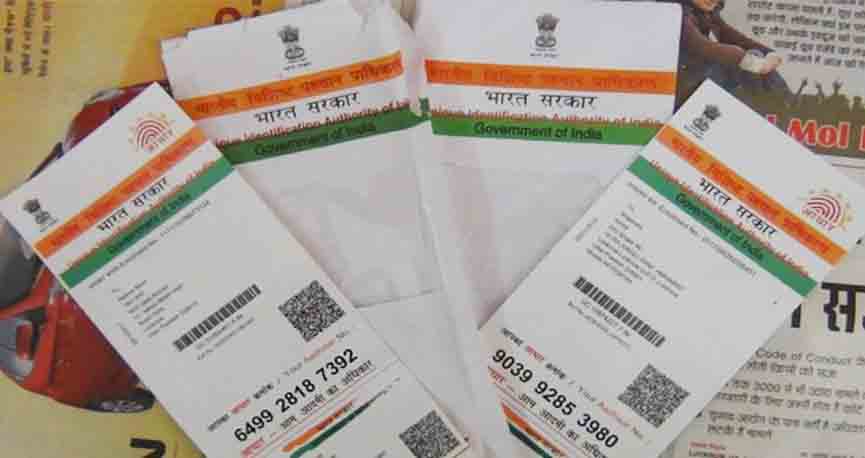
There is a range of ambitions riding on the UID project, and too many of them seem to lack the innocence that could keep us unworried. ‘Cash transfer’ is the most visible of these ambitions. This is contested terrain, peppered with debates around the wisdom or otherwise of the state withdrawing from taking responsibility for providing food or fuel or education or health; and the unwisdom or otherwise of bringing in the market while displacing the state where whole communities of people live lives rendered precarious by poverty and its concomitants.
Whichever side of the debate one is on, there is no denying that the minimum that is needed for cash transfer is a system in place which can deliver the cash. The acknowledged fact is that there
are hardly any banking services available to the poor.
In illustration, this is what Dr Deepali Pant Joshi, Executive Director, RBI said in a talk delivered on 4 May 2013: “Under the roadmap for providing banking outlets in villages with population above 2000, banking outlets have been opened in hitherto 74199 unbanked villages comprising 2493 branches, 69374 Business Correspondents (BCs) and 2332 through other modes like ATMs, mobile van, etc.” And: “As per the roadmap drawn about 4,84,000 villages with population less than 2,000 have been allotted to various banks. Provision of banking services are to be made in the next three years.”
And, again: “Business Correspondent model is still in the experimental stages and there are various challenges associated with the model. The viability of BC model has remained a critical issue. Surveys have revealed that branch officials do not visit BCs or customers and do not take any effort in introducing BCs to villagers. One primary reason cited by branch officials are the scarcity of staff provided to them for carrying out such visits to villages.
Further, most of the accounts opened by BCs have remained non-operational.”
These are just snippets from the speech indicating a remarkable state of unreadiness.
Yet, the Central government has pushed ahead with Direct Benefit Transfer (DBT) depending on banks, banking correspondents, the UID number and authentication ~ each of which is either severely deficient or deeply defective ~ and with no responsibility when any of this does not work.
But, then, in times when minimum wages, and the poverty line, are being reconstituted so that the poor can begin to disappear even as a statistic, these are words that need to be treated with some seriousness.
The interests of national security, and the terror threat, are presented as reasons why the state should have access to data about its people; and the more that is available to it, the better. That the state would want to track and tag individuals is hardly surprising. By now, the US and the UK have trained us to understand how secretively curious states are not just about people in their territory, but far beyond! This ambition, to know the individual intimately, when achieved, will leave him or her at the mercy of the state.
The false sense of security when the state says it wants the power to put people on watch so that they can be kept safe from terrorism, and crime, and immorality, and illegality is a way for the state to keep its hold on the polity.
The complete collapse of the criminal justice system, the waywardness of unsupervised intelligence agencies, and treating every person as a subject of surveillance to keep the country safe, is all part of the same universe.
(The writer is an academic activist. She has researched the UID and its ramifications since 2009.)
USA should respect free movement of professionals: Anand Sharma
Press Trust of India
NEW YORK, 11 JULY: Pitching India as a long-term investment destination, commerce and industry minister Anand Sharma today said the USA should respect free movement of skilled professionals to enhance the strategic partnership between the two countries.
The Minister is accompanied by a CII CEOs delegation in his four-day visit to the US to woo foreign investors.
He said India and the USA are partnering across sectors, including aerospace, nuclear, defence, agriculture, information technology, communications, science and technology, and will grow stronger with a two-way process.
Speaking at a dialogue hosted by the CII and the US India Business Council (USIBC) here, Mr Sharma made a strong pitch to US businesses to look at India as a long-term business and investment opportunity.
He outlined the various policies undertaken by the Indian government to invigorate manufacturing and to create the right conditions for inviting investments into the country.
The government is committed to making India as the manufacturing hub of the world, he said.
The minister emphasised that the USA and India share a larger strategic relationship with deep and growing engagements in various sectors.
Joint collaborations in science and technology, innovation, research and development have further strengthened the bilateral partnership.
He mentioned the strong two-way investment flows, with US FDI in India pegged at $32 billion and Indian investments into the US projected to stand at $13 billion.
Mr Sharma also recalled the steps such as creation of National Investment and Manufacturing Zones (NIMZ) across India and single window approval mechanism for investments undertaken by India.
Six cops injured in attack by villagers; one held
Press Trust of India
THANE, 11 JULY: At least six police personnel were injured when a group of villagers allegedly attacked them with stones here, district rural police said today.
One person has so far been arrested in this connection, they said.
The incident occurred when a team of personnel from the Arnala Police Station in Vasai area of Thane district went to take action against illegal dredging in Narangi village yesterday.
While the police team was taking action against some persons dredging illegally and seizing the suction pumps, the villagers hurled stones at them thus injuring six of them, including a police inspector and an assistant sub-inspector, police said.
The policemen were treated at a local hospital.
Police have registered an offence against the mob of villagers under sections – 143 (unlawful assembly), 147 (rioting), 149, 353 (assault or criminal force to deter public servant from discharge of his duty), 332 (voluntarily causing hurt to deter public servant from his duty), 333 and 324 (voluntarily causing hurt by dangerous weapons or means) of the IPC.
One person has been arrested in connection with the attack, police said, adding that they are on the look of others who were part of the mob which attacked the police party.
Dec 16 gangrape: Verdict in juvenile”s case on 25 July
press Trust of India
NEW DELHI, 11 JULY: A Juvenile Justice Board (JJB), trying the minor accused in the 16 December brutal gang rape and murder of a 23-year-old girl here, today reserved its judgement for 25 July.
The Board presided by Principal Magistrate Geetanjali Goel reserved the verdict after counsel for the accused and the prosecution submitted their clarifications.
The juvenile accused in the case is being tried for the gang rape and brutal assault of the paramedic student in a moving bus here on the night of 16 December, last year. The murder charge was slapped after the victim died on 29 December in a Singapore hospital.
Besides the juvenile, the four adult accused Mukesh, Pawan Gupta, Vinay Sharma and Akshay Thakur are being tried by a special fast track court.
Proceedings against key accused Ram Singh abated after his death on March 11 when he was found hanging in his cell in Tihar Jail here.
Parents of the gang rape victim were present outside the JJB today. Speaking to media persons, they sought death penalty for the juvenile accused, whom the police in its charge sheet had dubbed as the “most brutal” of all the six accused persons in the case.
According to a police official, the counsel for the juvenile accused submitted some clarifications related to the incident and also claimed that his client was innocent as he was “not present” in the bus on the night of 16 December.
The official said that the prosecution too submitted its reply to the contentions of the accused’ counsel.
He said that the judgement in another case related to robbery of a carpenter on the same night before the accused gang raped the girl has been kept in a sealed cover and will be pronounced later.
The other four accused are also being tried for robbing carpenter Mr Ramadhar on the fateful night.
During the inquiry, the juvenile had denied all charges against him, claiming he was not a participant in the horrendous crime.
Senior Egyptian army commander escapes attempt on life
Press Trust of India
CAIRO, 11 JULY: A top Egyptian military commander escaped an attempt on his life in the border town of Rafah after gunmen opened fire on his car, an army spokesman said.
The car of the second field army chief “came under heavy fire, which led to clashes between security forces and the terrorist elements,” the spokesman said in a statement, without identifying the commander.
Militants attacked the commander’s convoy while he was checking Shaykh Zuwayed area near the border with the Gaza Strip.
One girl was hurt during the exchange of fire and died later in hospital, the army said.
“There have been several attacks in Sinai on army and police officers to create chaos in the area and harming the stability and national security of Egypt,” the army said.
Sinai is known to be a stronghold of hardline Islamists and trouble has started in the region concurrent with the ousting of president Mohammed Morsi.
Leading Muslim Brotherhood leader Mohamed al Beltagy said that violence in Sinai will stop as soon as Morsi is reinstated as Egypt’s president.
Trial in Bombay serial train blasts still on
Press Trust of India
MUMBAI, 11 JULY: Seven years after the Mumbai serial train blasts in which nearly 200 people were killed and over 700 injured, the trial in the case is still going on with the special MCOCA court recording statements of the accused.
“The court is now recording the statement of the accused who wanted to depose as defence witness in the case,” said advocate Sherif Sheikh, appearing for some of the accused in the case.
Sheikh said they propose to examine some more defence witnesses in the case.
Special MCOCA judge YD Shinde has till now recorded the statement of about 180 prosecution witnesses. The statements of witnesses has been recorded in over 2,400 pages.
The prosecution and defence have also submitted over 700 exhibits to the court to substantiate their claim. While about 40 defence witnesses have deposed in the court including four accused, the court is now recording the statement of fifth accused.
During the trial, the court also recorded the statements of three accused – alleged co-founder of terror group Indian Mujahideen Sadiq Sheikh, Arif Badruddin and Ansar Ahmed – arrested in 2008 for their alleged role in various blasts across the country during that year.
The defence lawyers had called as witnesses as they had in their confession statement stated that it was IM which was responsible for carrying out blasts since 2005.
Seven RDX bombs kept in the first class coaches of Mumbai’s suburban trains had exploded on July 11, 2006, killing about 188 people and injuring 817 others.
The blasts had occurred in suburban trains between Khar road-Santacruz, Bandra-Khar road, Jogeshwari-Mahim junction, Mira Road-Bhayander, Matunga-Mahim Junction and at Borivali.
Kamal Ahamed Ansari (37), Tanvir Ahmed Ansari (37), Mohd Faisal Shaikh (36), Ehtesham Siddiqui (30), Mohammad Majid Shafi (32), Shaikh Alam Shaikh (41), Mohd Sajid Ansari (34), Abdul Wahid Shaikh (34), Muzzammil Shaikh (27), Soheil Mehmood Shaikh (43), Zamir Ahmad Shaikh (36), Naveed Hussain Khan (30), Asif Khan (38) had been arrested by the Anti Terrorism Squad (ATS).
Key accused Azam Chima along with 14 others are absconding in the case.
The examination of witnesses resumed after a span of two years as the Supreme Court had stayed the trial in 2008.
Before the stay, the prosecution had already examined a police officer.
The apex court vacated the stay on 23 April, 2010.
Water-logging exposes civic agencies” tall claims
sharbani banerjee
banerjee.sharbani@gmail.com
New Delhi, 10 July
The Tuesday’s heavy showers which led to massive water-logging at many parts of the Capital have exposed the lackadaisical attitude of the civic agencies about how ill-prepared they were for upcoming monsoons despite several reminders by the traffic police.
Even after the Delhi Traffic Police’s several reminders to the civic agencies to tackle water-logging problem in the areas which were likely to be worst affected due to upcoming monsoon, it seems all requests have fallen on deaf ears.
The problem of water-logging was reported from 65 areas in the Capital thus washing away all the tall claims made by the civic agencies. Though, out of these, 31 are new areas from where water-logging was reported.
However, according to Mr Anil Shukla, Additional Commissioner of Police, traffic, this time the number of areas are less from where the problem was reported. "The department had written a letter in February well before the onset of the monsoons, providing the civic agencies a list of 157 roads and points in the capital which are vulnerable to water-logging but the situation was almost the same," stated Mr Shukla.
Further, the same reminder was sent in May but the problem of water-logging continued and the same was reported from all those major roads identified by traffic police. "The civic bodies are well aware of the roads that need to be repaired and resurfaced. It’s not that they need Traffic Police report and letters to know about the vulnerable points. All the agencies have their own control rooms and they are very much aware of these points," he added.
Meanwhile, of 157 vulnerable points identified by the traffic police, 142 were under the PWD (Public Works Department) and remaining were under the municipal corporations and National Highway Authority of India (NHAI).
During last spell of rain in the capital on June 15, when flash flood had hit Uttarakhand, the traffic police also identified new areas from where water-logging was reported. "During that time also, 50 new areas had witnessed the water-logging on June 15 rain and the list has been sent to all the civic agencies to resolve the problem," added Mr Shukla.
In the first week of June, PWD, in reply to a letter by traffic police had informed that the capital would not witness any water-logging during the monsoon, added Mr Shukla.