Solar energy could be key to making sustainable aviation fuel
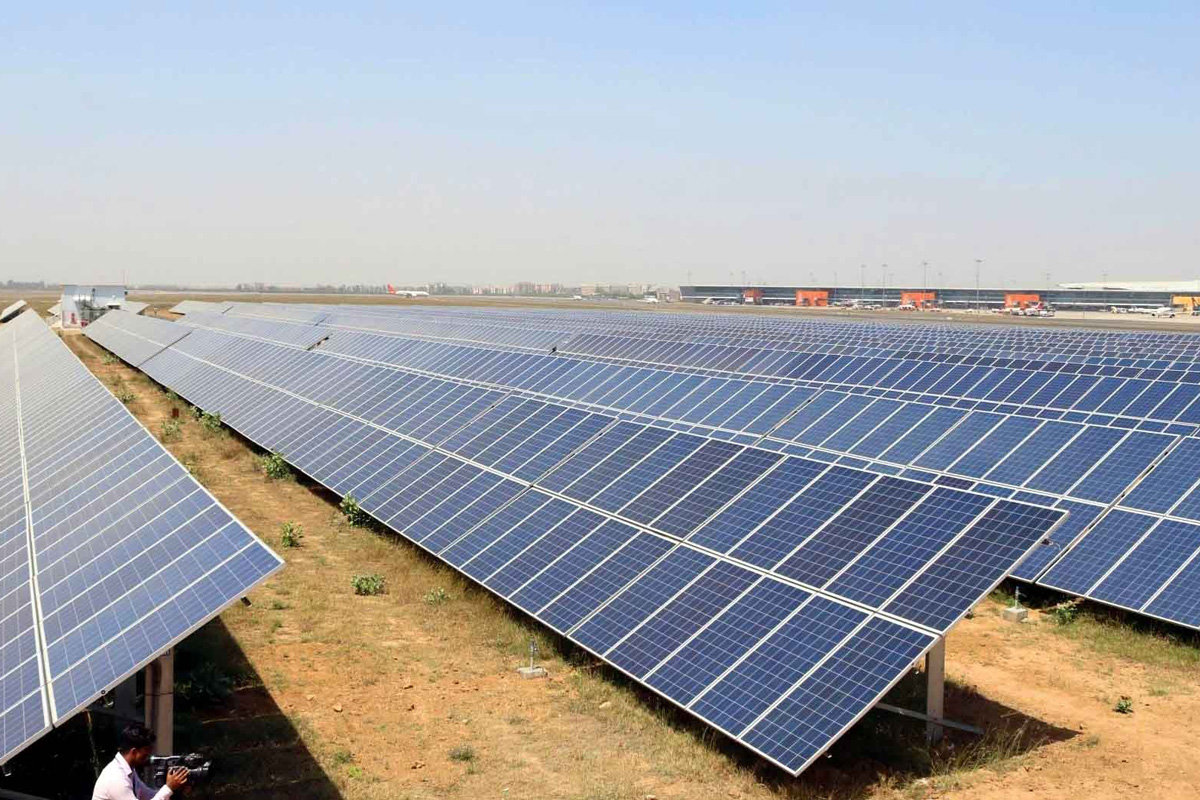
An international team of engineers, led by the University of Sheffield, has developed a new way of making sustainable aviation fuel (SAF) using solar energy.
In this context, the Delhi government is said to be exploring and examining the possibility of having a green budget that could contribute towards striking a balance between economic growth and protection of the environment in the capital.
Maharashtra’s large-scale solar power programme for farmers, supplying 16,000 MW, was showcased at Davos and may now be studied globally as a clean energy model.
In 2025, India achieved a milestone of 50 per cent cumulative electric power installed capacity from non-fossil fuel sources in June, five years ahead of the 2030 target set under its Nationally Determined Contribution (NDC) to the Paris Agreement
Uttar Pradesh has surpassed the milestone of 3 lakh (3,00,654) solar energy installations, marking a historic achievement in the state’s renewable energy journey.
India’s Sun-watching spacecraft is about to face the moment it was built for. In 2026, the solar cycle will crest, the Sun will flip its magnetic poles, and the familiar yellow disc will turn into a furnace of violent expulsions.
The solar energy plant, set up by the Indore Municipal Corporation (IMC), is scheduled to begin functioning from November this year. The electricity generated from it would be used to operate pumps to supply drinking water from the Narmada River to Indore city.
Addressing the gathering, CM Sai said that solar power consumers are now emerging not only as energy producers but also as active contributors to the energy grid.
Saying that the renewable energy capacity of Madhya Pradesh has increased 14 times in the last twelve years, Chief Minister Dr Mohan Yadav today stressed on the need of providing solar energy to farmers, as they consume about 41 per cent of the state’s power supply.
While it is absolutely possible to realise the environmental benefits of EVs, this will depend on the source of energy used to charge them. India has a rich solar and wind resource, which can be tapped into to realise these potential benefits.