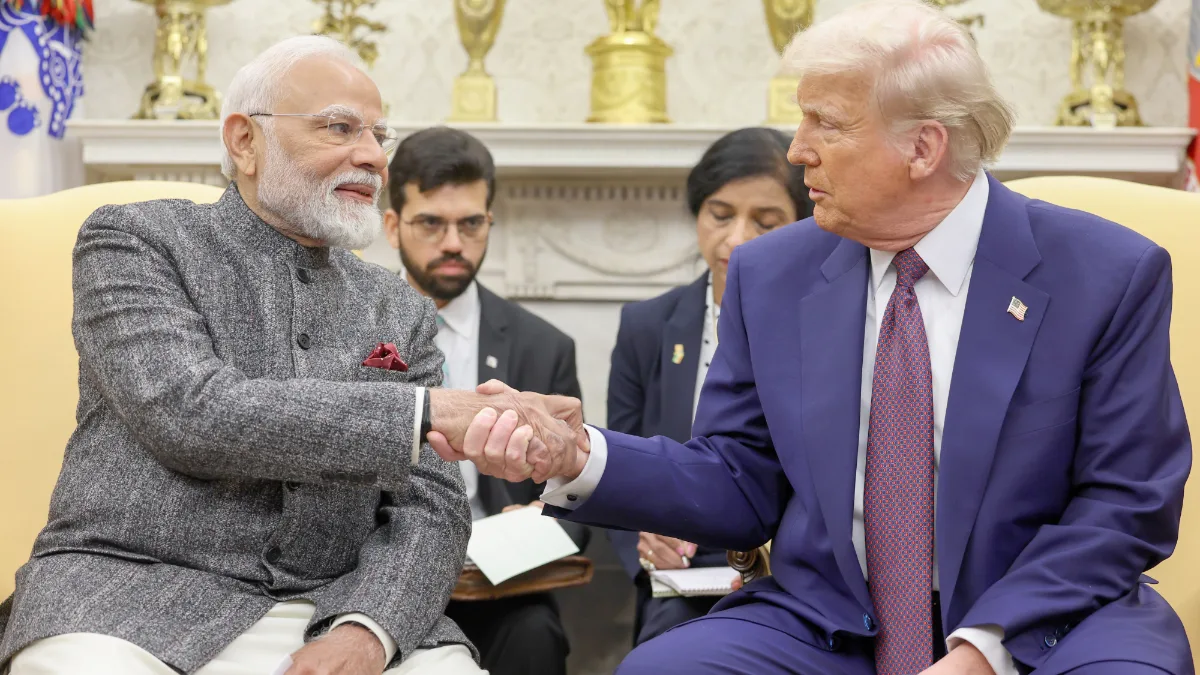
Geopolitics in the age of scrolling
There was a time when geopolitics moved through formal rooms. A state issued a statement. A spokesperson read from a prepared text.

There was a time when geopolitics moved through formal rooms. A state issued a statement. A spokesperson read from a prepared text.

There Are moments in history when a nation’s progress stops being incremental and becomes directional.

The announcement of a framework agreement between the United States and Iran has understandably been greeted with relief.

Modern society has an unhealthy relationship with medical progress. We crave miracles, celebrate breakthroughs and search for definitive cures.

Light follows darkness. After the 15-year long TMC era ~ most certainly a dark period in the socio-economic and political history of Bengal, people are now hoping for rejuvenation of a state that has fallen beyond the depth of anarchy and despair.

Integrity. Humility. Selfless commitment. Conviction. These loaded words are grabbing media space with unending tributes to VS Achuthanandan, the former chief minister of Kerala who passed away recently, aged 101.

The country that once dominated the global economy is now grappling with a severe debt crisis. The United States, with a GDP of $28 trillion, is burdened by a debt of $36 trillion.

The acquittal of 12 men in the 2006 Mumbai train bombings ~ an attack that claimed 187 lives and injured over 800 ~ demands not just legal introspection but moral and institutional reflection.

In much of the West, bilingualism is often framed as a cognitive edge ~ an acquired skill to sharpen the ageing brain or enrich young minds.

As the dust settles from the 12-day conflict that began with Israel’s “Operation Rising Lion” on 12 June 2025, and escalated with U.S. strikes on June 22, an urgent question arises: Were these pre-emptive attacks on Iranian nuclear facilities lawful under international law? Both countries claim the strikes were acts of self-defence against an existential nuclear threat.