Hospitals to offer “home away from home” for patients’ families
The Chhattisgarh government announced the creation of dedicated rest homes for relatives of patients at government medical college hospitals.
In an e-mail interview with The Statesman, the British writer-journalist talked about the value of empathy and the never-ending search for a unified self in a fractured society.




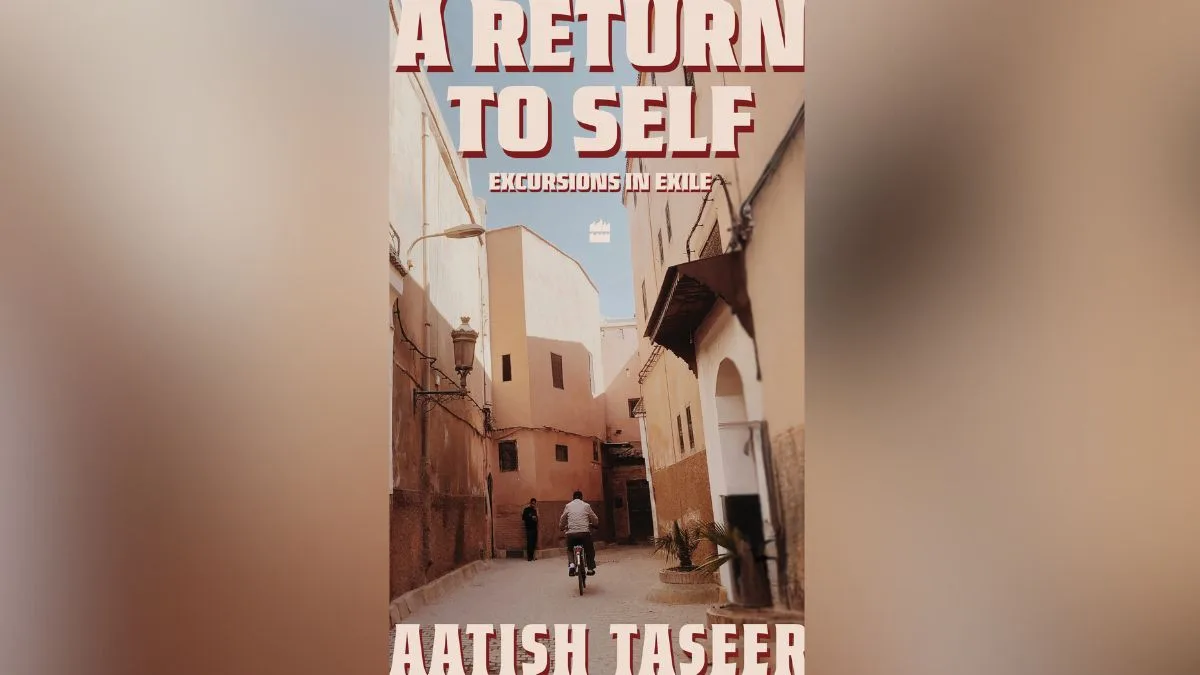
Front cover of the book
In his most intimate work to date “A Return to Self”, celebrated author Aatish Taseer explores identity, belonging, and cultural intersections through travel and memory. Written after the revocation of his Indian citizenship, he stresses on greater understanding in the face of both internal and external exile by contrasting his experiences in India with lessons learnt via travels to Turkey, Uzbekistan, and Mongolia.
In an e-mail interview with The Statesman, the British writer-journalist talked about the value of empathy and the never-ending search for a unified self in a fractured society.
Advertisement
1. You mentioned in your book, ‘To lose one’s country is to know an intimate shame’. Why do you call it a “shame” when the circumstances which led to this end were clearly not in your control and in fact were “politically motivated”?
Advertisement
The element of shame surpasses the workings of logic and reason. People have been known to feel shame after being the victims of sexual assault. Slavery, the Holocaust and Colonization have all elicited feelings of shame. I think the power of shame has to do with its ability to defy rationality. To be turned away from the place one has always considered home certainly produced shame in me. I felt it on behalf of other people.
And that is the other interesting thing about shame: it is a social emotion. I felt embarrassed on behalf of my grandmother, aunts, friends and family. People who could attest to my life in India; people had shown me affection; people who now had to contend with my being recast as an outsider, not to be admitted among their warmth and familiarity anymore. Someone suspect. Ostracized that true Greek sense of a man whose name has been written secretly on a potsherd (ostraka) and who must now be cast out from the community. I felt the government’s action as a betrayal of the love I had received in India.
2. Quoting from “A Return to Self”, you say that you were forcefully “exiled” not only from India, but from your identity or conception of yourself. Six years have passed, are you at ease now? How do you look at your life in America? Is it a reconciliation of sorts or do you still long for going back to India?
I try not to aim at resolution anymore. My life is full of absurd jagged ends, but I to do yet more violence to that stubborn lack of cohesion when I chase wholeness. I have had to learn to let those “burnt-out ends of smoky days,” of half led lives and seams of experience and belonging, just vibrate next to each other. Travel, especially, teaches you that. It teaches you to carry your centre within you, to grow more reassured as a writer and observer – which is ultimately the only thing that I am – even as the landscape keeps shifting, never allowing the traveler the comfort and illusion of stability. India, too, lives on in me now, in the marrow, but no longer as a physical place I seek to go to. In a sense, I am completely passive.
3. Critics have argued that you failed to call out Modi’s Hindu nationalism and majoritarian policies in the book while primarily criticizing the revocation of your Overseas Citizenship of India. How do you respond to that?
This is not a book about India. I have already written an extremely detailed book about Modi and the rise of Hindu Nationalism called The Twice-Born. This, in a sense, is a book about being free of those involved Indian discussions, all that hand-wringing and recrimination. How tiresome it was to live among all that frenzy, all that illusion of hectic activity on the surface, even as the society beneath felt so inert, a profile in stasis. It reminds you of certain Indian cities, the casbahs of the north, where the chaos of the street belies a suffocating stillness, a place where nothing has happened in centuries. Naipaul was never more right than when he implied that all that can be said about India is that “it will go on.”
4. Is it important for writers, irrespective of the genre they write in, to comment on the world around them, especially through their art?
Yes, but not necessarily in the way your question suggests—which, to my ear, has a political overtone. The most profound thing an artist can say about any society has to do with dramatizing what Octavio Paz calls its “inner controversy.” This is never simply political; it involves getting at what is driving the politics. The way this happens artistically is often quite oblique. People express politics, but they do not always express the cultural and historical convulsions that underlie the politics. It is in very quiet understated ways that the writer tries to capture the deeper tensions of the society he is travelling in.
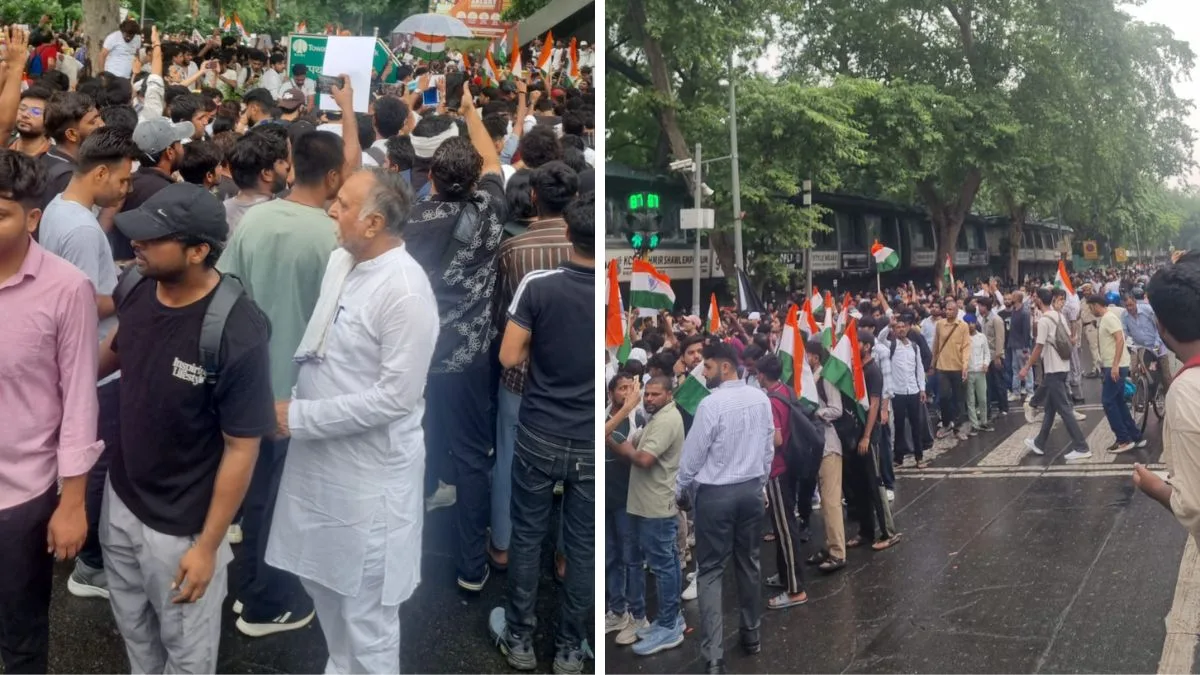
5. Migration is also at the core of your latest book. The world at large is dabbling with this problem, or the dilemma of whom to call theirs and whom not. More recently, massive protests were held against immigrants, especially Indians, in Australia. They are treating Indians the way India is treating Bangladeshi immigrants and Rohingyas. Where do you think we, as a country, are faltering?
It is hard for me to enter into what’s happening on the ground in India. Is it about migration, or is it about Muslims? This government has worked people into frenzy about Islam and I fear that will pay dividends (in hate) for years to come. It’s something that India can ill afford. The story of postcolonial migration to the West is of a totally different order than the presence of Islam on the subcontinent. The one is a relatively recent affair; the other comes closer to Baldwin’s description of an encounter that has occasioned “war” on the soul of a society. Even if we take the Hindu Right’s argument on face value, namely that this is about historical hurt and reconciliation, it is hard to believe that these cycles of historical convulsion will yield anything. Has this decade of Modi rule produced anything resembling closure? Has it engendered a genuine self-confidence? Or are we still beset by acute oversensitivity, communal suspicion and dark visions of a historical cleansing that would tear India apart? One of these essays deals with the example of Islamic Spain and, to me, it provides the most fearful example of what can happen when the cry for purity – limpieza de sangre – takes hold of a society.
6. In Modi’s India, there are everyday allegations of “politically motivated” action, be it against Opposition leaders, artists, activists, or even social media influencers. As someone who himself has been at the receiving end of such a treatment, what is your take on the importance of freedom of speech and expression under pressing times?
What matters here are the reasons for the paranoia of Modi’s India. This was supposed to be an era of new confidence. Instead it has brought about another wave of what Robert Byron describes as “a distemper of oversensitivity.” Even after a decade in power, this government exudes such insecurity. The Indian voice on the world stage is neither moral, nor powerful. It is why our foreign policy is in shambles. None of this is merely political. It is the political expression of a deeper cultural failing, and that is something that affects us all. We may not like Modi, but his failure is the failure of tens of millions of Indians. They threw him up after years of continuity and now they must contend with the bitter disappointment of what this man has been.
He is the perfect crystallization of a certain Indian arrogance: the belief that an emanation of spirit will carry the day alone. All one has to do is be more truly oneself, and the fruits of that ardour will follow. But that’s not enough. You have to know things, and do things; you have to achieve. The world is difficult and complex. It will not yield to you simply because you put your heart into it.
7. Lastly, you have talked extensively about your equation with your father, late Salman Taseer. How has been your relationship with your mother, acclaimed journalist Tavleen Singh?
It is an easy relationship. We’ve had our political differences, of course, but, unlike the father-figures I’ve had in my life, she’s never sought to impose her views on me. She’s not doctrinaire and is always full of humour about herself and life in general. She’s excellent company, a big reader, a great traveler. If she has one fatal weakness, it is her tendency to privilege the male ego over herself. She’s the wind beneath the wings of every male narcissist that ever lived! I see her imbuing these utter mediocrities with ill-deserved confidence, and want to tell her to let them hang. But she can’t do it. It’s generational.
Her world was made in the image of male power and, though she’s broken many glass ceilings herself, she still clings to the shape of that world. It reminds me of certain postcolonial countries who win their independence only to find their sense of self hostage to their former masters. Perhaps Fanon was right, perhaps it is only through the exercise of a tonic violence (violence desintoxique) that we can achieve a true return to self.
Advertisement