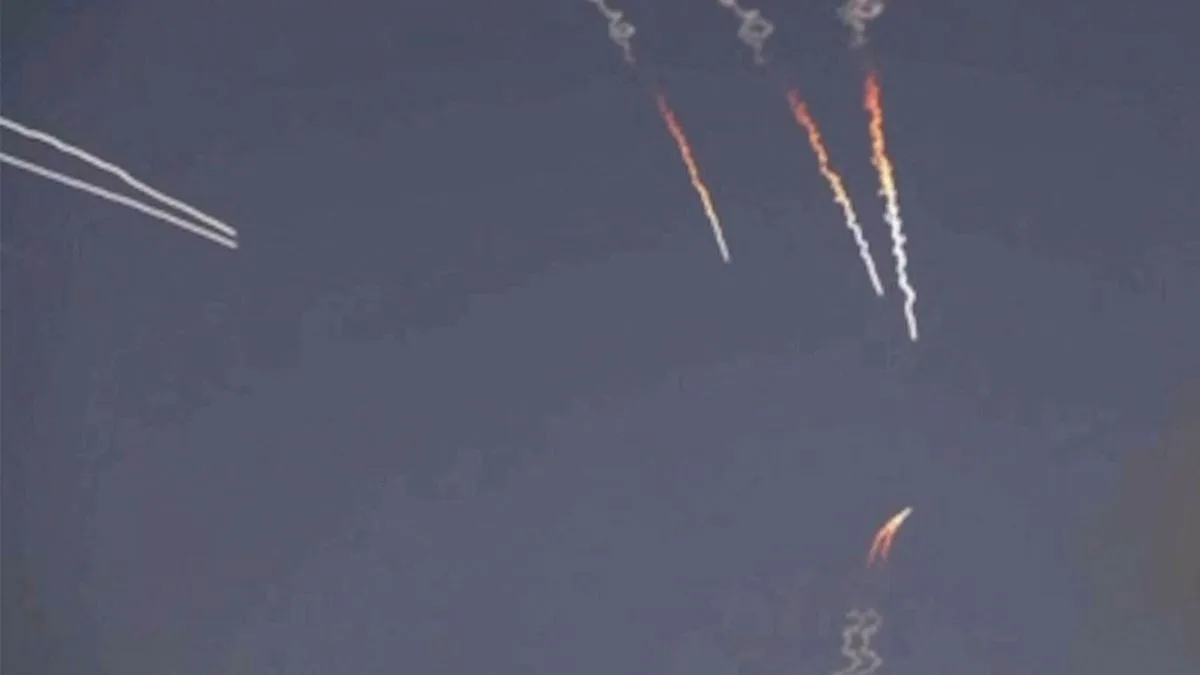
The United States carried out a fresh wave of airstrikes against Iran on Sunday, marking the ninth consecutive night of military operations, as President Donald Trump said the attacks were conducted after American service members were killed in Jordan and vowed that Washington’s campaign against Tehran would continue.
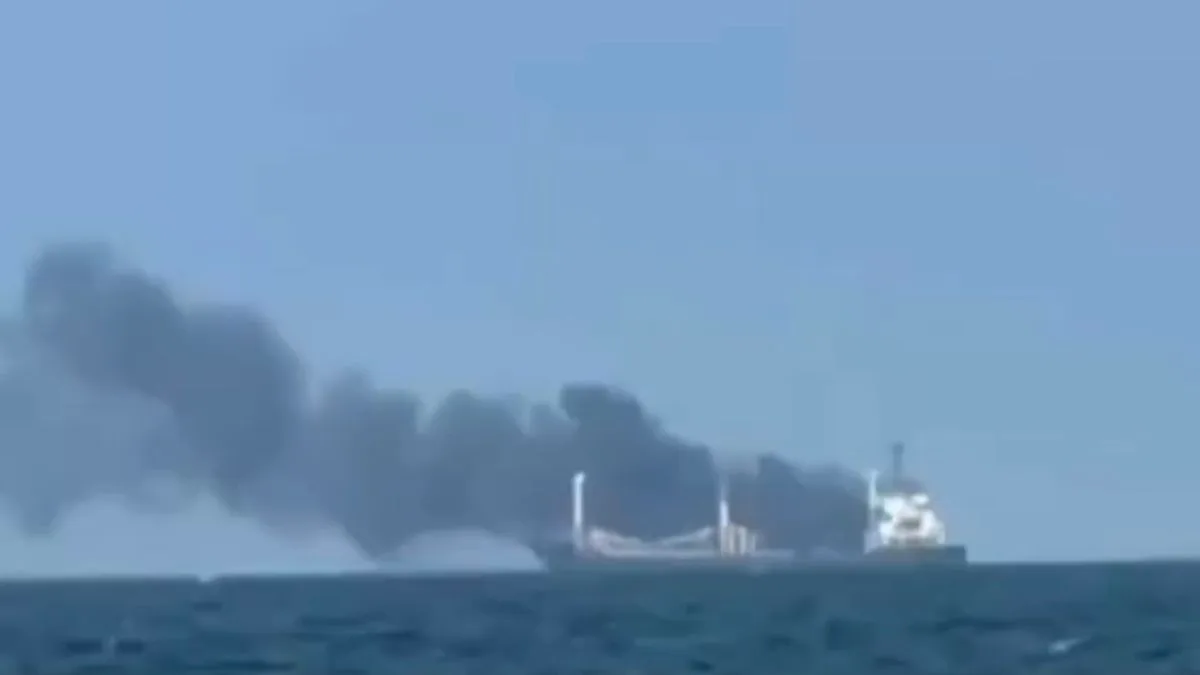
The latest strikes, announced by the US Central Command (CENTCOM), targeted Iranian military assets that Washington says have been used to threaten commercial shipping and civilian vessels in the Strait of Hormuz. The renewed attacks came as Iran and the US exchanged competing claims over control of the strategic waterway, while reports of missile and drone attacks emerged from Jordan, Kuwait and Bahrain.
Advertisement
CENTCOM said the new round of strikes began at 7 pm ET on Sunday.
“CENTCOM began conducting a new wave of strikes against Iran at 7 p.m. ET today for the ninth consecutive night. The strikes will continue degrading Iranian military capabilities used to attack commercial vessels and civilian mariners transiting the Strait of Hormuz,” the command said in a post on X.
Trump says Iran ‘very badly damaged’
Speaking to reporters after arriving in Washington, Trump claimed Iran’s military capability had been severely weakened.
“Iran has been very, very badly damaged. They’ve lost everything almost militarily. They’ve got very little left. They’ve got some missiles. They’ve got some drones. They’ve got some manufacturing ability, not much,” he said.
Trump also asserted that the United States now controlled the Strait of Hormuz.
“We control the Strait; they don’t control anything,” he said, adding that the latest strikes were carried out in honour of US personnel believed to have died in recent attacks.
CENTCOM separately said it had recovered unidentified remains following the July 17 Iranian attack in Jordan, where two American service members had earlier been confirmed dead, and another was reported missing. The military said forensic examinations were underway to establish the identity of the recovered remains.
The command also said a separate US service member was killed during a controlled detonation of unexploded Iranian drone ordnance in northern Iraq, while another was injured.
US says campaign will continue
Energy Secretary Chris Wright said the deaths of American troops would not alter Washington’s military objectives.
“Yes, this mission will go on until the mission is done,” Wright told ABC News.
He said the administration remained focused on degrading Iran’s military capabilities, protecting commercial shipping through the Strait of Hormuz and preventing Tehran from acquiring nuclear weapons, while maintaining that President Trump remained open to a diplomatic resolution.
Democratic Senator Mark Warner criticised the administration’s strategy, calling it “a war of choice” and arguing that the conflict had failed to eliminate Iran’s missile and drone capabilities or fully secure maritime trade routes.
Regional tensions spread beyond Iran
As the conflict widened, Jordan said it intercepted multiple Iranian missiles fired towards its territory, while Kuwait and Bahrain reported intercepting hostile missiles and drones.
Jordan’s Foreign Minister Ayman Safadi held separate discussions with Turkish and Kuwaiti counterparts, calling for de-escalation and renewed diplomacy.
Arab League Secretary-General Nabil Fahmy also urged the United States and Iran to immediately reduce tensions, warning that continued escalation risked triggering wider regional instability and economic disruption.
Meanwhile, Iranian state broadcaster Press TV reported explosions in several locations, including Mahshahr, Imam Khomeini Port and Tabriz, and claimed the Islamic Revolutionary Guard Corps (IRGC) had launched retaliatory strikes on US positions in Syria.
Strait of Hormuz remains in focus
The Strait of Hormuz, through which a significant share of global oil and liquefied natural gas exports passes, remains at the centre of the confrontation.
US officials said oil flows through the waterway had recovered to roughly two-thirds of pre-conflict levels despite the fighting.
Former NATO Supreme Allied Commander James Stavridis warned that Iran could seek to expand the conflict by threatening shipping through the Suez Canal using allied groups, adding another layer of risk to global energy supply chains.