In a significant political shift following the latest round of Assembly election results, the balance of power across states has tilted decisively in favour of the National Democratic Alliance (NDA), raising its footprint to 21 states. The development comes as the Bharatiya Janata Party (BJP) emerges as the single largest party in West Bengal, strengthening its national position.
The BJP is now set to independently govern 15 states, marking a notable expansion of its direct influence. The NDA’s overall tally rises further due to its alliances in key regions, including Bihar, Andhra Pradesh, Nagaland, and Meghalaya, consolidating its presence across diverse political landscapes.
Advertisement
In contrast, the opposition INDI bloc has seen its influence contract, with control or leadership now limited to six states. The bloc’s position has been reshaped by a series of electoral setbacks and gains. While it appears to have lost Tamil Nadu, where a new political entrant led by Vijay and his Tamila Vettri Kazhagam (TVK) has unseated the DMK-Congress alliance, it is poised to gain Kerala, where the Congress-led United Democratic Front (UDF) is set to form the government.
Post-results data released by the Election Commission of India (ECI) indicates that the Congress now holds a clear majority on its own in only three states: Karnataka, Telangana and Himachal Pradesh. Elsewhere, its presence depends on alliances, such as in Jharkhand alongside the Hemant Soren-led JMM. In Punjab, the Aam Aadmi Party (AAP), led by Bhagwant Mann, remains outside the INDI bloc framework, though it continues to oppose the BJP at the Centre.
Numbers matter in Parliament
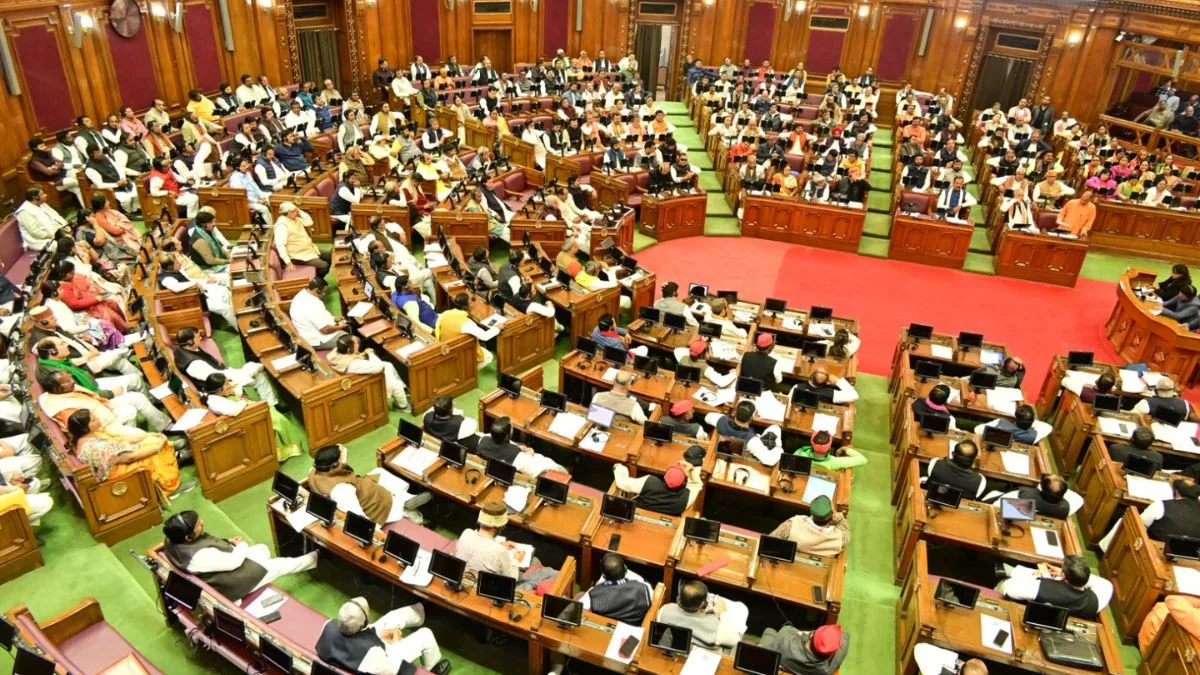
Beyond state-level politics, the changing map carries implications for legislative power at the national level. Under the provisions of the Constitution of India, particularly Article 368, constitutional amendments require a two-thirds majority in Parliament. In addition, certain amendments must be ratified by at least half of the state legislatures to take effect.
These include changes affecting federal provisions such as the election of the President (Articles 54 and 55), the distribution of executive powers (Articles 73 and 162), the structure of the judiciary, and the division of powers between the Centre and states as outlined in the Seventh Schedule.
With the NDA expanding its influence across a larger number of states, its capacity to secure such ratifications, when required, is strengthened. The evolving political arithmetic, therefore, is not just about electoral victories, but also about shaping the legislative and constitutional trajectory of the country in the years ahead.