Describing the outcome of U.S.-brokered negotiations as the “last opportunity to enter into a final and comprehensive ceasefire,” Lebanese President Joseph Aoun said on Thursday that Beirut was consulting domestic stakeholders, including Hezbollah, before responding to a ceasefire framework agreed with Israel during talks in Washington.
The proposed agreement, reached during the fourth round of trilateral negotiations involving U.S., Israeli and Lebanese officials, calls for a complete halt to Hezbollah attacks, the withdrawal of Hezbollah operatives from areas south of the Litani River and the establishment of pilot zones under the exclusive control of the Lebanese Armed Forces.
Advertisement
Aoun said the United States would determine the timing and mechanism for implementation after receiving Lebanon’s response and the necessary guarantees.
The framework is aimed at ending hostilities along the Israel-Lebanon border and paving the way for a broader security and peace agreement between the two countries.
Israel and Lebanon have agreed to implement a ceasefire agreement following talks held on June 2-3 in Washington.
Officials said the measure is intended to pave the way for a broader peace and security agreement between the neighbouring countries.
The United States, which mediated the talks, said Israel and Lebanon reaffirmed that they harbour no hostile intentions toward each other and committed to continuing direct negotiations aimed at building confidence, resolving outstanding disputes and working toward a comprehensive bilateral agreement.
Delegations also discussed a security framework based on talks held at the Pentagon on May 29, focused on ensuring the sovereignty, security and territorial integrity of both countries. The framework includes provisions for dismantling non-state armed groups and preventing their re-emergence.
In a joint position, the three parties condemned Iran’s attacks in the region and activities they said undermine Middle East stability through support for proxy groups and other acts of aggression.
Washington reiterated its support for both governments and stressed that any agreement ending hostilities must be reached directly between Israel and Lebanon under U.S. mediation. The United States also pledged continued support for strengthening the Lebanese Armed Forces and expanding its ability to exercise authority across Lebanese territory.
Israel maintained that lasting security and respect for its territorial integrity depend on the disarmament of Hezbollah and the dismantling of the group’s infrastructure across Lebanon. Lebanese representatives, meanwhile, underscored the importance of respecting internationally recognised borders, fully implementing the cessation of hostilities and preserving Lebanon’s sovereignty.
The parties agreed to resume political and security negotiations during the week of June 22 with the objective of reaching a comprehensive agreement, while the United States will continue facilitating communication between the two sides.
Speaking after the meeting, Israeli Ambassador Yechiel Leiter credited the diplomatic breakthrough to the leadership of U.S. President Donald Trump, Israeli Prime Minister Benjamin Netanyahu and Lebanese President Joseph Aoun.
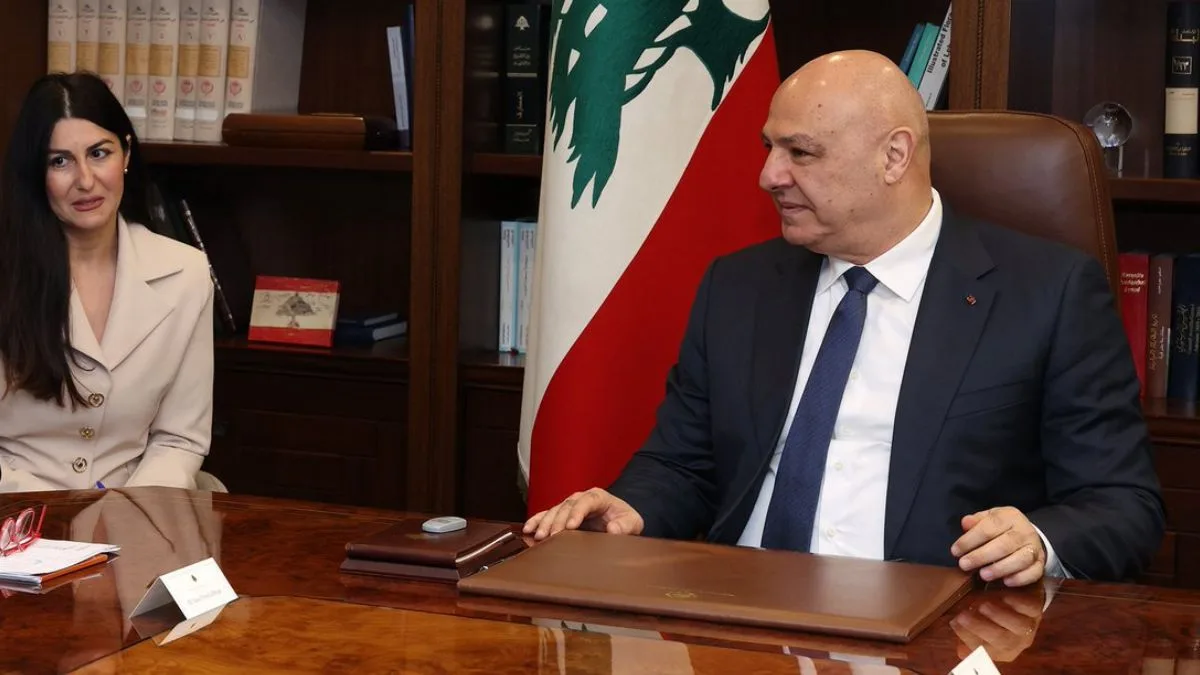
Addressing reporters at Baabda Palace, President Aoun described the outcome of the fourth round of negotiations as “the last opportunity to enter into a final and comprehensive ceasefire” and said each party would bear responsibility in the event of non-compliance.
Aoun said Lebanon would communicate its official position to the United States after receiving responses from relevant domestic stakeholders, particularly Hezbollah. He added that Washington would determine the timeline and mechanism for implementing the ceasefire, which could take effect within 24 hours of receiving formal agreement and the necessary guarantees, with President Trump serving as the direct guarantor.
The Lebanese leader praised the country’s negotiating team, headed by Ambassador Simon Karam, saying it had shown firmness during what he described as extremely difficult negotiations. According to Aoun, Karam temporarily suspended discussions and refused to move to other issues until a comprehensive ceasefire was secured, prompting intervention by U.S. Secretary of State Marco Rubio to restart talks.
Aoun also revealed that Lebanon remained in contact with international and domestic stakeholders throughout the negotiations and credited several friendly nations with helping secure support for a comprehensive ceasefire.
Regarding the proposed pilot zones, he said Lebanon had suggested beginning in the eastern and western Zutar regions, along with Yahmor and Shaqif Castle, citing the area’s symbolic importance and proximity to Nabatieh.
Separately, Aoun held a telephone conversation with Qatari Prime Minister Sheikh Mohammed bin Abdulrahman bin Jassim Al Thani, thanking Qatar for its efforts to promote regional stability and for supporting diplomatic initiatives aimed at consolidating the ceasefire in Lebanon.
He also praised the support extended by Qatar’s Emir, Sheikh Tamim bin Hamad Al Thani, and acknowledged Qatar’s continued assistance to Lebanon during its ongoing economic and security challenges.
The ceasefire framework represents the most significant diplomatic progress between Israel and Lebanon in recent months amid persistent regional tensions and international concerns over Hezbollah’s military presence along the border.