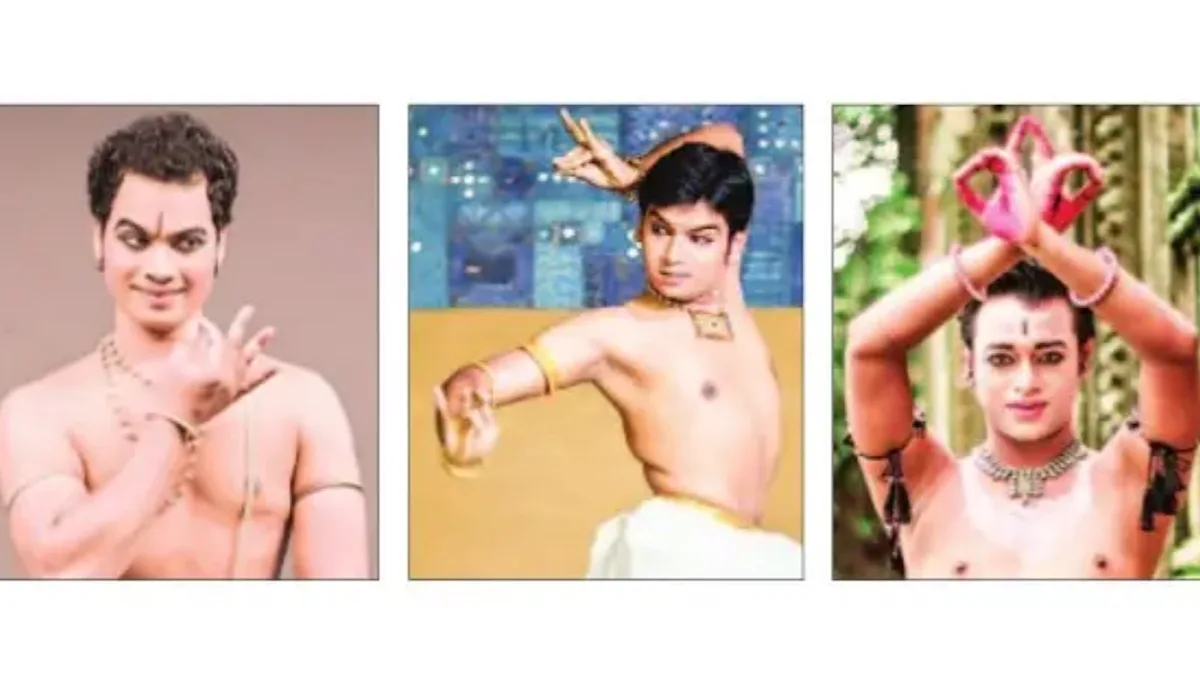
The sixth edition of Shivaarghya, a rare festival spotlighting classical male dancers, was held at Ganesa Natyalaya, Delhi on Sunday, 1st March, 2026. Rama Vaidyanathan, President, Ganesa Natyalaya, who curated the festival, talks about how male dancers have always been integral to our classical traditions.
Shivaarghya was envisioned by your Guru, late Saroja Vaidyanathan. What inspired her to create a festival exclusively for male dancers, and how has that vision evolved over six editions?
Advertisement
Shivaarghya was the brainchild of my late Guru and mother-in-law, Padma Bhushan Saroja Vaidyanathan. She strongly felt that male dancers deserved special recognition, as even today there remain certain reservations about men pursuing classical dance. Fortunately, this perception is gradually changing. Her vision was to provide young male dancers—especially those who rarely get such opportunities in Delhi—with a dedicated platform to showcase their talent. Over the past editions, the festival has grown into a space that not only highlights male artistry but also celebrates inclusivity and innovation, staying true to her original inspiration while evolving with the times.
Indian classical dance traditions historically included powerful male performers, yet today the stage appears largely female-dominated.How do you interpret this shift?
In Indian traditional dance forms—particularly Bharatanatyam—it was often women from traditional communities who performed, while men from those same communities typically provided the music. At the same time, there were traditions like Gotipua in Odisha, performed by young boys, and Kuchipudi, which was historically presented by male Brahmins. So, it would be inaccurate to say that classical dance was ever exclusively male – or female-dominated; each tradition had its own balance of gender participation. The shift was largely due to social perceptions of dance as not being a “proper” or financially secure profession. In many families, men are still expected to be the primary breadwinners, which discourages them from pursuing dance as a career. I personally know several male dancers who wanted to dedicate themselves to the art but faced family pressures to take up conventional jobs, marry, and provide financial stability. Dance requires immense time, patience, and investment before it begins to repay you, and many men simply don’t have that luxury. However, this mindset is changing. Professions are becoming more gender-fluid, and dance itself has evolved into a viable career path. With opportunities in teaching, collaborations, and cross-cultural projects, classical dance is increasingly recognized as a sustainable profession. As a result, more men are returning to the stage, and the balance is slowly being restored.
This year’s edition of the festival brought together six classical forms along with Neo-Classical. As curator, what guided your selection process and programming balance?
My challenge as a curator is always to identify genuine talent and provide those dancers with an opportunity to perform in Delhi. Often, remarkable artists may not be invited by established organizations or may remain relatively unknown in the city despite being exceptional performers. I make it a point to discover these rare gems across different art forms and bring them together to create a vibrant and diverse dance programme. Throughout the year, I actively scout for young dancers and maintain a list of potential invitees.
How do you define masculine expression within classical aesthetics? Is it about strength, restraint, grace—or something more nuanced?
I believe dance itself is gender-fluid; it is not simply a male body dancing or a female body dancing. While audiences may visually perceive a male or female performer, for us the soul that dances is beyond gender. Increasingly, people are beginning to see dance as a genderless activity. For instance, when a woman performs the Shiva Tandava or a man portrays Radha, the essence lies not in the dancer’s body but in how the character is depicted. What truly defines the expression is the energy conveyed through the face, the nuances reflected in the body, the way one walks, and the emotions one evokes. These elements shape the character far more than the physical appearance of the dancer. In that sense, masculine or feminine expression in classical aesthetics is not confined to strength or grace alone—it is a nuanced interplay of energy, emotion, and embodiment that transcends gender.
How does hosting Shivaarghya align with the larger mission of Ganesa Natyalaya?
Natyalaya is primarily a Bharatanatyam institution, but our mission extends to the propagation of all classical dance forms of India. That is why, in every edition of Shivaarghya, I strive to make the festival inclusive rather than limiting it to Bharatanatyam alone. We consciously include other dance traditions such as Kathak, Kuchipudi, Sattriya, Odissi, and more, so that audiences can experience a diverse range of performances under one roof. Typically, when one attends an Odissi recital, the focus remains solely on Odissi; however, Shivaarghya offers the unique opportunity to witness multiple disciplines in a single space. Moreover, we actively encourage collaboration among dancers from different traditions. For instance, last year a Bharatanatyam dancer and a Kathak dancer jointly developed a choreography that was both innovative and widely appreciated by the audience. Such initiatives embody our vision of celebrating diversity while fostering dialogue between India’s rich classical dance forms.
In an era of digital consumption and changing audience attention spans, how do you preserve the spiritual depth of classical dance and keep the attention of the audience?
The digital world has created its own dance space, often dominated by 30-second reels that garner millions of views. But the real question is: can someone who excels in a 30-second reel also deliver a solid 45-minute live concert? At Ganesa Natyalaya, through Shivaarghya, other festivals, and our regular training, we focus on nurturing well-grounded performers. Our dancers receive rigorous training that equips them to present powerful solo performances while also adapting seamlessly to group presentations. In today’s fast-paced environment, I believe the key is to remain true to your art. When you pursue your chosen path with sustained confidence and commitment, the depth and spiritual essence of classical dance naturally shine through—and audiences respond to that authenticity.
(THE WRITER IS A SENIOR JOURNALIST AND EDITOR)