The crux of the matter: The world is witnessing unprecedented transitions, especially in the six key areas of geopolitics, geography, geoeconomy, technology, environment (transition from carbon to green energy), and the shift of economic power from the Organization for Economic Co-operation and Development (OECD) to the emerging economies of the Global South.
The argument: If India plays its cards right and can turn these transitions to its own advantage through careful assessment, its own ambitions of transitioning from an intermediate power to a global player could be entirely within the realm of possibility. In fact, India’s future as far as the relative status quo is concerned sort of depends on it (this kind of meticulous scrutiny of the transitions).
Advertisement
But in order to take advantage of these transitions or make the assessments, India needs to understand them thoroughly and frame a policy which would put herself, if not in the centre of things, at least in its ambit.
The writers of “India and the Six Simultaneous Global Transitions: Everything All At Once” Rajiv Kumar and Ishan Joshi, go about providing this understanding. They examine each of the unfolding transitions in its present form and suggest a possible future course for India to take in order to navigate it, but not before doing a deep-rooted analysis of its past, tracing each back to its origin, thereby putting it in perfect context.
The six transitions are discussed/dissected in six separate chapters. Let’s take the first (and possibly the one with the greatest significance): geopolitics. In their analysis, the writers trace the current trends in geopolitics back to the end of World War II and to the evolution of Pax Americana, when, following the Allied powers’ victory, the US replaced Britain (and Pax Britannica) to emerge as the world’s number one superpower in terms of military strength and economy. “From an empire on which the sun never set, Britain became a junior partner to the US with the rise of Pax Americana in the post-war era,” they write.
Implicit within this newfound role for the US was the cooperation with (and hence domination over) nations around the globe, especially its Allied partners, who would, to put it in layman’s terms, now be the beneficiaries of its magnanimity.
The writers thus knit a fascinating fabric of the emergence of today’s geopolitical scenario by threading it together with references to the major events, incidents and happenings of the subsequent past, including prominent defeats and victories in conflicts around the globe, the Cold War, the different treaties signed, the myriad organisations formed and the overall implications of these in the way that the world has since shaped up. (The present geopolitical scenario and how it is undergoing tectonic shifts is examined in the context of this past unfolding since the early to mid twentieth century.)
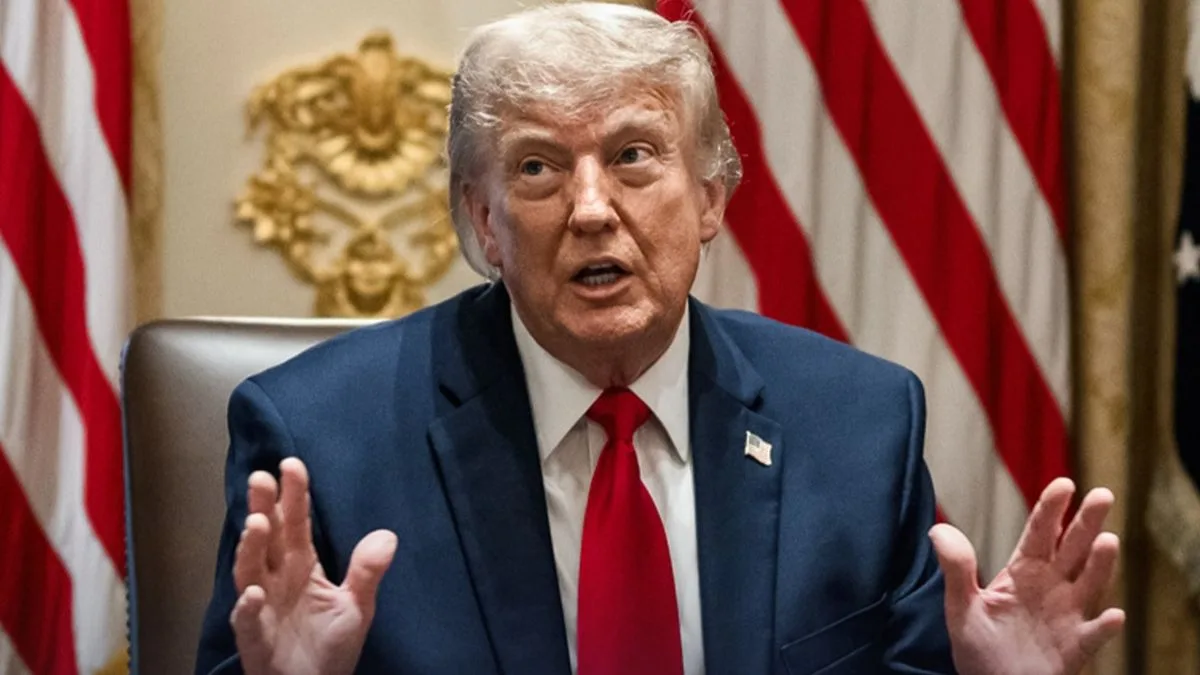
For the purpose of the present review, let’s take, for instance, how the writers contextualise, compare, and really link the present scenario of shifting geopolitics with that of the past. One of the treaties cited (but of course) is the all important GATT (General Agreement on Tariffs Trade) of 1947. This becomes relevant to the present discussion on today’s transitioning geopolitics because after Trump’s return to power earlier this year, such vital Pax Americana generosity could become a thing of the past, quite literally. To quote the writers, “The multilateral GATT of 1947 began regulating trade among 153 countries in fulfillment of its charter to achieve a substantial reduction of tariffs and other trade barriers, and the elimination of preferences, on a reciprocal and mutually advantageous basis. GATT functioned as a de facto multilateral institution, conducting eight rounds of talks addressing trade issues and resolving international trade disputes.” Cut to the present, and we are led right up to the strained trade/tariff talks today between India and the US. This is an example of the shifting geopolitics that the book brings up….the gradual erosion of Pax Americana….and a tightfisted Trump 2.0’s disengaging with the US role, since the end of World War II, of playing the generous big brother and reigniting the idea of MAGA (Make America Great Again).
But make no mistake. This is not to say that the writers have put the onus of the shifting geopolitics of the world today squarely on the shoulders of Trump and the changing dynamics of US policy alone. Indeed, integral to the very nature of the shifting geopolitics and really all the “transitions” that the writers engage with throughout the book, is taking due cognizance of global giants in other ends of the world which have long posed threats to US hegemony. If Russia lost that space post the disintegration of the USSR and thereby its defeat, if you will, in the Cold War, the US’ most formidable adversary has over a long period of time now been China. The discussion on China’s unmistakable role in the shifting tides of today’s transitions takes a prominent position in this book, if not a central theme of it.
“While China is not close to catching up with the US in terms of aggregate power projection capabilities, it is a fact that China has overtaken the US in the number of patents filed and in the development of some key emerging technologies. Out of 64 critical technology categories, China took the top spot in 57 in 2024, compared to 2023 when the People’s Republic of China was leading the US in 37 out of the 44 cutting-edge digital technologies tracked. Beijing is in the process of establishing a monopoly in areas like synthetic biology and nanoscale materials, while it has established leads in fields such as electric batteries, hypersonic, and advanced radio-frequency communications (5G and 6G). The US is the clear leader in only seven out of 44 technologies – tracked over 2022-23 by the Australian Strategic Policy Institute – including vaccines, quantum computing, and space launch systems. Xi Jinping’s recent pronouncement of China needing to discover new production capabilities for powering its way out of the middle-income trap is aimed at further narrowing the technology gap between itself and the US. China’s overt goal now is to overtake the US as the leading science and technology player in the world.”
The book’s engrossing narrative takes the reader on a geographical journey that transcends borders, crossing oceans and into countries going back and forth in time, and then transcends it further into the realms beyond physical space to discourse on the abstract: the path ahead. It must be said that throughout the reading of it, one eagerly awaits the delivery of the promise of delineating a course of action for India to take.
And the narrative is interspersed with it:
Sample: “In this situation, placing a premium on strategic autonomy, as India, for example, has made no bones about doing, may be sufficient as a strategic placeholder. However, it ought not to be conflated with what India’s defined position should be at the culmination of the ongoing geopolitical transition.”
And “India needs to be cautious about buying into the China-as-bogeyman narrative, especially as our national interest may not be served by the confrontation with our powerful northern neighbour at the current state of our development….This is not to imply Delhi should not keep a very close eye on the potential dangers of an expansionist, upper riparian PRC with which we have a live border dispute….But Delhi has to engage with Beijing for the sake of its national interests. India must begin to display the maturity required in recognising that a freshly minted superpower such as China will look to constrain India’s rise, including in its neighbourhood….The short point is: superpowers do what they do. The question for India is not which side to pick, but how to protect Indian interests by engaging with all sides while expanding our space to grow.”
But the future is unseen, and the events that can turn tides and bring about tectonic shifts and usher in transitions are unforeseen.
For instance, Covid 19 and 11 September, which coincidentally is today’s date. And yet there is planning to do.
The writer is Editor, Features.
Spotlight:
India and the Six Simultaneous Global Transitions: Everything All At Once
By Rajiv Kumar and Ishan Joshi
Rupa Publications India Pvt. Ltd.
Price: Rs 695, 239 pages