Turning the spotlight on the lost glory of India’s diverse folk music
The four key celebrities associated with the campaign are Salim Merchant, Papon, Lakhwinder Wadali, Hamsika Iyer and Mame Khan.
In an age where artificial intelligence writes poetry, algorithms curate our music playlists, and digital platforms remix traditional tunes for instant consumption, a quieter, more organic rhythm still beats in the heart of Bengal — the rhythm of its folk songs, tribal myths, and centuries-old oral traditions.




In an age where artificial intelligence writes poetry, algorithms curate our music playlists, and digital platforms remix traditional tunes for instant consumption, a quieter, more organic rhythm still beats in the heart of Bengal — the rhythm of its folk songs, tribal myths, and centuries-old oral traditions.
It is a rhythm that speaks of paddy harvests and springtime festivals, of community rites and sacred legends, of a worldview shaped not in classrooms but under the open sky. Yet, while much of the world has embraced this living heritage as a serious field of academic study, West Bengal’s universities remain curiously indifferent.
Advertisement
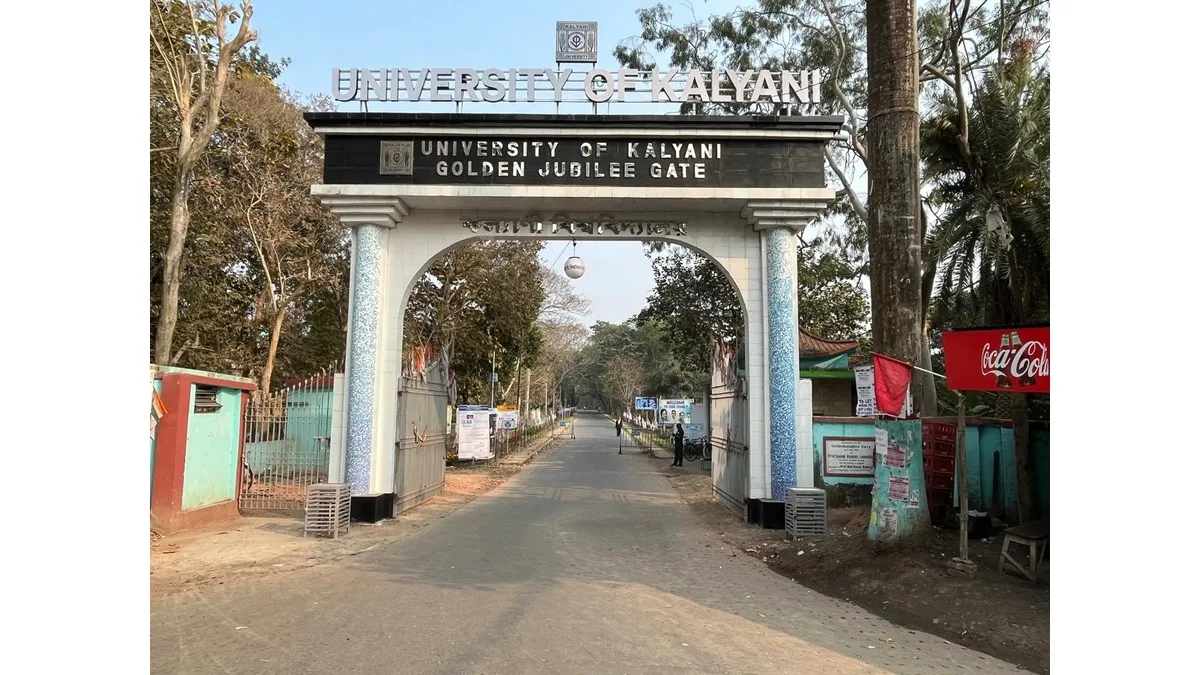
That gap is exactly what the Department of Folklore at Kalyani University is determined to close. In a detailed memorandum to the state government, the department’s teachers, researchers, and students have called for the formal introduction of ‘Folklore and Tribal Studies’ at every level of education — from secondary school to doctoral research.
Advertisement
Their plea is not just an academic demand. It is, in their words, “a cultural safeguard, an economic opportunity, and an act of justice for the communities whose traditions shaped Bengal’s identity.”
A global movement Bengal risks missing
Across continents, the study of folklore has evolved far beyond the romanticism of old folk tales. In the USA, Canada, Japan, Germany, China, Finland, England, Mexico, Estonia, and Australia, universities have long housed dedicated folklore departments, supported by robust research funding. UNESCO, recognising folklore as a vital part of intangible cultural heritage, has repeatedly urged governments to integrate it into formal education and policy-making.
Closer home, Bangladesh has made folklore a proud academic export. Several of its universities — including the University of Dhaka and Jatiya Kabi Kazi Nazrul Islam University — offer undergraduate and postgraduate programmes in folklore, often coupled with ethnology and cultural anthropology. Nepal, too, has moved in this direction.
India, though late to institutionalise folklore studies, is now witnessing what some scholars call a ‘folklore renaissance.’ Over 50 universities — among them Gauhati University, Tezpur University, North Eastern Hill University, the University of Mysore, Kannada University, Karnataka University, the Central University of Jharkhand, and the University of Hyderabad — offer structured courses. The establishment of the Karnataka Folklore University in 2011 remains a landmark moment.
“Folklore today is not nostalgia,” says Prof. Frankkoron, a visiting scholar from Boston University, USA. “It is a dynamic study of human creativity, communication, and resilience. It is as much about the future as it is about the past.”
Bengal’s cultural paradox
And yet, West Bengal — home to Baul ballads, Chhau dance, Patachitra scroll painting, Santhali myths, and a dozen other living folk forms — has failed to match its cultural prestige with academic action.
Calcutta University once offered a special paper on folklore under its Bengali department, a move hailed in the 1970s as a pioneering step. But that paper was quietly discontinued around two years ago.
Today, Kalyani University stands alone in offering a full-fledged Department of Folklore, with both a scientific and cultural approach to the discipline. Its programmes combine textual study with fieldwork, digital archiving, and policy-oriented research.
The state government has made some gestures — notably the establishment of the Folklore and Tribal Culture Centre at Kalikapur in South 24 Parganas, complete with a ‘Folklore Village’ — but here too, a controversy has arisen. According to faculty and students at Kalyani University, graduates trained in folklore have been bypassed for appointments at the centre, with positions going to candidates from unrelated disciplines.
“It is deeply discouraging,” says Prof. Sujay Mandol, Head of the Folklore Department at Kalyani University. “We have trained students with expertise in ethnography, heritage documentation, and cultural analysis — yet when jobs are created in our own field, they go to people who have never studied folklore formally.”
Why folklore studies matter
To many outside academia, folklore is still seen as quaint — a space for hobbyists and cultural activists rather than a rigorous field of study. But proponents argue that its relevance is broader and sharper than ever.
The Kalyani University memorandum lists ten key objectives for integrating Folklore and Tribal Studies into formal education:
Preservation and promotion of traditional knowledge through academic channels.
Understanding cultural diversity in rituals, practices, and artistic expression.
Ethnographic insights into the worldviews and social behaviours of indigenous communities.
Decoding communication patterns within folk societies, from proverbs to performance styles.
Raising public awareness about cultural heritage as a shared asset.
Assessing the functional value of folklore in contemporary development, tourism, and media.
Facilitating policy and development projects targeted at marginalised communities.
Establishing institutions such as archives, museums, and regional resource centres.
Expanding social science research to rural and tribal regions often left out of data-driven studies.
Creating employment opportunities in government, cultural institutions, NGOs, and the private sector.
These objectives align closely with UNESCO’s intangible heritage framework, but they also speak to Bengal’s pressing realities — from rural economic stagnation to the erosion of indigenous languages.
“Every folk form is a living textbook,” says MA student Srilekha Biswas. “If we don’t read them now, the pages will turn to dust.”
A roadmap for reform
The proposal from Kalyani University outlines a three-tier plan:
At the school level
Introduce folklore as a compulsory or optional subject in secondary (Madhyamik) education. Offer folklore and tribal studies as an arts stream subject in higher secondary.
At the college level
Introduce folklore as a major subject at the undergraduate level. Offer it as an honours subject with interdisciplinary electives — anthropology, history, linguistics, and development studies.
At the university level
Expand postgraduate offerings — MA, MPhil, PhD — beyond Kalyani University to other state universities. Integrate digital tools for archiving, performance documentation, and data analysis into the curriculum. Such integration, advocates say, would not only enrich academic diversity but also offer practical skills for careers in heritage management, publishing, documentary filmmaking, and cultural policy.
The stakes of delay
If Bengal moves slowly, it risks more than academic embarrassment. Folk forms, unlike static museum pieces, survive only in performance and practice. A generation’s disinterest can spell extinction.
Santhal Hul songs, which once carried the memory of rebellion, are now fading from villages as young performers migrate for work. The Baul tradition, inscribed by UNESCO as part of the world’s intangible heritage, faces commodification in commercial music circuits.
“Folklore without transmission is like a lamp without oil,” warns Dr Mandol. “Once the practice dies, revival becomes a matter of reconstruction, not continuity.”
Campus energy, cautious hope
On the Kalyani University campus, the movement has taken on a quietly determined tone. Students and teachers are gathering signatures, holding informal lecture series, and documenting their own fieldwork to share with policymakers.
A second-year MA student who himself hails from a tribal community in Jhargram sees the stakes in personal terms. “When I go home, I record stories from my grandmother,” he says. “If I don’t, nobody will. If this subject is taught in schools, maybe more children will feel proud of what their elders know.”
The department’s library has become a hub for both nostalgia and innovation. On one table, a group of undergraduates pores over field notes from a recent visit to Purulia’s Chhau dance troupes. At another, researchers are cataloguing Santhali folktales for a bilingual digital archive.
A question for the state
The proposal now lies with the state’s education authorities. Whether it will result in a policy shift remains uncertain, but the urgency is clear to those on the ground.
In their formal submission, the Kalyani University faculty wrote:
“If implemented, this initiative will allow West Bengal to reclaim its position in India’s folklore renaissance and set a new benchmark for cultural education. Without it, we risk turning our heritage into a museum exhibit rather than a living practice.”
For now, the lamp is lit on the Kalyani campus. Whether the flame spreads across the state’s classrooms will depend on whether policymakers see folklore not as a relic of the past, but as a resource for Bengal’s future.
Advertisement