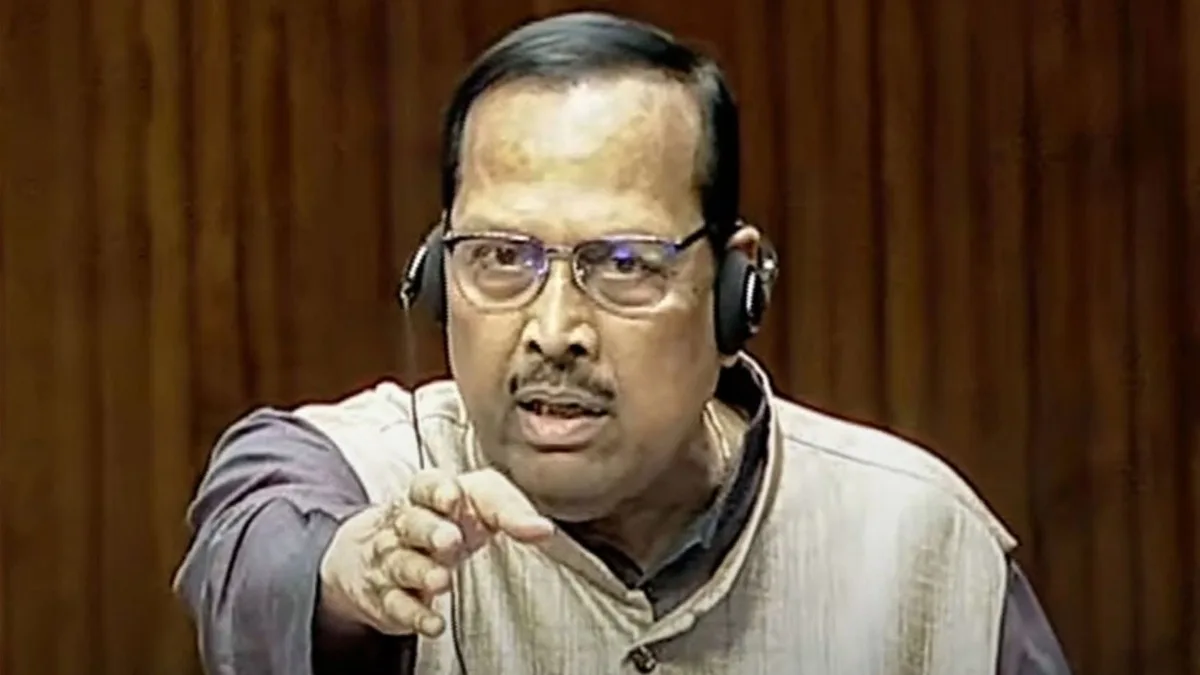
The appointment of Nitin Nabin as the national president of the Bharatiya Janata Party (BJP) marks a moment that is less dramatic than it appears, yet more revealing than it seems. In Indian politics, generational change is often mistaken for ideological renewal. In fact, the two rarely travel together. At 45, Mr Nabin represents a cohort shaped by liberalisation-era aspirations, expanding urban-rural mobility, and the transformation of politics from street mobilisation to system-driven organisation, one that operates comfortably in a political ecosystem driven by data, artificial intelligence and rapid communication.
His elevation, therefore, signals not novelty, but organisational confidence. Prime Minister Narendra Modi’s repeated assertion that he remains a “party worker” even after three terms at the helm of government is not merely symbolic humility. It is a reminder of how the party seeks to define itself ~ as an institution where authority is structured, transferable and larger than individual stature. This distinction matters because Indian political parties have often struggled with succession. Many have relied on charisma, lineage, or crisis to manage leadership change. The BJP, by contrast, continues to emphasise internal grooming and cadre legitimacy, projecting stability rather than transition anxiety. His rise also reflects a conscious organisational choice.
Advertisement
By elevating a leader without an independent national power base, the party reinforces central coherence, rewards organisational reliability, and ensures that authority flows from structure rather than personal charisma or regional mass following. Yet, youth here should not be confused with disruption. Mr Nabin does not represent a break from ideological direction. Instead, he embodies a managerial generation of politics ~ one focused on execution, message discipline and organisational coordination rather than ideological experimentation. Technology, in this framework, becomes an instrument rather than an idea. Artificial intelligence and digital outreach expand reach, but do not redefine political purpose.
The emphasis remains on continuity, not reinvention. The repeated invocation of tradition, culture and national identity further underlines this approach. Leadership may change, but the narrative framework remains intact. The generational shift is therefore tactical ~ aimed at energising party workers and preparing for sustained electoral engagement rather than signalling a philosophical pivot. For younger political entrants, the messaging is carefully calibrated. Politics is presented not as spectacle or shortcut, but as endurance ~ a marathon requiring patience, hierarchy, and long-term loyalty. This discourages impulsive ambition while reinforcing organisational discipline. At the same time, such stability carries its own challenge.
A generation raised entirely in the digital era may eventually demand politics that extends beyond symbolism and structure ~ seeking sharper accountability, governance outcomes, and economic mobility. For now, however, the leadership transition reflects confidence rather than uncertainty. The party appears less concerned with redefining itself than with proving that its political model can be reproduced across generations. In that sense, Mr Nabin’s elevation is not a reset, but a relay. The baton has changed hands, but the track ~ carefully laid over decades ~ remains the same.