In his much-celebrated book This land is our land, Indian-American writer Suketu Mehta offers advice to the immigrants in Europe and America. He says that when immigrants are asked “why are you here”, they should respond, “we are here because you were there.” Immigrants, mostly from Asia, Africa and Latin America have increasingly become what novelist Laila Lalami calls “conditional citizens.” Over the years, the US has tried various policies to deal with the flood of illegal migrants, particularly from Latin America. In 2019 President Trump and Mexican President Andres Manuel Lopez Obrador came to an agreement to keep non-Mexican asylum seekers remain in Mexico while their claims were adjudicated in US immigration courts.
The same year the United States signed “Safe Third Country Agreements” with Guatemala, Honduras, and El Salvador, requiring migrants on their way to the US to apply for protections in those countries first. It effectively banned most migrants arriving at the US border from requesting asylum.
Various US administrations have sought temporary protection status ‘neither documented nor undocumented’ for asylum seekers and immigrants; what sociologist Cecilia Menjívar calls “liminal legality.” The twilight status for the immigrants has been variously explained by experts as “precarious legality”, “differential inclusion”, “conditional belonging” and “earned citizenship.” Conditional rights and belonging are at the heart of what citizenship means for many minorities today in their own home countries. Are discourses around “good” and “bad” citizens, or immigrants any different from what and how colonialism and settler colonialism categorised indigenous peoples under restrictive conditions?
The colonisers saw people as “good nobles” and “bad savages”. Palestinian-American writer Edward Said has written along similar lines saying how “good Arabs” were the ones who did as they were told and bad Arabs were those who did not, and were therefore terrorists. Many see the targeting of the Mexican and Central American deportees by the Trump administration as a racial project and a gendered racial removal programme. Mexican and Central American immigrants also carry the burden of stigmatization. The stigmatization of immigrant groups is, after all, socially constructed which is based on stereotypes and which intersects with racism and MAGA politics in the US.
Structural racism is embedded in US immigration laws which have institutionalized practices and values that categorise certain immigrant groups like Mexicans, Latinos, and Chinese, as “illegal.” Menjivar explains the global expansion of what she calls “crim migration” which finds reflection in both political discourses and media narratives today. Fortress Europe too is witnessing a large influx of immigrants and refugees who too are affected by regimes of conditional inclusion and citizenship. As Nikesh Shukla and Chimene Suleyman argue in their book, The Good Immigrant, a good citizen must contribute economically through hard work. Otherwise, they are “job stealers, benefit scroungers, girlfriend thieves, and criminals.” Only when they “win an Olympic medal, treat you at your local hospital, or rescue a child from the side of a building do they become good.”
Immigrants have to negotiate with “precarious legality and differential inclusion in their new homes. Europe’s history of slavery and colonialism haunts it. Of course, there is occasional talk of the “new deal” and “partnership of equals.” However, given the enormity of the crisis in Africa, from where the largest number of refugees seek shelter, such policies, even if implemented in right earnest, can at best scratch the surface. Noises have been made by some EU leaders that they need to confront their colonial past. French President Emmanuel Macron said on one occasion that France “must look history in the face” and recognise the share of suffering that it inflicted on the Rwandan people during the 1994 Rwandan genocide. Spanish Prime Minister Felipe Gonzalez has extolled the contribution of migrants to Spain’s economy, social system and its wealth and development.
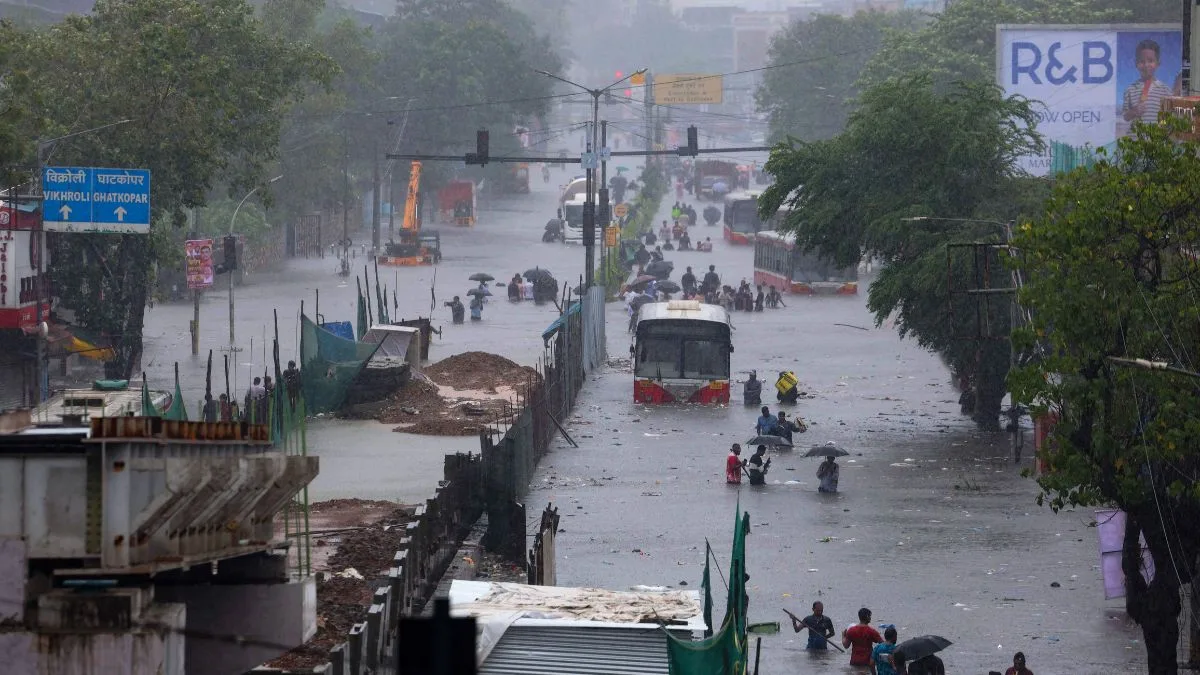
The rise of the far-right in Europe is due to its vilification campaign against migrants. Immigrants are seen as threats to European peace, to European security, and also to European civilization. Climate migrants pose added problems. Water scarcity, forest fires, soil infertility, land degradation and floods, combined with other socio-economic factors like poverty and inequality will further aggravate the situation. Exporting borders that some developed countries have resorted to will come to naught when a sizable number of people flood international borders.
The US under Trump may try to build walls and conquer others’ territories, but that will be counter-productive. According to the latest survey by Pew Research, construction of a wall on the border with Mexico is still popular. Now fifty-six per cent of Americans favor expanding the wall along the Mexican border which is up from 46 per cent in 2019. Canada long sold itself as a beacon for immigrants, who were widely viewed as key to economic growth in a vast nation with a small and rapidly aging workforce. But that sentiment is changing.
(The writer comments on global affairs)
Advertisement