Securing our Borders ~ II
Special emphasis has been laid on the development of infrastructure in the difficult terrains in Arunachal Pradesh, Ladakh, and parts of Uttarakhand bordering China.
People in North-east India still remember the aggression of 1962 from Communist China, which claimed a major portion of Arunachal Pradesh as Southern Tibet.




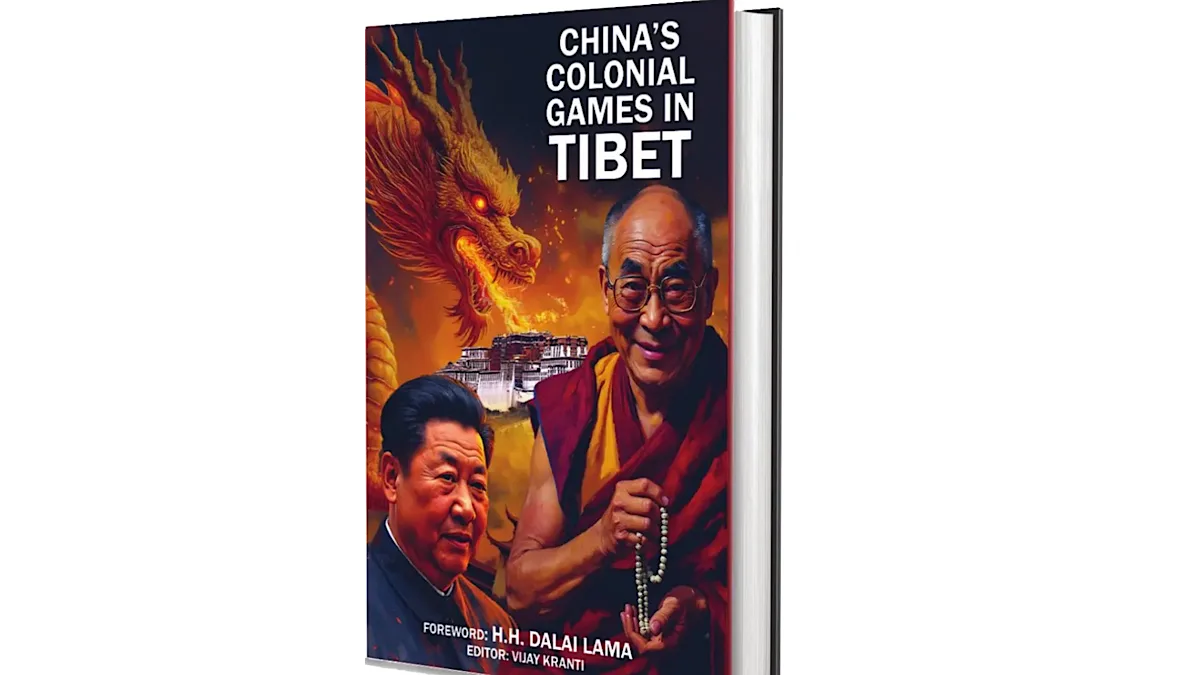
Photo:SNS
People in North-east India still remember the aggression of 1962 from Communist China, which claimed a major portion of Arunachal Pradesh as Southern Tibet. Even today, a sizeable section of residents in the region do not perceive China as a genuine neighbour but as an invader that occupied the sacred land of Tibet seven decades ago and thereby moved closer to Bharat.
The Union government in New Delhi may not subscribe to the idea of an independent Tibet ruled by the Dalai Lama from the Potala Palace, but millions of Indians continue to believe that the Tibetan plateau will someday emerge as a sovereign land, for which hundreds of thousands of Tibetans across the world continue their struggle. As the Tibetan Buddhist population remains prepared for supreme sacrifices, the Communist regime in Beijing shows little willingness to relinquish control over Tibetan resources and appears determined to suppress any movement that challenges its policies and practices. A new book, yet to be released, reiterates the spirit of Tibetan aspirations while denouncing what it describes as Beijing’s long-standing policies in Tibet.
Advertisement
Titled China’s Colonial Games in Tibet, the volume is edited by veteran journalist and author Vijay Kranti and published by VK Media Group for the Centre for Himalayan Asia Studies and Engagement (CHASE). The hardbound, 486-page book, priced at Rs 2,500 and USD 40, comprises nearly 60 essays by 39 leading experts on Tibet and China from different parts of the world. It seeks to provide comprehensive insights for scholars, researchers, diplomats, policymakers, and those engaged in security, strategy, and defence studies. The book is a collection of articles and presentations selected from over 30 international webinars organised by the New Delhi-based think tank CHASE between 2020 and 2023 on issues relating to Tibet and China.
Advertisement
The essays cover themes surrounding what contributors describe as Beijing’s colonial practices not only in Tibet but also in territories such as East Turkestan, Southern Mongolia, Hong Kong, and Manchuria. Vijay Kranti, who openly acknowledges his admiration for the 14th Dalai Lama and support from the Tibetan Youth Congress (TYC) while organising these interactions, presents the work as an effort to amplify underrepresented voices. The noted Tibetologist and photographer stated that this volume is the first in a planned series examining what contributors identify as China’s colonial conduct in various regions.
In his foreword, the Dalai Lama writes that Tibet, situated on the Roof of the World, remains the source of many of Asia’s great rivers. “Therefore, protecting the environment of the Tibetan plateau is of the utmost importance. The plateau plays a crucial role in the global climate system, so much so that scientists have called it the Third Pole. The rivers that flow from Tibet sustain the lives of over a billion people across Asia,” stated the spiritual leader while expressing concern over global environmental challenges. The Dalai Lama, who has authored or co-authored more than 100 books, added: “I have made repeated efforts to safeguard my homeland and my people.
Because our cause is grounded in truth and justice, I remain hopeful that we will achieve a peaceful and mutually acceptable resolution to our long-standing struggle.” He expressed hope that the book would raise greater awareness about Tibet and ongoing efforts to find a lasting solution through dialogue conducted in a spirit of understanding and mutual respect.
The volume includes contributions from several well-known scholars and commentators including Bhuchung Tsering, Chin Jin, Claude Arpi, Dechen Palmo, Eleanor Byrne-Rosengren, Enghebatu Togochog, Enver Tohti, Ethan Gutmann, Gabriel Lafitte, Geshe Lhakdor, Ilshat Hassan Kokbore, Jayadeva Ranade, Jennifer Zeng, John Jones, Kai Mueller, Karma Tenzin, Lhadon Tethong, Lhagyari Namgyal Dolkar, Marco Respinti, Martin A. Mills, Mei Lin Pan, Miek Boltjes, Milap Chand Sharma, Youdon Aukatsang, Uwe Meya, Thubten Samphel, Thinley Chukki, and Tenzin Pasang.
Among the contributors are Professor Robert Destro, former Assistant Secretary of State in the first administration of President Donald Trump, Professor Samdhong Rinpoche, former elected head of the Central Tibetan Administration (CTA), and Penpa Tsering, elected President of the CTA. Contributors broadly argue that Tibetans inside and outside Tibet deserve political recognition and a pathway to reduce prolonged uncertainty and displacement. Born as Lhamo Dhondup to a farming family in north-eastern Tibet on 6 July 1935, he was recognised as the reincarnation of the 13th Dalai Lama and installed as the 14th Dalai Lama, Tenzin Gyatso, in Lhasa’s Potala Palace in 1940.
Following the Chinese entry into Tibet in 1949 and the claim that Tibet was part of China, he assumed political authority in 1950. He attempted negotiations with Beijing through direct visits and diplomatic outreach, but with limited success. As tensions escalated and an uprising spread from Lhasa to other parts of Tibet, he left his homeland and entered India in 1959. According to widely cited accounts, tens of thousands of Tibetans lost their lives during the upheaval, and Tibetan institutions in Lhasa were subsequently dismantled. On 31 March 1959, the Dalai Lama and his associates crossed into India through Khenzimane Pass in present-day Arunachal Pradesh.
They were received by Assam Rifles personnel at Chuthangmu, where his guards surrendered their arms. The Dalai Lama also handed over his personal weapons before being escorted to Tezpur via Kameng, Tawang, and Bomdila. He publicly announced his departure from Tibet during a press conference in Tezpur on 18 April 1959. It is estimated that more than 85,000 Tibetans entered India following his escape. Later, he established the Central Tibetan Administration in Himachal Pradesh and remained its political and spiritual head until stepping down from political responsibilities in 2011.
Currently, he continues to serve as the highest religious authority of Tibetan Buddhism while political affairs are managed by democratically elected representatives. Beijing, however, continues to regard him as a separatist because of his advocacy for greater autonomy for Tibetans. Through his “Middle Way Approach”, the Dalai Lama has argued for accommodation within Chinese sovereignty while seeking protection for Tibetan linguistic and cultural identity. His commitment to non-violence despite prolonged conflict earned him the Nobel Peace Prize in 1989 along with numerous international recognitions. Meanwhile, tensions between New Delhi and Beijing culminated in armed confrontation during the 1960s, when the People’s Liberation Army advanced into areas bordering Assam after crossing the then North-East Frontier Agency, now Arunachal Pradesh.
Speaking to this writer from New Delhi, Vijay Kranti maintained that the book seeks to present comprehensive account of the major challenges faced by Tibetans under China’s Communist rule. He argued that Beijing has systematically weakened Tibetan educational institutions and subjected communities to relocation policies and political re-education. Drawing on more than 50 years in journalism, Kranti contended that Beijing has historically shown limited willingness to engage meaningfully with Tibetan leadership. He asserted that the Chinese Communist Party continues to govern Tibet through extensive surveillance and pre-emptive suppression of dissent and that Tibetans must remain vigilant while assessing international support through the lens of their national interests.
(THE WRITER IS A GUWAHATI-BASED SPECIAL REPRESENTATIVE OF THE STATESMAN)
Advertisement