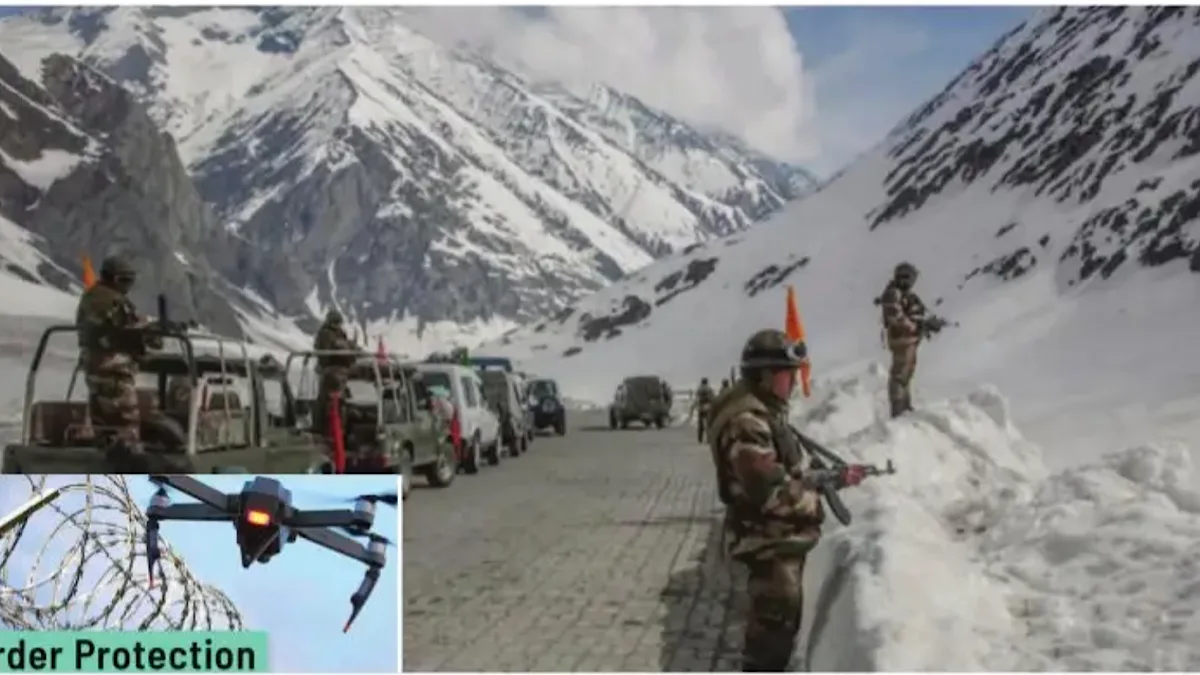
Special emphasis has been laid on the development of infrastructure in the difficult terrains in Arunachal Pradesh, Ladakh, and parts of Uttarakhand bordering China. The main purpose of focusing on development of border areas is to reverse the trend of migration of border populations from these difficult areas to comparatively better liveable areas of the respective State.
Thinning of population in border areas because of fewer opportunities for the local populace, lack of basic infrastructure facilities, and tough living conditions, especially during winters, provide an opportunity to the Chinese army to occupy uninhabited areas. In the recent past, there have been quite a few instances of transgressions and standoffs resulting in border tensions and diplomatic crises. ICBR 1(Indo China Border Roads), which was initiated in 2006, has so far seen the completion of roads up to 804 kms. Some projects undertaken in this phase are in progress. In 2018, ICBR 2 came into being with a proposal of 48 roads of 1080 kms.
Advertisement
The government is very keen on the comprehensive infrastructural development of border areas on the Indo China border at a fast pace. Special focus is on dualpurpose infrastructure viz., landing and take-off facilities on the roads itself, helipads on road stretches, shelters, simultaneous OFC laying etc. Both Arunachal Pradesh and Ladakh have tremendous tourist potential if development takes place in the right earnest and at the right pace. Tourism can emerge as a strong industry in these regions. Apart from scenic beauty, the flora and fauna of Arunachal Pradesh can also give a fillip to several connected economic activities in the state, which may not only result in the development of the area, but also attract large investments.
Recent improvement in air connectivity and impending rail connectivity will go a long way in giving a boost to the development of the area. Similarly, apart from infrastructural developments in Ladakh, other industrial and economic activities in the region will help stop migration of the local population from the hard areas of Ladakh. India’s strategic considerations in the Himalayan region revolve around maintaining its territorial integrity, preserving its influence, and countering potential threats from its neighbours. Socio-economic development of border populations is central to India’s security strategy.
The Border Area Development Programme (BADP) and the Vibrant Villages Programme provide roads, healthcare, schools, agriculture support, financial inclusion, and skills training, strengthening communities and making them less vulnerable to cross-border influence. Village Defence Committees (VDCs) involve locals in border guarding, with trained volunteers reporting illegal activities and collaborating with security forces. Recent geopolitical developments have impacted the security scenario in our neighbourhood and require strategic recalibration.
The Pakistan army chief’s bonhomie with President Donald Trump and the American set up, and his proximity with Bangladesh, Turkey and other Islamist countries is disturbing, and should be viewed seriously. In the recent past, a top Bangladeshi army officer, Lt. Gen Karm-ul-Hassan, met the Pakistan Army chief, and discussed regional security dynamics. Both emphasized the importance and relevance of a strong defense partnership in the current external scenario. In the same month Pakistan’s ISI team under the leadership of its chief Lt. Gen Asim Malik visited Dhaka with the purpose of creating an information sharing network between the intelligence agencies of the two countries.
It was the first time in decades that the chief of ISI had visited Bangladesh. He along with his team and Bangladeshi officers had visited Rangpur district, which is close to India’s Chicken’s Neck, and the sensitive Chittagong hill tracts. These visits, and developing collaboration with the Bangladeshi security set up, will adversely impact peace in the northeast, especially in Assam, West Bengal, Meghalaya, and Manipur. Drug trafficking and drug abuse have been the bane of the North-East since long. There has been a constant flow of drugs, especially heroin and Methamphetamine from Myanmar, through the porous border, and the entire region is very badly affected.
Drug lords sitting across, and within the North-East, use the narco-money for promoting their self-interests. Keeping the North-East on the boil is one of their prime motives, and to achieve this, they indulge in the business of providing logistics, arms and ammunition to insurgent and separatist groups in the North-East. Since ISI has been using narco money for aiding, abetting, and promoting terror in J&K, and Punjab, over all these years, it will definitely use the drug lords sitting in Myanmar, with links on our side in the North-East, to promote insurgents and separatists in the region.
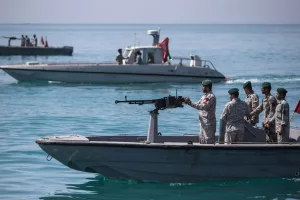
It has taken long years to effectively tackle these anti-national forces, and it is only recently with the active support of the central government, especially the MHA, that peace accords have been signed in Assam, with different separatist groups. Pakistan will target upsetting this peace momentum in the North-East to create a second front. The joint naval exercise “Aman” with Pakistan and other countries in Arabian Sea by Bangladesh after 20 years, goes to show the drift away from India, and should be a cause of concern. Bangladeshi Naval Chief Admiral Mohammad Hasan, while addressing the Aman Dialogue 2025 significantly remarked, “Land divides but sea unites”.
This statement should be viewed in the context of a statement made by the Pakistani army earlier which alluded to the two nations as brothers who should “remain resilient against external influences”. This is significant as it indicates a notable and important shift in bilateral relations of these two countries. Pakistan has also promised to train the Bangladesh army, and Dhaka has also shown keen interest in upgrading its air assets by way of inducting JF-17 Thunder fighter jets from Pakistan, which are jointly developed by China and Pakistan.
It also symbolizes a potential tripartite defense partnership between China, Pakistan, and Bangladesh. This keenness of Bangladesh to partner with Pakistan in defense cooperation has a potential threat embedded in it to India’s internal as well as external security scenario. It will place Pakistan closer to India’s eastern borders with Bangladesh (Northeast and West Bengal) and the strategically important Bay of Bengal. ISI, along with the Bangladeshi intelligence set up, will not leave any stone unturned to embarrass India by fomenting trouble in this region, and may go to the extent of launching serious terrorist operations, like it did in Pulwama and Pahalgam.
Much before Pahalgam, Pakistanis had been hobnobbing with the Bangladeshi establishment, leaving us to wonder if Gen Asif Munir’s statement of hitting India from the East, and the earlier statement of Major General (Retd) AM Fazlur Rahman, a former Bangladesh army officer, “if India attacks Pakistan, Bangladesh should occupy the seven states of Northeastern India….I think it is necessary to start discussions with China on a joint military arrangement in this regard,” are part of a joint strategy. All these statements given by different persons at different times do indicate a sinister design, and we must be prepared with not only pre-emptive moves, but also with a suitable and effective border security plan to counter this. The recent declaration by the Home minister is an indication towards that.
(The writer, a retired IPS officer, has served in various capacities including as Commissioner of Delhi Police, DG-BSF, DG-NCB, DG-BCAS and Special Director, CBI)