Expressing serious concern over the West Asia crisis, India on Thursday stressed that BRICS nations must work together to shape a more stable, equitable and inclusive international order, adding that “stability cannot be selective, and peace cannot be piecemeal”.
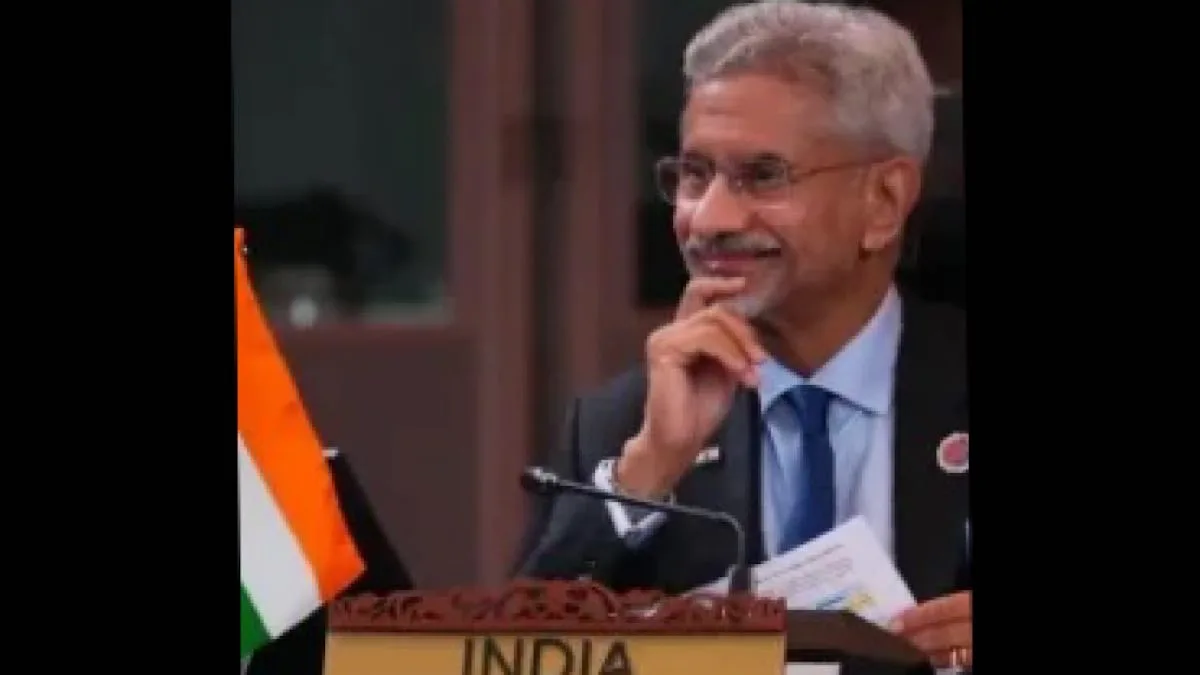
India is hosting the two-day BRICS Foreign Ministers Meeting, which commenced on Thursday in the national capital. The meeting is being chaired by External Affairs Minister Dr S Jaishankar. Several foreign ministers, including Iranian Foreign Minister Abbas Araghchi, Russian Foreign Minister Sergei Lavrov, Indonesian Foreign Minister Sugiono and senior representatives from BRICS nations and partner countries, are attending the Meeting.
Advertisement
Delivering India’s national statement at BRICS Foreign Ministers’ Meeting : Global and Regional Issues, EAM S Jaishankar said, “The conflict in West Asia merits particular attention. Continuing tensions, risks to maritime traffic, and disruptions to energy infrastructure highlight the fragility of the situation.”
He stated that safe and unimpeded maritime flows through international waterways, including the Strait of Hormuz and Red Sea, remain vital for global economic well-being.
The EAM further said the wider region also gives rise to serious concern.
“The conflict in Gaza has grave humanitarian implications. A sustained ceasefire, humanitarian access, and a credible pathway towards a durable and peaceful resolution remain essential. India supports a two – state solution where the Palestine issue is concerned,” he stated.
He mentioned that other situations also require attention.
“Lebanon and Syria face continuing challenges. The conflict in Sudan imposes a heavy human cost. Yemen presents humanitarian concerns and maritime risks, while stability in Libya remains important. These developments require sustained international engagement and coordinated diplomatic efforts,” the EAM remarked.
“Taken together, they underline a clear reality: stability cannot be selective, and peace cannot be piecemeal. It is essential to uphold international law, protect civilians, and avoid targeting public infrastructure,” Jaishankar stated.
“India stands ready to contribute constructively to de-escalation efforts and to support initiatives aimed at restoring stability,” he said.
The EAM stated that India reaffirms its strong commitment to the purposes and principles of the UN Charter. “Respect for sovereignty and territorial integrity must remain the foundation of international relations. Dialogue and diplomacy are the only sustainable means of resolving conflicts,” he said.
The EAM further said that terrorism remains a continuing threat, adding that there is no justification for terrorism in any form. “Cross-border terrorism violates the basic principles of international relations. Zero tolerance must remain an uncompromising and universal norm,” he said.
Delivering the statement, the EAM said the world faces unprecedented geopolitical and economic uncertainty, adding that conflicts, climate events and the Covid pandemic have been key contributory factors. “There is also an overarching trend reflecting the rebalancing and democratization of the global order. Not all nations are able to come to terms with it. Cumulatively, these developments are weakening growth prospects and deepening vulnerabilities. What we are witnessing is not a series of isolated events, but a convergence of challenges testing the resilience of multilateral systems,” Jaishankar remarked.
The EAM said technological advancements are reshaping the global landscape. “While they offer opportunities, they also raise concerns relating to trust, transparency, and equitable access. Bridging the digital divide must remain a shared priority,” he said.
He also stated that climate change remains a defining challenge. Climate action must go hand in hand with climate justice, requiring credible commitments, adequate financing, and accessible support. “Even as challenges mount, the multilateral system unfortunately weakens. The state of the United Nations, which is at its core, is particularly worrisome. With each passing day, the case for reformed multilateralism only gets stronger. This includes the reform of the UN Security Council in both the permanent and non-permanent categories. Continued delay comes at a high cost,” Jaishankar said.
“The message from our times is clear: cooperation is essential, dialogue is necessary, and reform is overdue. We must work together to shape a more stable, equitable, and inclusive international order,” he said.
India remains committed to engaging constructively with all partners in advancing these objectives, the EAM said.