India’s growing reservoir crisis is no longer confined to declining storage statistics or seasonal drought warnings. Scientists and river experts now argue that the country is witnessing a deeper ecological transformation involving shrinking river flows, accelerating groundwater depletion, se diment imbalance, increasing drought frequency and mounting climate vulnerability across major river basins. At the centre of this unfolding crisis lies a difficult reality: India’s hydrological systems are under simultaneous pressure from climate change, unplanned development, excessive extraction and ecological degradation.
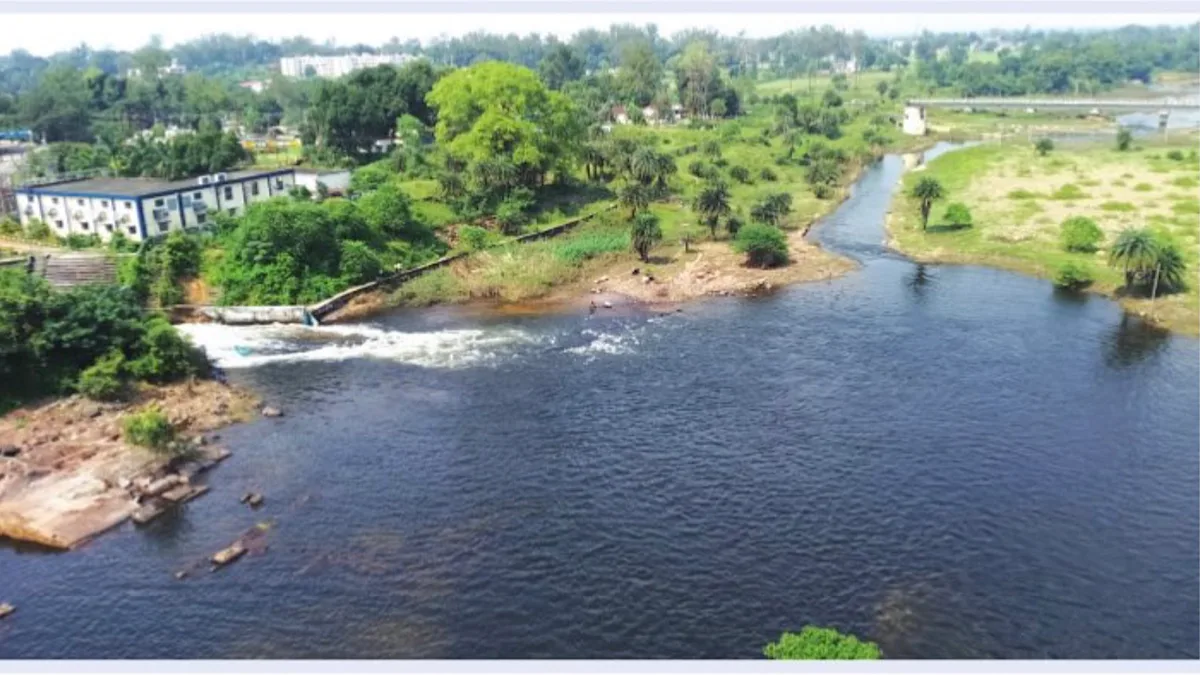
Reservoirs, rivers and aquifers that once functioned as interconnected components of a stable water cycle are increasingly losing their natural resilience. Few places illustrate this crisis more clearly than the Kangsabati Reservoir at Mukutmanipur in West Bengal. Kangsabati: A reservoir losing its capacity Constructed across the Kangsabati River, the Mukutmanipur Reservoir has long served as one of western Bengal’s most important irrigation lifelines. The reservoir supports agricultural activities across large parts of Bankura, Paschim Medinipur and adjoining districts where rainfall variability and drought conditions are common.
Advertisement
The Kangsabati catchment area up to the reservoir extends over nearly 3,625 square kilometres. The dam itself stretches more than 11 kilometres in length, including dyke and hillock sections, and rises over 41 metres above the river bed. For decades, it transformed the agricultural economy of western Bengal by stabilising irrigation supply in drought-prone lateritic regions. Today, however, the reservoir is confronting severe ecological stress. Recent assessments indicate that water storage in the Kangsabati Reservoir has declined to nearly 31.5 per cent of its normal capacity. Scientists attribute the decline not only to reduced rainfall and rising water demand but also to extensive siltation within the reservoir basin.
Studies reveal that the sediments accumulating inside the reservoir mainly consist of fine yellowish-brown loamy clay containing 23.7 per cent sand, 39.5 per cent silt and 36.8 per cent clay. These fine sediments are easily transported into the reservoir during heavy rainfall events from erosion-prone upper catchments. Environmental geographer Dr. Pravat Kumar Shit explained that the upper catchment areas surrounding the reservoir are dominated by barren lateritic landscapes highly vulnerable to erosion. “Reservoirs located in sparsely vegetated catchments receive higher sediment inflow because exposed soil is extremely susceptible to erosion,” he said.
“In some highly erosion-prone areas, sediment export rates have reached nearly 140 tonnes per hectare annually.” This enormous sediment load gradually settles inside the reservoir, reducing its effective storage capacity year after year. As the reservoir becomes shallower, its ability to store monsoon runoff declines, weakening irrigation reliability during dry periods. The ecological cost of erosion The Kangsabati crisis highlights the close relationship between land degradation and water insecurity. In many parts of India, deforestation, lateritic exposure, mining activities and unplanned land-use change have accelerated soil erosion across upper catchments.
During intense rainfall events, large quantities of sediment are washed into rivers and reservoirs. Over time, reservoirs lose storage depth, river channels become unstable and downstream ecosystems suffer from altered sediment dynamics. Experts note that catchment degradation is particularly dangerous under changing climatic conditions. As rainfall becomes more intense and irregular, erosion rates rise sharply in vulnerable landscapes. Dr. Shit stressed that integrated watershed management is now essential for protecting reservoirs like Kangsabati. “Afforestation, vegetation restoration and proper catchment treatment can significantly reduce soil erosion and sediment inflow,” he observed. “Increasing vegetation cover stabilises fragile lateritic soil, reduces runoff velocity and improves long-term reservoir sustainability.”
Such ecological interventions are increasingly being viewed as critical climate adaptation strategies rather than merely environmental conservation measures. Drought frequency rising across India Scientific studies now indicate that India’s major river basins are experiencing increasing drought frequency under changing climatic conditions. Between 1951 and 2025, drought frequency rose substantially across multiple basins including the Indus, Ganga, Godavari, Mahanadi, Narmada, Pennar, Subarnarekha and Brahmaputra systems. The Indus Basin recorded an increase in drought frequency from 16.24 to 19.50, while the Mahi Basin increased from 16.29 to 18.67. Researchers believe that rising temperatures, changing rainfall distribution and declining groundwater recharge are collectively altering the hydrological behaviour of Indian river systems.
The implications are enormous because India’s major river basins support vast populations dependent on agriculture, fisheries, industries and domestic water supply. The Ganga Basin alone sustains nearly 483.5 million people. The Godavari Basin supports over 71 million inhabitants, while the Damodar Basin supports more than 30 million. In highly stressed basins such as the Pennar, water scarcity conditions are already approaching critical levels. Experts warn that increasing drought frequency does not necessarily mean complete absence of rainfall. Rather, it reflects declining hydrological reliability — where rainfall becomes more erratic, groundwater recharge weakens and river flows become increasingly unstable.
ENSO and climate variability Climate scientists are also closely monitoring the influence of the El Niño–Southern Oscillation on India’s water systems. Research indicates that El Niño years generally reduce groundwater storage and reservoir replenishment because weaker monsoon rainfall limits recharge. Conversely, La Niña periods often improve water availability through enhanced precipitation. However, the relationship is becoming increasingly complex. The Ganga Basin, for instance, continued to experience groundwater decline between 2003 and 2009 despite La Niña events occurring during 2006 and 2008. The sharpest depletion occurred during the strong El Niño phase of 2009–10.
After 2010, groundwater conditions temporarily improved during the powerful La Niña event of 2010–11. Scientists argue that these fluctuations demonstrate how human activities are increasingly overriding natural climatic cycles. Excessive groundwater extraction for irrigation, expanding urban demand and industrial consumption are now exerting pressure on aquifers even during favourable rainfall years. This indicates that climate variability alone cannot explain India’s water crisis. Human-induced hydrological stress has become equally significant.
Dams and the sediment crisis River experts are increasingly concerned that large dams and reservoirs are fundamentally altering the natural sediment dynamics of Indian rivers. Under natural conditions, rivers transport enormous quantities of sediment from upper catchments toward floodplains and coastal deltas. This sediment sustains fertile agricultural land, maintains river morphology and supports delta ecosystems. However, reservoirs trap large portions of this sediment upstream. River expert Dr. Biswajit Bera of Sidho-Kanho-Birsha University warned that dams constructed across Himalayan and peninsular river systems are causing both upstream siltation and downstream sediment starvation. “Dams across the Himalayan and South Indian rivers invite large-scale siltation upstream while reducing sediment supply downstream,” he explained.
“This is especially dangerous for the Ganga-Brahmaputra-Meghna system, which is among the world’s largest sediment-carrying river systems.” According to him, reduced sediment flow threatens the long-term stability of the Bengal delta and the Sundarbans. Without sufficient sediment deposition, deltaic regions gradually sink and shrink. Simultaneously, reduced freshwater discharge allows seawater intrusion to penetrate further inland during dry seasons, damaging freshwater ecosystems and agricultural land. Scientists warn that such processes could intensify coastal erosion, salinity intrusion and displacement in vulnerable deltaic regions over coming decades.
The politics of water scarcity As India’s hydrological systems become more stressed, water is increasingly emerging as a political and geopolitical issue. Interstate disputes over river sharing, re ser voir release sche dules and groundwater extraction are becoming more frequent. Debates over river interlinking, dam construction and hydropower projects are also intensifying under conditions of increasing scarcity. Transboundary tensions are particularly significant in the Ganga-BrahmaputraMeghna basin shared by China, India and Bangladesh. Experts fear that large upstream interventions combined with climate-driven hydrological instability may complicate future regional water relations.
Within India, rapidly growing cities are also placing enormous pressure on freshwater systems. Urban expansion, industrial demand and groundwater extraction are increasingly competing with agricultural requirements in several river basins. Hydrologists note that India’s future water conflicts may not arise solely from absolute scarcity but from unequal access, ecological degradation and competing developmental priorities. Water security in an age of climate change The deepening reservoir crisis has therefore become a symbol of a much broader environmental transition taking place across India. Water is no longer merely a developmental resource.
It is now central to questions of food security, energy production, ecological stability, climate resilience and economic sustainability. Experts argue that future water security will depend not only on building more infrastructure but on restoring ecological balance within river basins and catchments. Rainwater harvesting, groundwater recharge, watershed restoration, afforestation, wetland conservation and climate-resilient water governance are increasingly viewed as essential long-term strategies. Traditional community-based conservation systems are also regaining importance in several regions as local populations attempt to adapt to increasing water stress.
Scientists caution that the coming decades may witness intensified hydrological instability across South Asia due to climate change. Rising temperatures, erratic monsoon behaviour, glacier retreat and extreme weather events are expected to place additional pressure on already stressed freshwater systems. India’s shrinking reservoirs therefore represent far more than a temporary summer phenomenon. They are visible indicators of a deeper ecological imbalance emerging across rivers, aquifers and landscapes under the combined pressure of climate change and human intervention. As the country awaits the monsoon, the rapidly declining water levels across reservoirs and river basins stand as a stark reminder that India’s future may increasingly depend on how effectively it can restore and protect the fragile hydrological systems upon which millions of lives depend.
(The writer is a senior staff reporter with The Statesman)