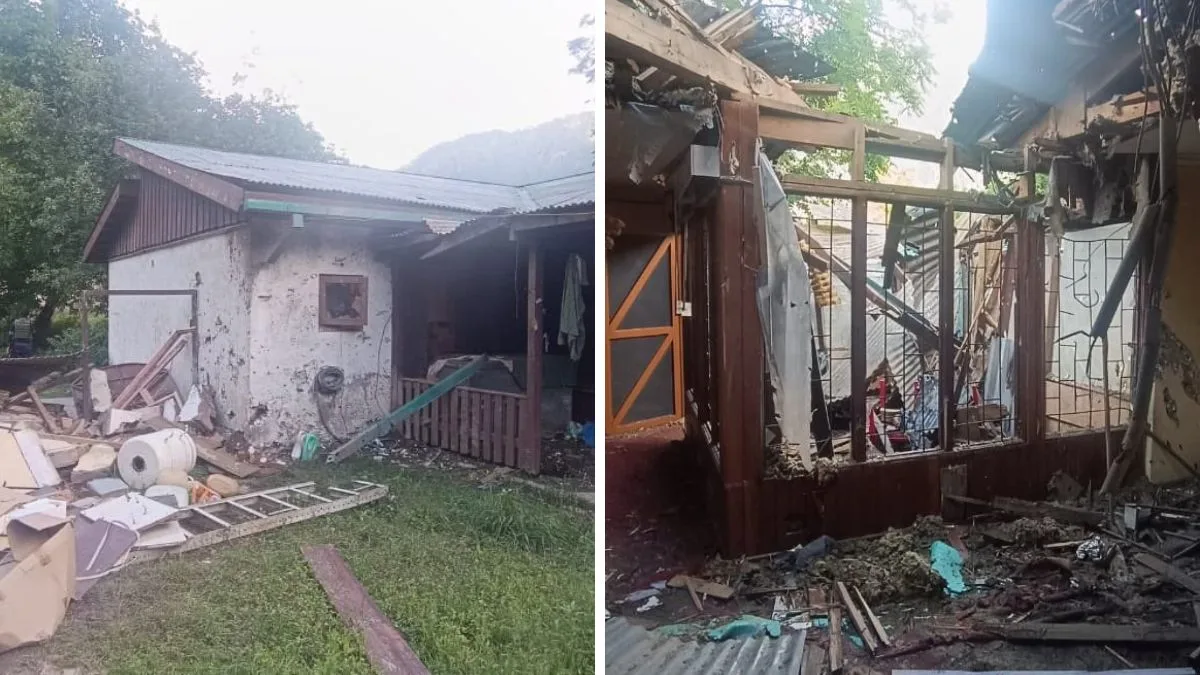
Months after Operation Sindoor, new details have emerged showing that Pakistani artillery fire had directly threatened the Uri Hydro Electric Power Projects (UHEP-I and II) during the May exchange along the Line of Control. It has now come to light that the Central Industrial Security Force (CISF) quietly thwarted what could have been a serious strike on the hydropower complex, ensuring the installation and nearby civilian areas remained unharmed.
The disclosure comes as the CISF on Tuesday formally recognised 19 personnel with the Director General’s Disc for their actions that night.
Advertisement
According to officials, the CISF teams deployed at the NHPC-run projects were positioned just eight to ten kilometres from the LoC when Pakistani shelling intensified after India’s retaliatory strikes on terror infrastructure across the border on the night of May 6–7. The hydropower installations and adjoining residential zones came under immediate threat.
Despite the escalation, the CISF says its teams initiated rapid protective measures, guided by Commandant Ravi Yadav, Deputy Commandant Manohar Singh, and Assistant Commandant Subhash Kumar. Personnel assessed shell trajectories in real time, reinforced bunkers, and began relocating families and staff from vulnerable pockets into secure shelters.
Door-to-door evacuation amid continuing fire
Officials said the personnel conducted door-to-door evacuation of NHPC staff, women, children and local residents while rounds continued to land close to the housing clusters. Their actions ensured the safe movement of around 250 civilians, with zero casualties.
Throughout the most volatile phases, CISF troops maintained communication lines through POLNET and satellite networks, provided emergency assistance, and safeguarded armoury stores by redistributing weapons to prevent potential damage. The force also neutralised hostile drones that appeared to be targeting the installations.
Critical infrastructure stayed intact
Both hydropower stations, UHEP-I and UHEP-II, remained fully secure, with the CISF saying the “integrity” of critical national assets was preserved because of the alertness of the deployed units.
Those recognised with the DG’s Disc include personnel from both Uri installations: officers Ravi Yadav, Manohar Singh, Subhash Kumar, Inspector Deepak Kumar Jha, SIs Anil Kumar and Deepak Kumar, ASIs Rajeev Kumar and Sukhdev Singh, and head constables Manoj Kumar Sharma, Ram Lal and Gurjit Singh, among others.
Force leadership acknowledges delayed revelation
CISF Director General Praveer Ranjan, who conferred the awards, said the personnel had “upheld the highest traditions of the force, displaying rare courage under fire and unwavering commitment to national security”. He added that their actions are an example of the CISF motto: Protection and Security.
Officials noted that the details of the Uri incident did not surface immediately after Operation Sindoor due to operational sensitivities along the LoC, and were shared formally only after the commendation process was completed.
Residents and NHPC authorities have also expressed appreciation for the CISF’s conduct, which prevented any civilian or infrastructural loss during the cross-border shelling.
The CISF, raised in 1969, is tasked with securing the country’s strategic infrastructure — including airports, nuclear facilities, metro systems, refineries, ports and hydropower stations. The force now has a sanctioned strength of 2.20 lakh personnel.