Meghalaya Chief Minister Conrad K Sangma on Tuesday announced that the state government has earmarked Rs 240 crore for the implementation of Floriculture Mission 1.0 over the next three years.
Launched in March 2024, the mission is designed to transform Meghalaya into a floriculture hub of the Northeast and the country.
Advertisement
With a focus on climate-resilient and high-value farming, the scheme is expected to benefit more than 3,000 farmers across the state.
Each beneficiary will receive a Rs 7 lakh subsidy package covering inputs, infrastructure, and training.
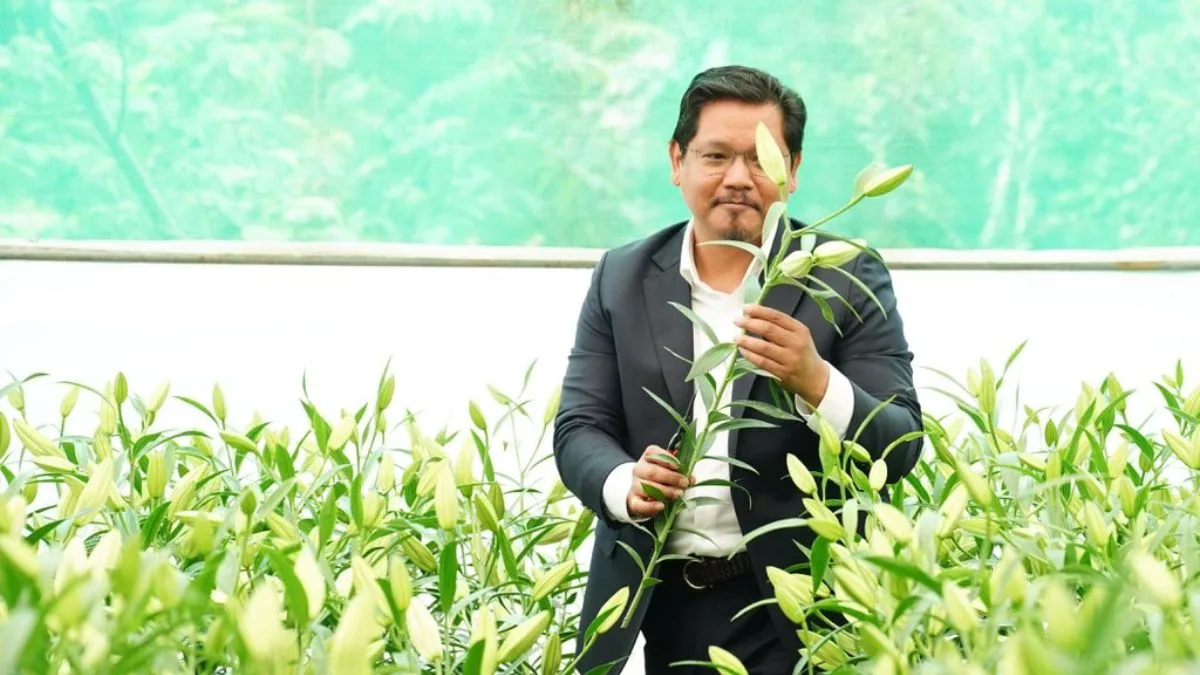
“This is the highest investment any government has made in floriculture in Meghalaya,” Sangma said during a visit to Mawkriah village in East Khasi Hills.
He was accompanied by Agriculture Minister Dr Ampareen Lyngdoh and local MLA Ronnie Lyngdoh.
So far, nearly 500 farmers have availed themselves of the scheme’s benefits.
The mission emphasises the cultivation of premium flowers such as Orchids (Dendrobium, Cymbidium, Vanda, Phalaenopsis) and Oriental Lilium, which have high domestic and export demand.
Meghalaya’s diverse agro-climatic conditions—ranging from tropical to temperate—make it ideally suited for growing such varieties.
To ensure the successful implementation of the mission, the state government has partnered with Darjeeling Gardens and North Bengal Floritech.
These professional agencies will provide technical support, quality planting materials, and infrastructure.
Additionally, they have committed to a three-year buyback guarantee, securing a steady market and income for participating farmers.
“Region-specific flower clusters are being developed using scientific cultivation techniques,” the Chief Minister said.
“We are combining Meghalaya’s natural advantages with modern systems to create a thriving floriculture ecosystem.”
The Floriculture Mission follows in the footsteps of successful initiatives like the Lakadong Turmeric Mission, which saw turmeric production jump from 1,000 metric tonnes to over 20,000 MT due to strategic investments and market integration.
As part of future plans, the government will establish dedicated logistics and storage hubs in key flower-producing areas to support the supply chain and preserve quality.
“Our vision is to double farmers’ incomes, diversify livelihoods, and make agriculture the backbone of sustainable development in the state,” Sangma added.