Tributes to Salil Chowdhury by children’s choir
Legendary music composer, poet and political thinker Salil Chowdhury’s popularity is not confined to Bengal or Mumbai.
Celebrating 100 years of Salil Chowdhury, the musical genius who blended Indian folk, classical, and Western melodies to create timeless songs across languages and generations.




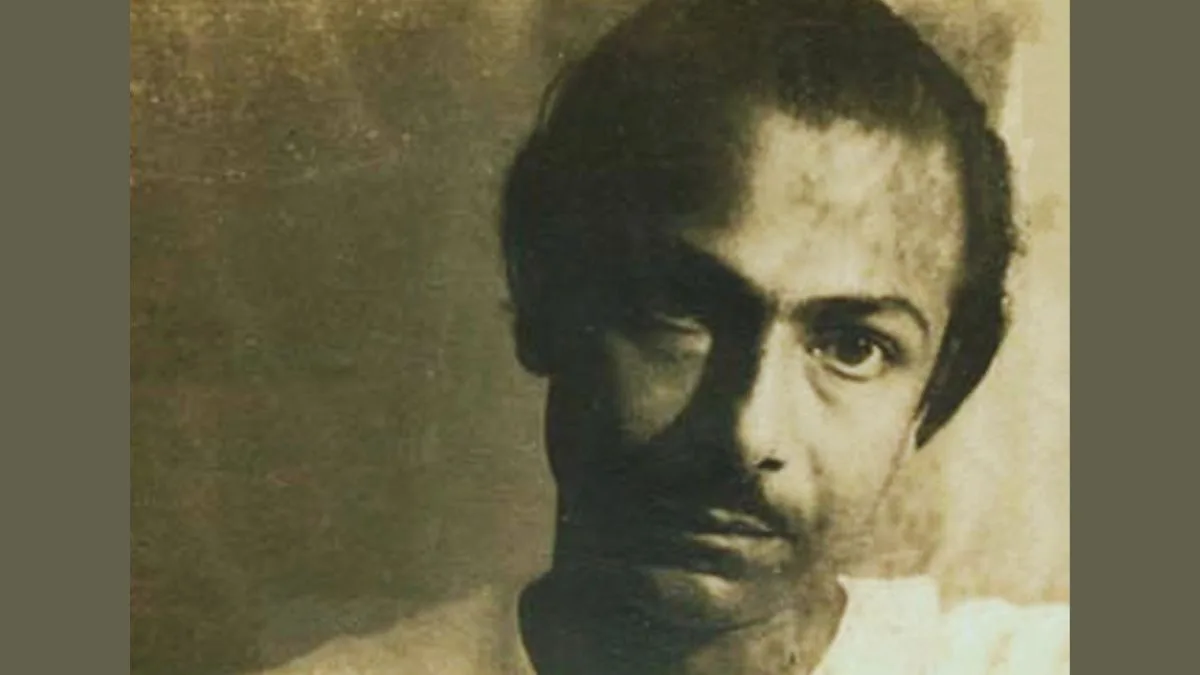
File Photo
Today marks the 100th birth anniversary of one of India’s most gifted musical minds, Salil Chowdhury, fondly known as Salilda. In a world filled with musicians, few have been able to create music that is not just heard, but felt; fewer still have mastered multiple art forms with such elegance and vision. Chowdhury was one of those rare talents. He was a composer, lyricist, poet, arranger and musician.
Salil’s journey began in the quiet village of Gazipur, West Bengal, on November 19, 1925. But it was in the lush tea gardens of Assam where he spent his childhood and that he first tuned in to the music of life. His father, a man who organised local plays for the tea garden workers, introduced young Chowdhury to the world of performance and expression. It was there among the rolling hills and the rhythm of the forest that he first heard Western classical music, thanks to a collection of records and a gramophone left behind by a departing Irish doctor.
Advertisement
Daily, he listened to Mozart, Beethoven, Tchaikovsky, Chopin. Those sounds would leave an indelible imprint on his musical imagination. At the same time, he soaked in the melodies of the flute. There were chirping birds and the local folk tunes of Assam.
Advertisement
By the time he started his college, Salil’s creative spirit was already so blooming. He composed his first popular song ‘Becharpoti Tomar Bichaar’ then.
Witnessing the suffering of refugees during World War II and the Bengal famine, he was profoundly affected by the struggles of ordinary people. He immersed himself in the peasant movement as well. He even went underground in the Sundarbans. There he composed music and plays for villagers while evading arrest warrants.
Salil’s first break in Bengali cinema came with the 1949 film ‘Paribortan’. Between 1949 and 1994, he composed music for 41 Bengali films. He was all about blending folk melodies, Indian classical motifs, and Western orchestration into something uniquely his own. His entry into Hindi cinema was almost serendipitous. While narrating a story idea to the legendary director Bimal Roy, Salil Chowdhury impressed him so much that he was invited to compose for the film. That film ‘Do Bigha Zamin’ (1953) went on to become a landmark in Indian cinema. The same film earned the very first Filmfare Best Movie Award for him.
From there, Salil’s musical odyssey truly took off. He composed for films in over 13 languages including Hindi, Bengali, Malayalam, Kannada, Tamil, Telugu, Odia, Gujarati, Assamese, Marathi, and others. He scored 75 Hindi films, 41 Bengali, and 27 Malayalam films.
His songs captured a vast emotional spectrum from the romantic and playful to the deeply philosophical. Who can forget the haunting poignancy of ‘Zindagi Kaisi Hai Paheli Haaye’ (‘Anand’) or the patriotic fervor of ‘Aye Mere Pyaare Watan’ (‘Kabuliwala’).
There was the tender yearning of ‘Na Jaane Kyu’ (‘Choti Si Baat’), the playful charm of ‘Wo Ek Nigaah Kya Mili’ (‘Half Ticket’), and the heart-rending ‘Toote Huye Khwaabo Ne’ (‘Madhumati’). From the raindrops in ‘Barkha Bahaar Aayi’ (‘Parakh’) to the soul-stirring folk of ‘Shimul Shimul Shimulti’ (‘Barjatri’), his melodies seemed to belong to no era yet to every heart.
His magnum opus for ‘Do Bigha Zamin’ bagged the first National Film Award for Best Feature Film, a Prix International at the 7th Cannes Film Festival, and the Social Progress prize at the Karlovy Vary International Film Festival. His 1965 Malayalam classic ‘Chemmeen’ won the President’s Gold Medal, while ‘Madhumati’ (1958) fetched him the Filmfare Best Music Director Award along with eight other Filmfare honors. The film also won the National Film Award for Best Feature Film in Hindi and many accolades from film associations in West Bengal and beyond.
Later, Chowdhury received the Sangeet Natak Akademi Award (1988), the Maharashtra Gaurav Puraskar (1990), and posthumously, the Mukti Judhho Maitreyi Samman Award by the Government of Bangladesh in 2012.
So what set Salil Chowdhury apart? He often described his vision as creating a style “which shall transcend borders, a genre which is emphatic and polished but never predictable.” And in practice this meant he could take a folk melody, an Indian raga, even a Western classical composition and then seamlessly blend them into something fresh and timeless.
His daughter Antara recalls him jokingly calling himself a reincarnated Mozart. And indeed, whether it was the piano, the flute, the esraj, he played them all with remarkable fluency.
Yet Salil Chowdhury was not without his self-doubts. He once confessed to a journalist, “I do not know what to opt for: poetry, story writing, orchestration, or composing for films. I just try to be creative with what fits the moment and my temperament.”
And perhaps that restless curiosity, that refusal to be in a single label, was exactly what made him so extraordinary. Whether writing poetry in Bengali, composing for the silver screen, arranging orchestral scores, Chowdhury brought the same sincerity and joy to everything he touched.
Chowdhury’s work was never just about melody. It was more about life itself and its joys and sorrows. His songs carried stories and elements of love and longing. They came with social consciousness and human spirit. And needless to say, they often reflected the times he lived in. For example films like ‘Anand’, ‘Madhumati’, ‘Jagte Raho’, ‘Mere Apne’, and ‘Kabuliwala’ didn’t just feature his music. His music elevated them.
Even today decades after his passing in 1995, Salil’s music continues to resonate. Young listeners discover him through the timeless songs that still echo on radio. Connoisseurs of cinema and music marvel at his mastery of blending tradition with innovation, still.
Advertisement