The female side of Partition
Every coin has two sides, and so do partitions. While the birth of new nation-states is celebrated, the human cost is often forgotten.
A film about cages, freedom, and five lives that cannot break loose. Bengali drama ‘Pinjar’ has landed an international deal with Singapore’s Hazelnut Media. It releases in India on July 10.




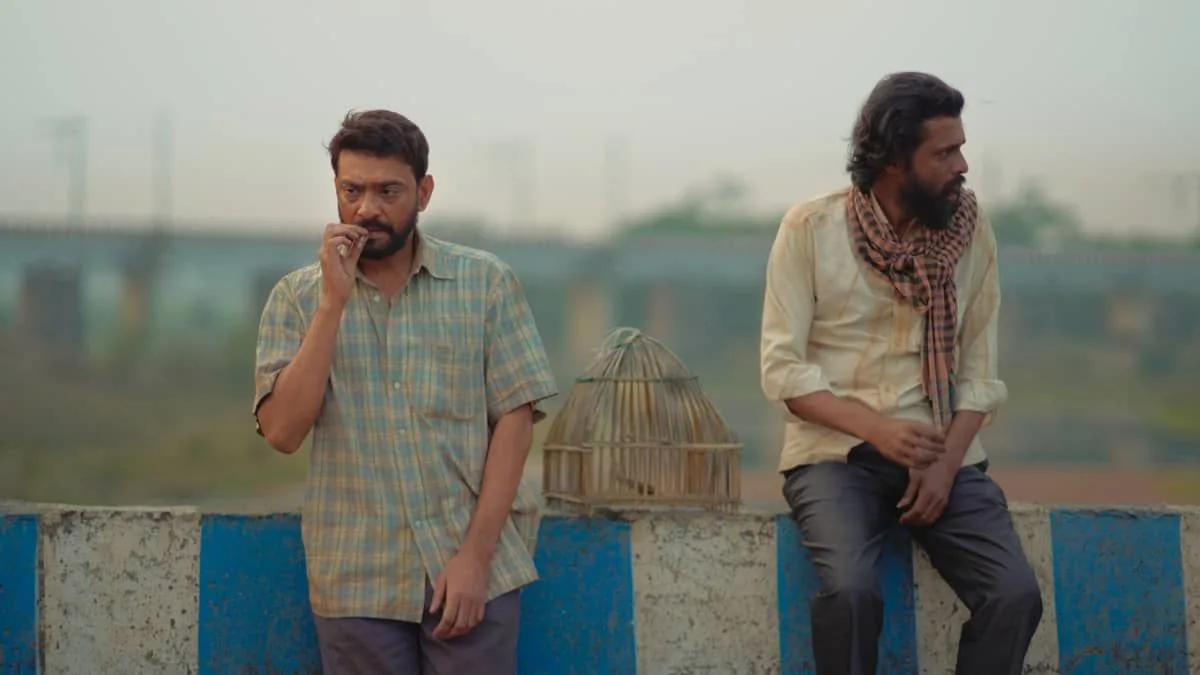
Image Source: Instagram
A Bengali feature film from Kolkata has landed an international distribution deal ahead of its India theatrical release. Singapore-based Hazelnut Media has acquired international rights to ‘Pinjar’, directed by Dr. Rudrajit Roy. The film opens in Indian cinemas on July 10.
The deal was marked with a white dove release ceremony in Kolkata, drawing on the film’s central imagery of freedom and captivity.
Advertisement
The title ‘Pinjar’ translates to “The Cage” in English.
Advertisement
The film follows five characters whose lives are shaped by a shared inability to break free. Tarak is a bird-catcher who traps the very freedom he cannot find for himself. His daughter Jhimli comes of age in a world that limits her before she can find her footing. Paromita, a widowed teacher, hides her loneliness behind duty. Shefali, a working wife, conceals the bruises she carries. And Iqbal, a migrant Muslim man, moves through a city that does not fully welcome him.
Running through all their stories is a wild bird. It is stolen, sold, and caged. Its restlessness mirrors every character’s longing to be free.
The ensemble cast includes Mamata Shankar, Joy Sengupta, Sagnik Mukherjee, Mallika Banerjee Roy, Satakshi Nandy, Ishan Mazumder, Tathagata Mukherjee, Swastidipa Rabidas, and Samiul Alam. Manas Bhattacharyya handled the cinematography. Music is by Ratul Shankar, with music rights acquired by Pluto Music.
The film is produced by Chasing Dreams Films in association with Bell Jar Films.
Hazelnut Media is a Singapore-based impact production company. Its co-CEOs are Olivier A. Dock and Isabella Sreyashii Sen.
The company plans to use the film’s release as a platform for a real-world initiative. The campaign will support education for girls in rural West Bengal.
“From the very beginning, we believed in Pinjar’s power to move hearts and spark change,” said Dock and Sen. “Our commitment has been to stand behind the film and its makers, ensuring its story of resilience and freedom reaches audiences worldwide while creating tangible impact on the ground.”
Hazelnut Media is mapping an international rollout beyond India. Theatrical and festival plans cover South and Southeast Asia and diaspora markets in the UK, the Middle East, and Singapore, before moving into wider mainstream theatrical release.
Sen has overseen close to 120 international film releases across South and Southeast Asia as an independent theatrical distributor. Dock brings three decades of experience spanning Europe, the Middle East, Africa, and Latin America. The two previously collaborated on the India-Singapore co-production Early Days and the Iran-Singapore production Tadji.
The film had its world premiere at the Chicago South Asian Film Festival in 2025. It has since screened at the Asian Film Festival Barcelona, the International Indian Film Festival Toronto, the Indian Film Festival of Sydney, the London Bengali Film Festival, the South Asian Film Festival of Montreal, and Haapifest.
At the Third Eye Asian Film Festival in Mumbai, Roy received a best director special jury mention.
Dr. Rudrajit Roy is a critical care physician based in Kolkata. He developed the film over two years of fieldwork with rural villages and slum communities across West Bengal.
His earlier shorts include the sci-fi film Wavelength, the drama Man and Wife, and the documentary Chasing My Dream, which alone earned 22 international awards. His films collectively have earned selections at Oscar-qualifying festivals.
Roy spoke about the idea at the heart of the film. “Pinjar was born from the image of a bird in a cage, a metaphor for the boundaries that shape human lives,” he said. “My vision was to invite viewers to reflect on the cages we inherit and the quiet human desire to transcend them.”
Advertisement