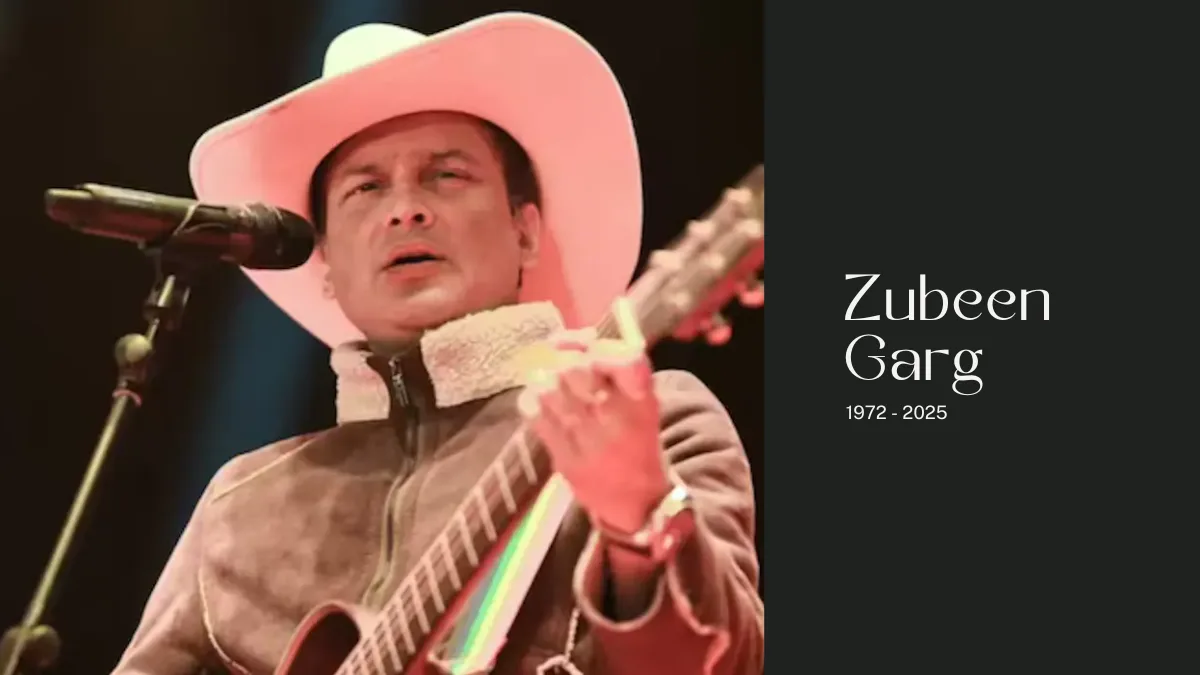
Assam’s heartthrob Zubeen Garg, the voice that defined generations in Assam and beyond, was laid to rest on Tuesday with full state honours at Sonapur on the outskirts of Guwahati.
The moment was marked by grief as much as by song, with lakhs of fans turning the farewell into an overwhelming chorus of love. His sister Pami Barthakur lit the funeral pyre.
Advertisement
From the early hours, the roads leading to Sonapur were overflowing with mourners — students in black, farmers carrying flowers, families with children clutching posters of “Zubeen Da.”
Some wept quietly, others sang his evergreen songs, but all had come for one reason: to bid a final farewell to the man who had become Assam’s elder brother, friend, and cultural heartbeat.
The funeral was attended by Chief Minister Himanta Biswa Sarma, Union Ministers Sarbananda Sonowal and Kiren Rijiju, and leaders across party lines, a reminder of how Zubeen transcended politics and identity. Yet the true tribute came from ordinary people — fans who broke into chants of “Zubeen Da Amar Houk!” (May Zubeen Da be immortal) as flames rose from the pyre.
Born in 1972 in Tura, Meghalaya, and raised in Jorhat and Tezpur, Zubeen was destined for music. Named after maestro Zubin Mehta, he grew up in an absolutely art-steeped family. His father was a tabla player, and his mother a writer and singer. His debut Assamese album, Anamika, in the 1990s catapulted him into stardom, and his Bollywood hit “Ya Ali” from Gangster (2006) gave him nationwide fame.
But while his voice soared across India and abroad, his heart remained rooted in his soils of Assam.
For fans, Zubeen was ‘Zubeen Da’. The singer was someone who they felt a sense of belonging with. He sang tirelessly at Bihu functions, and even performed all night. He mingled freely with crowds. And, sometimes he dropped by unannounced at weddings or community gatherings.
Beyond music, Zubeen was a fearless voice. He often spoke up for Assam’s causes. He stood with students during protests, and supported farmers and artists alike. And he was fiery, sometimes controversial. But always honest!
As his sister lit the pyre, many saw the act as symbolic. Assam itself, through her hands, bidding farewell to its most cherished son.
For a moment, the crowd went silent. Then, slowly, voices rose in unison with ”Mayabani ”, his immortal song. It was no longer a funeral; it was a vow — that his voice would never fade.
Zubeen Garg may have left the world, but for Assam, he remains eternal. In every Bihu song, every protest chant, every love ballad played late into the night, his presence will linger.
“Zubeen Da Amar Houk.” And so it shall be.