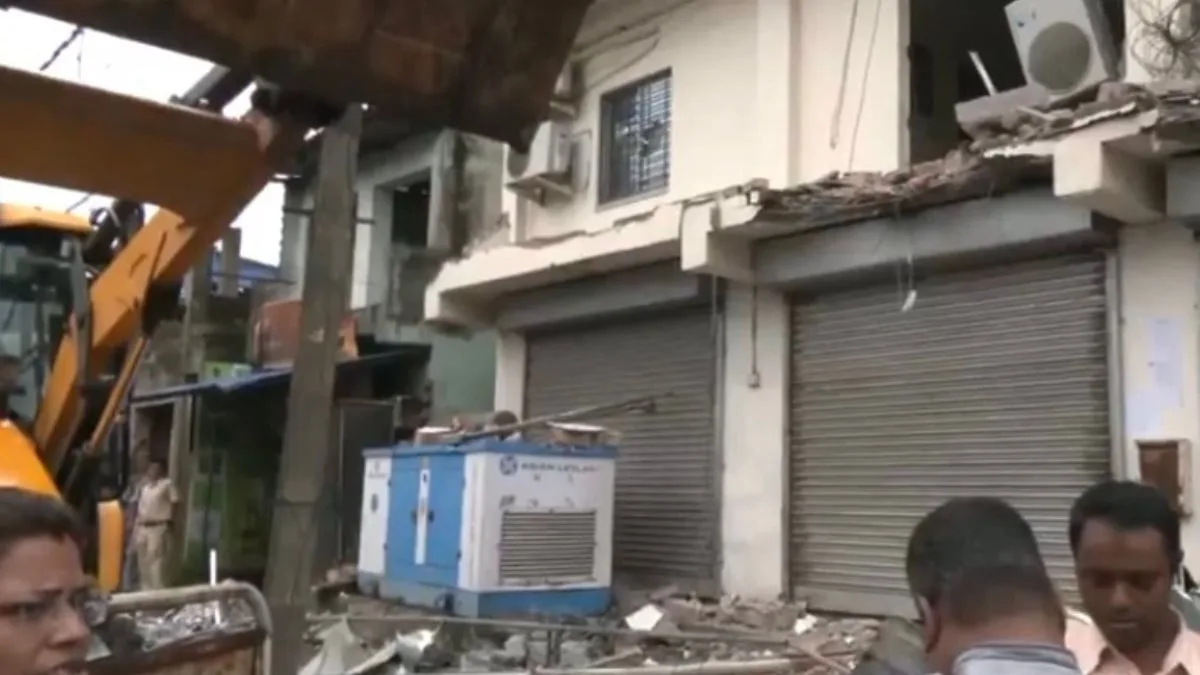
Calcutta HC stays demolition work at Abhishek Banerjee’s Amtala office until further orders
The Calcutta High Court has directed West Bengal authorities to stop all demolition work at Lok Sabha MP and Trinamool…
There was a time when a voter list was a dull document. It sat in the Block Development Office, it was consulted once in five years, and nobody imagined that a clerical entry in it could decide whether a man boards a flight, joins the Army, or feeds his family.




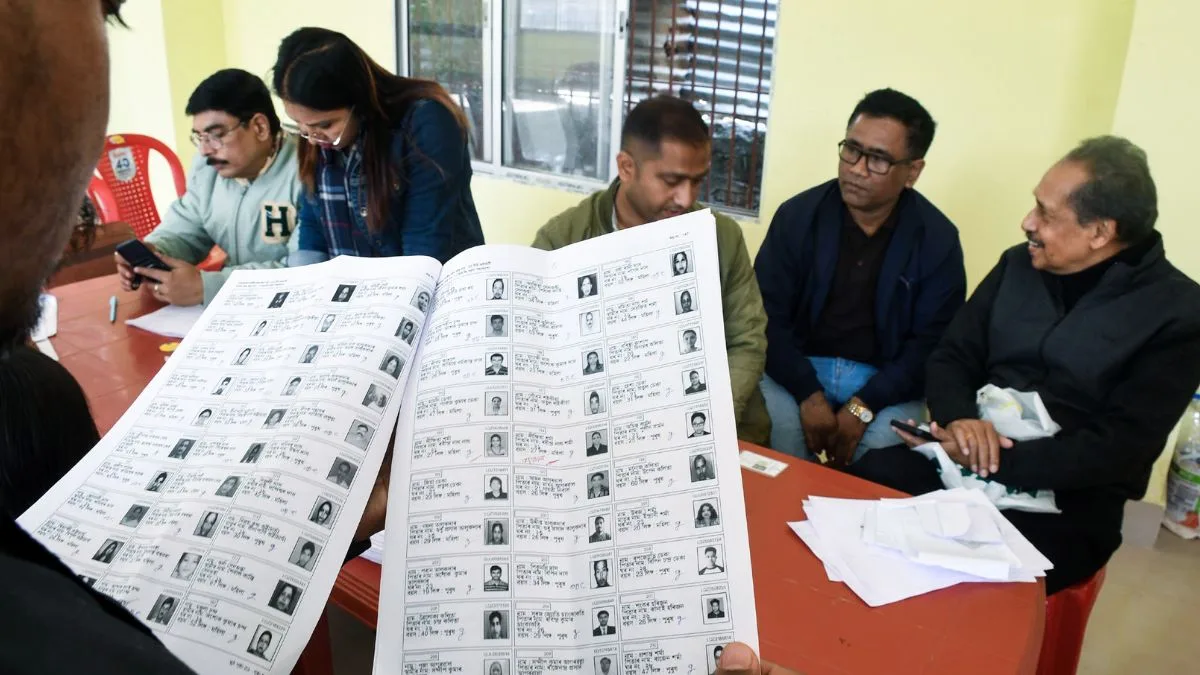
There was a time when a voter list was a dull document. It sat in the Block Development Office, it was consulted once in five years, and nobody imagined that a clerical entry in it could decide whether a man boards a flight, joins the Army, or feeds his family. In West Bengal, in the summer of 2026, the voter list has b ecome the most consequential piece of paper in a citizen’s life. It was never meant to be. Consider three residents of this state who have never met one another.
The first is a young man from Cooch Behar. He cleared every stage of the Indian Army’s Agniveer recruitment: written, physical, medical. All that remained was a Police Clearance Certificate. The police would not process it. His name, they said, had been deleted from the electoral roll during the Special Intensive Revision. The Army had found him fit to defend the country; the local thana was not satisfied that he belonged to it. It took a petition before the Calcutta High Court, and the High Court’s request to the appellate tribunal to hear his appeal urgently, before the deletion was set aside and his appointment saved. The second is one of the most senior newspapermen of Kolkata, the former Editor of The Telegraph, a Ballygunge voter of long standing.
Advertisement
His name went the same way, on the ground of a “logical discrepancy” that nobody has explained to him. He could not vote in April. Then his passport renewal stalled. The police sent an adverse verification report, citing nothing except the deletion of his name from the voters’ list. He has since described his days as an unending round of appeal trackers, verification offices and letters to institutions where his parents studied and taught more than sixty years ago, hunting for papers to prove that his family existed. He missed his daughter’s wedding abroad. The third has no byline and no writ petition.
Advertisement
He is the daily-wage labourer of Murshidabad or Malda whose name was deleted along with lakhs of others, whose appeal lies in a queue before a tribunal, and who learnt in June that the state had linked his ration card to the voter list. By an order of the Food and Supplies Department, ration cards of persons deleted in the SIR are to be marked inactive; those with pending appeals continue to receive their entitlements only until their appeals are decided. A cash-transfer scheme for women has been linked in the same fashion.
A farm labourers’ union has challenged the linkage; the Supreme Court declined an urgent hearing and directed it to the Calcutta High Court, where the matter now rests. The union’s estimate of ration cards at risk runs into the tens of lakhs. Three lives, one pattern. The deletion was supposed to mean one thing only: that a name would not appear on a voters’ list. The Supreme Court, even while upholding the revision exercise, said so in terms. The Election Commission’s inquiry is confined to electoral conse quences and is no t a determination of citizenship, which only the competent authority under the Citizenship Act can make.
Yet in practice the deletion has begun to travel. It has walked out of the electoral roll and into the police verification report, the passport file, the recruitment dossier and now the ration shop. A single administrative entry, made in lakhs of cases on grounds as vague as “logical discrepancy”, is functioning as an all-purpose certificate of suspicion. The safety valve for all this was supposed to be the appellate tribunal. Nineteen were constituted on the Supreme Court’s directions, each headed by a retired High Court judge. Their record after roughly a hundred days: about thirty thousand appeals disposed of, out of nearly thirty-three lakh, which is less than one per cent.
In Murshidabad, 112 appeals decided against more than six lakh filed; in Malda, 185. Judges have resigned. There is no website on which an appellant can even see the status of his case. And here is the figure that should trouble every fair-minded reader: of the appeals actually heard in the early months, a substantial majority ended in the name being restored. Where the process worked, it found the deletions wrong more often than right. For everyone else the wait continues, and while it continues the vote is gone, the clearance is withheld, and the ration card hangs by a thread.
I write this not as a partisan of any party. The revision was conducted under one government and the welfare linkage has come under another. I write as a lawyer looking at what the sum of these measures does to the ordinary citizen of this state. The genius of our constitutional arrangement was that a man’s civic existence never rested on a single document. Citizenship, the franchise, employment, movement, food: each had its own law, its own procedure, its own safeguards. What Bengal is witnessing is the quiet collapsing of all of them into one list, maintained by an administrative process that its own tribunals are finding wrong in most of the cases they manage to hear.
The courts will, in time, answer the legal questions. The Calcutta High Court has the ration matter, the tribunals have the appeals, and election law provides its own remedies for constituencies where the margins were thinner than the deletions. But some things should not have to wait for judgments. No police officer needs a court order to stop treating a voter-list entry as proof of nationality; the Supreme Court has already spoken. No department needs litigation to know that a man’s food should not depend on a list compiled for elections. And no citizen of this state, whether he edits a newspaper or carries head-loads at a railway site, should have to prove to a clerk’s satisfaction that he exists. A voter list ought to go back to being a dull document. The measure of the coming months is how quickly Bengal can make it one again.
(The writer is an Advocate practising before the Supreme Court of India and Founder & Managing Partner, 4C Supreme Law International. He is also National Spokesperson of the Lok Janshakti Party – Ram Vilas, a member of the National Democratic Alliance.)
Advertisement