Syama Prasad Mookerjee to be included in Bengal texbooks, says BJP MP Rahul Sinha
Rajya Sabha MP Rahul Sinha alleged that the Congress, CPI(M) and Trinamool Congress (TMC) had “concealed” Bengal’s real history.
The book shares insights on the impact of the Second World War, the war policy of the British administration and Indian political parties, and the demand for self-governance.




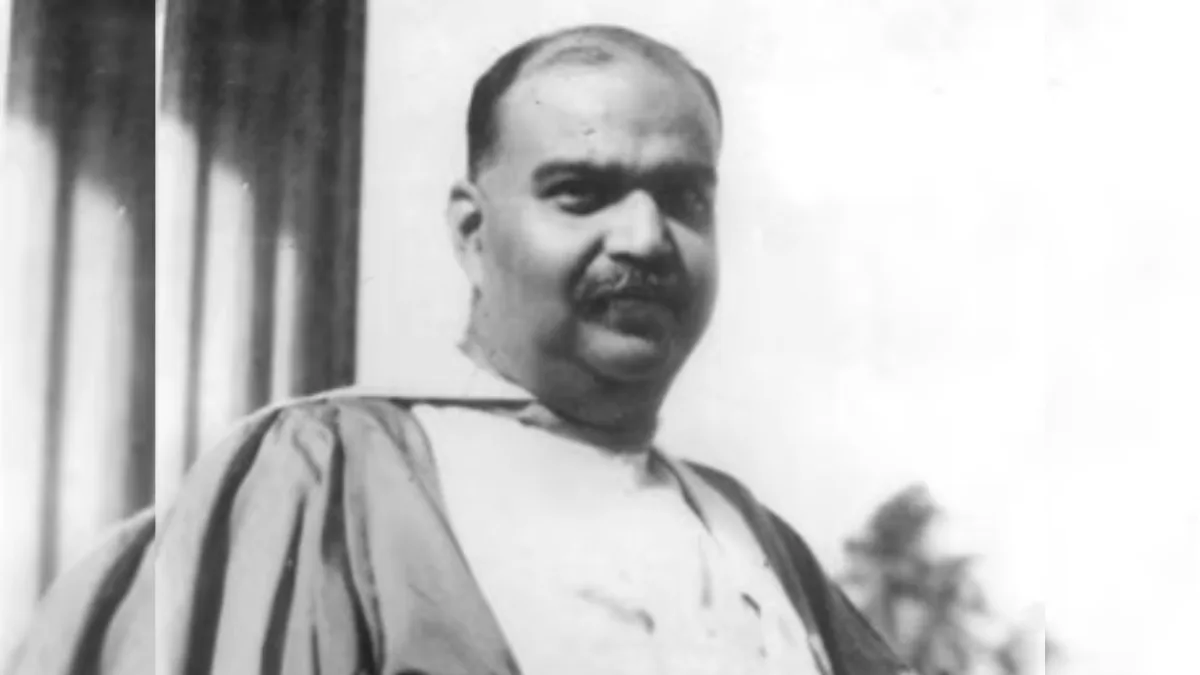
Photo: bjp.org
While Bengal is all set to celebrate Bharatiya Jan Sangh (BJS) founder Syama Prasad Mookerjee’s 125th birth centerary on Monday, it might be interesting to know that the British Raj had once banned his book ‘A Phase of the Indian Struggle‘, since it critically documented the Indian independence movement as well as condemned exploitative colonial rule.
The British government viewed his writings as a severe threat as he consistently exposed the role of the colonial rulers in the 1943 Bengal famine.
Advertisement
Due to his vehement opposition to British policies, the colonial government routinely blacklisted his speeches and ultimately banned the publication of his book.
Advertisement
Elaborating on the book ban, eminent historian and researcher Partha Chatterjee, teacher of Balagarh Bijoy Krishna Mahavidyalaya said, “The history of Indian independence movement is not just a continuous account of political events; it is also a narration of intellectual, administrative and ideological positions of various political personalities through their speeches, correspondence and policy positions. One of the most important names who have influenced contemporary political thought is Syama Prasad Mookerjee.”
Chatterjee shared that this book, ‘A Phase of the Indian Struggle‘ is a compilation of some of Mookerjee’s selected letters and speeches, which is not just a historical argument, but also considered an important primary source of political thought in colonial India.
This included colonial administration, national defence, industrialisation, administrative reforms and civil rights, he added.
Historically, the speeches in this book are from the late 1930s to the wartime situation in the 1940s. The book shares insights on the impact of the Second World War, the war policy of the British administration and Indian political parties, and the demand for self-governance. The ideological positions of these speeches lie within the tension between these three contexts.
“As a result, here is not just an expression of opinion, but an attempt to redefine the relationship between state and citizen,” Chatterjee said.
In 1947, Mookerjee strongly opposed a proposal by Huseyn Shaheed Suhrawardy and the British officials to create a sovereign, independent state of Bengal. He argued that the plan would marginalise Hindus and was pivotal in the movement to divide Bengal so that the Hindu-majority areas could remain within the Indian Union.
As Mookerjee’s work exposed the oppressive nature of foreign rule and directly challenged colonial policies, the British viewed him as a major threat.
Advertisement