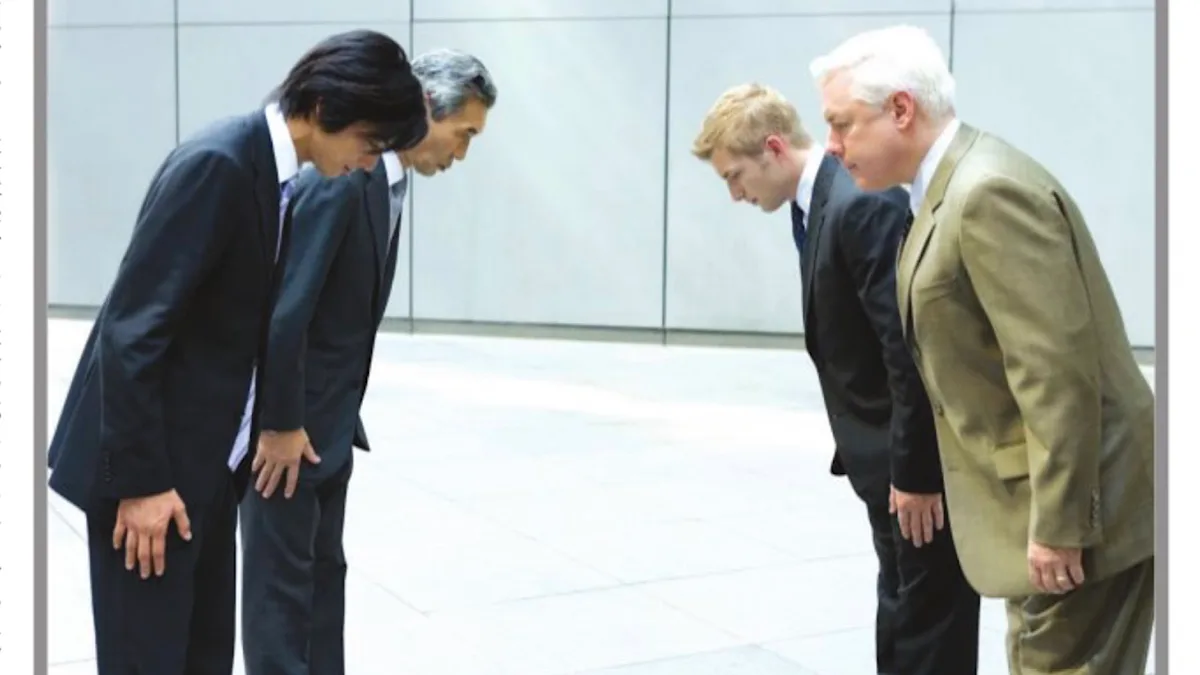
At first glance, the Japanese people do not appear to have a sense of humor. During the time I worked at Sony, there was no opportunity of opening a presentation with a joke or making sarcastic comments during a meeting. It was all serious business during working hours. Drinking lots of alcohol helped them to relax after work and open up about various topics, but even then, they were somewhat restrained.
I gradually learned that the Japanese do have a wonderful sense of humor, especially compared to other Asians. They are intelligent and understand English well enough to appreciate the subtleties of a joke and know when to laugh and when not to. They understand differences between innocent inane jokes versus humor with some sort of message. One of my early projects at Sony was approval of copper wire from a US vendor, Phelps-Dodge. Mr. Ito, an engineer at Sony-Japan, was my main contact in technical communications. I emphasized in numerous exchanges with him the need for expedited approval of Phelps-Dodge wire for cost reduction reasons and promoted their quality.
Advertisement
When I met Mr. Ito, for the first time, I handed him my business card. It had “PhD” printed after my name. He looked at the card, pointed to the acronym “PhD” on my card and asked with a smile “Phelps Dodge?” We both laughed out loud. He was teasing me that perhaps I had become a salesperson for Phelps Dodge.This incident was my awakening to the Japanese sense of humor. I used my comedic talents in my presentations and this news gradually spread throughout the organization. Eventually, my speeches became an attraction no matter what the occasion was; a farewell dinner or Christmas party or even a business dinner. I made fun of the Japanese about their way of doing business, their personalities and idiosyncrasies as well as real issues.
Much to my surprise, the Japanese members just lapped up my humor. Mr. Takahashi was my boss in San Diego during a period when I lived alone.Takahashi, a perfect gentleman, had one of those stoic faces, without any expression or reaction regardless of the situation. I said in a speech “As some of you know, I live by myself and spend a lot of my time talking to the walls.I am happy that Mr. Takahashi is my boss because I practice by talking to him before I talk to the walls”.Mr. Suzuki, one of the executives, was literally rolling on the table, laughing.
Mr. Suzuki called me “man with the golden tongue”. I got the biggest response to my jokes when I made fun of politics in the top-level management circle.On one occasion I was telling the story of how I got promoted (not true story).Mr. Suehiro Nakamura used to be the president of the Sony TV operation in the UK, before returning to Japan as the head of global TV business.The TV plant in the UK was in a town named Bridgend, in Welsh. He openly promoted career paths of several of his subordinates at Bridgend by placing them in important executive positions at facilities throughout the world. The rumor was that, if you worked for Nakamura in Bridgend, your future was bright.
I told the audience: “One day, I was so depressed and frustrated because of all the politics in my job, I decided to take my own life. I went to the Coronado Bridge and stood at the end of the bridge, ready to jump into the San Diego Bay.Coincidentally, Mr. Nakamura happened to be there and saw me.He said ‘Oh, you are at bridge end. You must be promoted to a higher level”. My favorite was the story during my speech in honor of Mr. Hasebe on the eve of his re turn to Japan.Hasebe was the head of Sony Engineering and Manufacturing reporting to Mr. Carl Yankowski, the president of Sony Electronics.There were rumors of conflicts between Yankowski and Hasebe and a few people even wondered if that was the reason behind Hasebe’s return to Japan.
In my speech, I was offering my tribute to Hasebe, “When I think of Mr. Hasebe, there is only one other leader, who I can compare him with: Bill Clinton”. All ears in the room perked up because this was the time when Bill Clinton’s scandalous affair with Monica Lewinsky was the hot news.Some folks seemed a little worried about what I might end up saying.I continued “Just like the US economy prospered under Clinton’s presidency, Sony made enormous profit under Hasebe’s leadership.
Just like Clinton, Mr. Hasebe loved to play golf; and Hasebe told everyone ‘I had no improper relation with that man –Carl Yankowski’”, modifying the infamous Clinton denial. The audience loved it.Even Mr. Hasebe laughed out loud and told me “What are you doing here? You should be performing in Las Vegas”. Even though many Japanese had a keen sense of humor, I never saw them publicly making jokes.The only incident that came close was when Tak Miyanaga made fun of my engineering efforts in introducing local vendors, facing stiff opposition from the design engineers in Japan.
Miyanaga said “it is an epic battle between Dr. Who and Dr. No”.Dr. Who was me because people had difficulty in pronouncing my last name and Dr. No was the Japanese engineering group who said “no” to all my proposals. I was occasionally teased, to get a funny response. On one occasion, I was asked “What does ‘San’ in ‘San Diego’ mean?” I responded “It means saint; you know, same as in Japanese.Like Nakamura-san means Saint Nakamura”. Mr. Kunitake Ando (who eventually became the president of global Sony) asked me during a business dinner “Basab, what is your religion?”I responded, “I follow my own religion”.Mr. Ando did not accept such a vague sarcastic answer and asked, “but who do you worship?”I answered calmly, “Mr. Ando”.
As my colleague and good friend, John Pion commented “this is good for your job security. You cannot fire a guy you drink and laugh with”. The writer is a physicist who worked in industry. He is a Bengali who lives in the United States. Note: The views expressed are for the purpose of drawing attention to cultural differences applying specifically to humor here. They do not in any way attempt to denigrate any race, country or community.