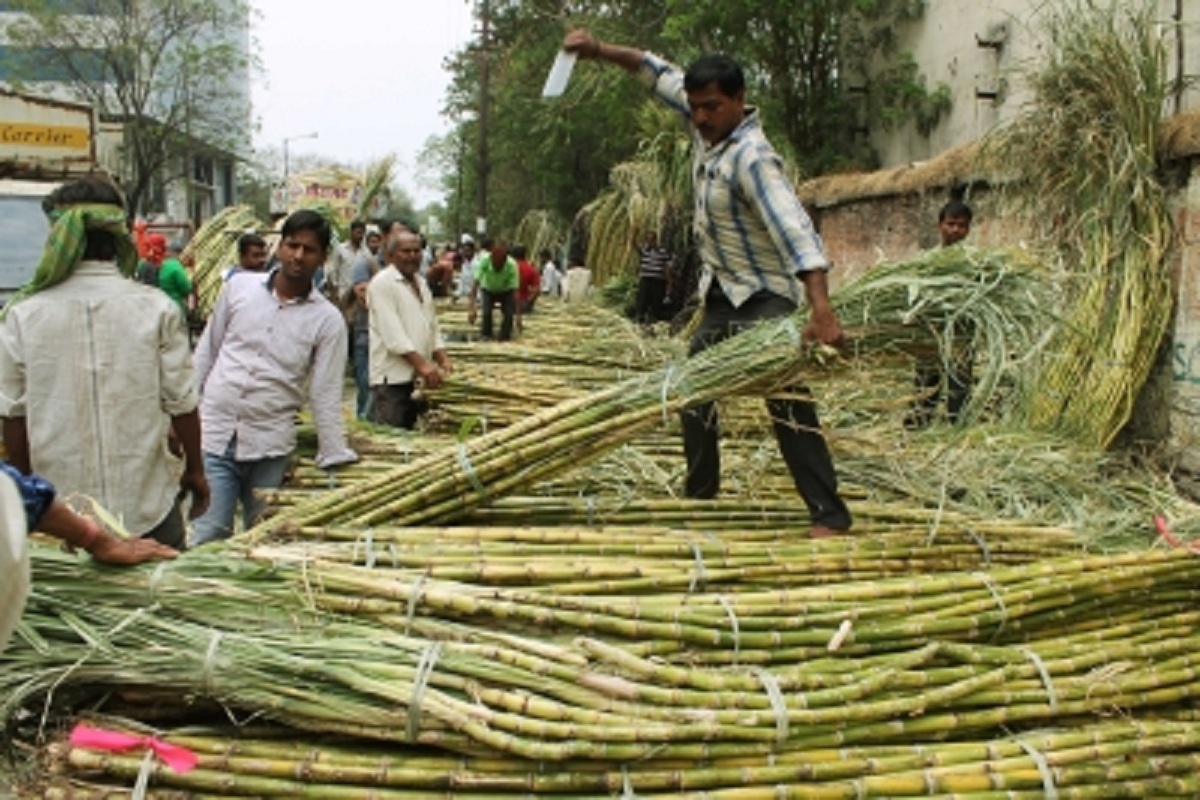
India’s sugar policy is slipping into a familiar pattern. When production rises, exports are encouraged. When supply tightens, exports are restricted. As ethanol targets expand, sugar availability comes under pressure again. The government’s latest export ban is being presented as a temporary measure to contain prices and protect domestic supply, but it also reflects a deeper problem: export controls are increasingly becoming the default response whenever competing policy goals begin to collide.
The call to ban sugar exports until September comes amid concerns over domestic supply, inflation risks, and uncertainty linked to the Iran war. Officials are trying to keep domestic sugar prices from rising further, even as higher global oil prices already put pressure on consumers’ pockets. As a widely consumed household staple, sugar is often at the centre of efforts to contain food inflation. But the latest ban also highlights how India’s sugar sector is caught between competing priorities. On one hand, the government wants stable domestic sugar prices. On the other hand, it wants to aggressively expand ethanol blending to reduce dependence on imported crude oil. Both goals rely on the same raw material: sugarcane.
Advertisement
That balancing act becomes harder when production weakens. This year, unseasonal weather in key producing states such as Maharashtra and Karnataka reduced sugar recovery rates, lowering overall output expectations. At the same time, continued diversion of sugarcane toward ethanol blending has further pressured domestic sugar availability. With closing sugar stocks projected to fall to their lowest levels in years, exports have once again become the adjustment mechanism. The logic is simple. Restrict exp or ts, re tain more supply domestically, and limit price pressure.
But repeated interventions also create distortions that are harder to reverse over time. India has imposed sugar export restrictions multiple times since 2022 whenever supply concerns resurfaced. That pattern creates uncertainty across the sector. Mills negotiate export contracts for just one month, only to face policy reversals the next. Traders struggle to plan shipments. Buyers are beginning to treat Indian supply as unreliable. Markets can adapt to changing prices. Constant policy shifts are far harder to absorb. The impact does not stop with exporters.
Once export channels close, financial pressure on mills builds quickly, particularly for operators already facing higher cane procurement costs and heavy investments tied to ethanol expansion. And when sugar mills face financial pressure, farmers usually feel it next. Delayed payments to sugarcane farmers, commonly known as cane arrears, have long been one of the industry’s biggest structural problems. Restrictions that reduce mill revenues risk worsening those delays further. That, in turn, pushes farmers toward alternatives that offer quicker returns.
In many sugar-producing states, farmers already view jaggery as a more reliable alternative because payments are quicker and returns can often be better than supplying cane to mills. Local jaggery processors frequently offer immediate cash, unlike mills, where payments can stretch for weeks or even months. If more sugarcane gets diverted toward jaggery production instead of sugar processing, the same supply pressures the government is trying to contain today may return even more sharply next season.
Thailand’s sugar sector offers a useful contrast. Periodic export controls and price interventions have often been used to stabilize domestic supply, but they have also created uncertainty for producers, exporters, and mills trying to plan ahead. The problem is not the intervention itself, but the frequency with which short-term controls are used to manage structural issues.[1] Over time, those pressures do not disappear; they simply shift elsewhere in the supply chain. The sugar sector already operates under heavy administrative influence, from cane pricing to export quotas and ethanol diversion targets. Each additional intervention may temporarily solve one problem, but it often creates pressure elsewhere in the system.
That is increasingly visible in India’s sugar market. Ethanol expansion reduces sugar availability. Lower sugar stocks trigger export restrictions. Export restrictions weaken mill revenues. Financial stress delays farmer payments. Farmers then divert cane elsewhere, tightening future supply again. The result is a sector that constantly shifts between surplus and shortage management, without addressing the underlying instability. None of this means governments should ignore inflation concerns or domestic supply risks. But repeated intervention is not the same thing as long-term stability. The broader issue is not whether India should restrict sugar exports during periods of stress. It is whether constant policy reversals are gradually replacing a coherent market strategy altogether.
(The writer is Indian Policy Associate, Consumer Choice Center.)