Fragile Shield
For years, India’s economic story has rested on a comforting assumption: that strong domestic demand can insulate the country from global turmoil.
For nearly two decades, Indian politics has steadily moved towards a welfare consensus.





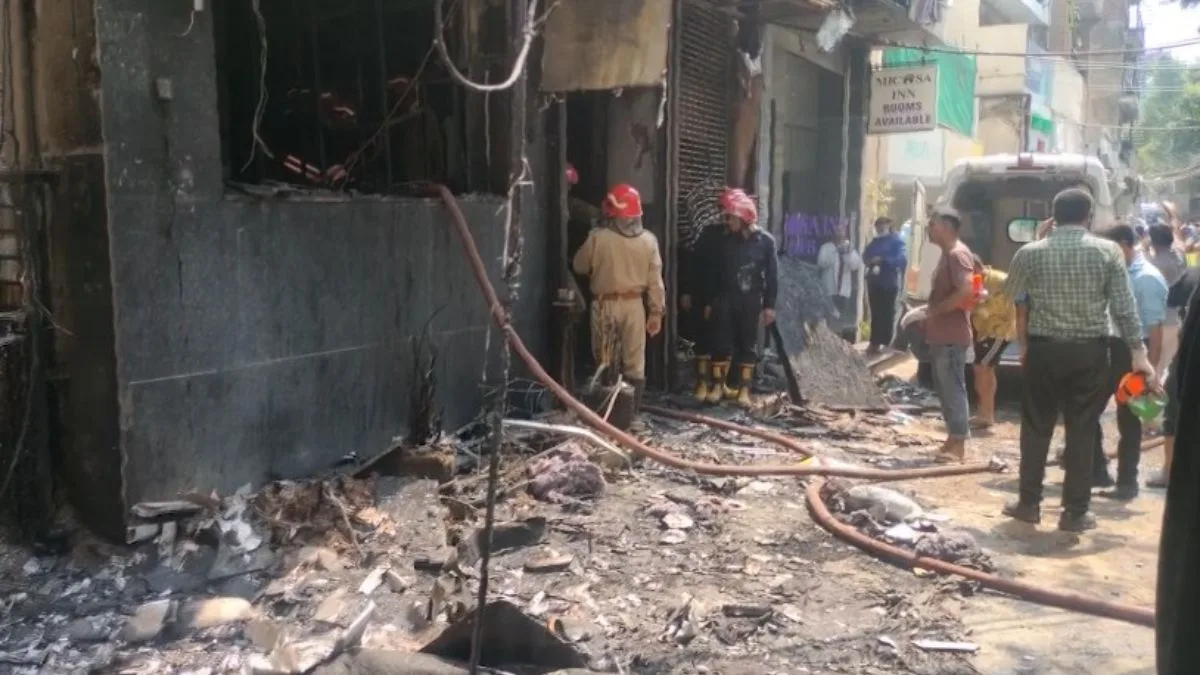
Representative Image (IANS)
For nearly two decades, Indian politics has steadily moved towards a welfare consensus. From cash transfers and subsidised food to free electricity and women-focused income schemes, political parties across ideological lines have embraced direct state support as the safest route to electoral security. What was once considered a distinctive political strategy has now become routine governance. Yet recent state elections suggest an important political transition is under way: welfare is no longer sufficient to guarantee public trust or electoral victory.
This does not mean welfare politics has collapsed. On the contrary, welfare remains deeply embedded in India’s political economy. Governments cannot easily withdraw benefits without risking public backlash, especially in a country where economic insecurity remains widespread. But voters increasingly appear to distinguish between short-term assistance and long-term progress. They may accept welfare as necessary support, while simultaneously demanding jobs, mobility, infrastructure, and economic opportunity. That distinction matters. India’s welfare expansion coincided with a period of uneven employment growth. While headline economic numbers improved, large sections of the population continued to struggle with stagnant incomes, rising living costs and uncertain livelihoods.
Advertisement
Welfare schemes helped cushion that pressure. But over time, support payments alone could not fully address deeper anxieties about the future. This explains why even strong welfare-driven governments have faced electoral setbacks. Voters are beginning to evaluate administrations not merely on what they distribute, but on whether they create conditions for upward mobility. A monthly transfer may help a household survive inflation, but it cannot substitute indefinitely for stable employment, functioning public services or expanding private investment. Women voters illustrate this shift most clearly. Across India, women have become central to modern electoral strategy because of rising turnout and growing political influence.
Advertisement
Governments increasingly direct welfare schemes toward them, assuming that financial support will automatically translate into political loyalty. But evidence from several states suggests women voters are making more complex calculations. Concerns over education, alcoholism, rural employment, household debt, and prices often weigh as heavily as cash benefits. There is also a fiscal dimension that governments can no longer ignore. Many states are expanding welfare commitments while simultaneously facing mounting debt burdens. Revenue expenditure on subsidies, salaries and transfers increasingly competes with capital investment in roads, healthcare, schools, and industrial infrastructure. This creates a dangerous political temptation: prioritising immediately visible giveaways over slower but economically productive investments. The long-term risk is obvious.
A state that continually expands consumption support without generating productive growth eventually weakens its own capacity to sustain welfare itself. Indian politics is therefore entering a more demanding phase. Welfare remains politically essential, but it is now the minimum expectation rather than a transformative promise. Elections are increasingly shaped by a broader test of governance: credibility, economic opportunity, administrative delivery, and public confidence in the future. The era when welfare alone could decisively shape electoral outcomes may be fading. Voters are beginning to ask a harder question ~ not merely what governments can give them today, but what kind of future they can build tomorrow.
Advertisement