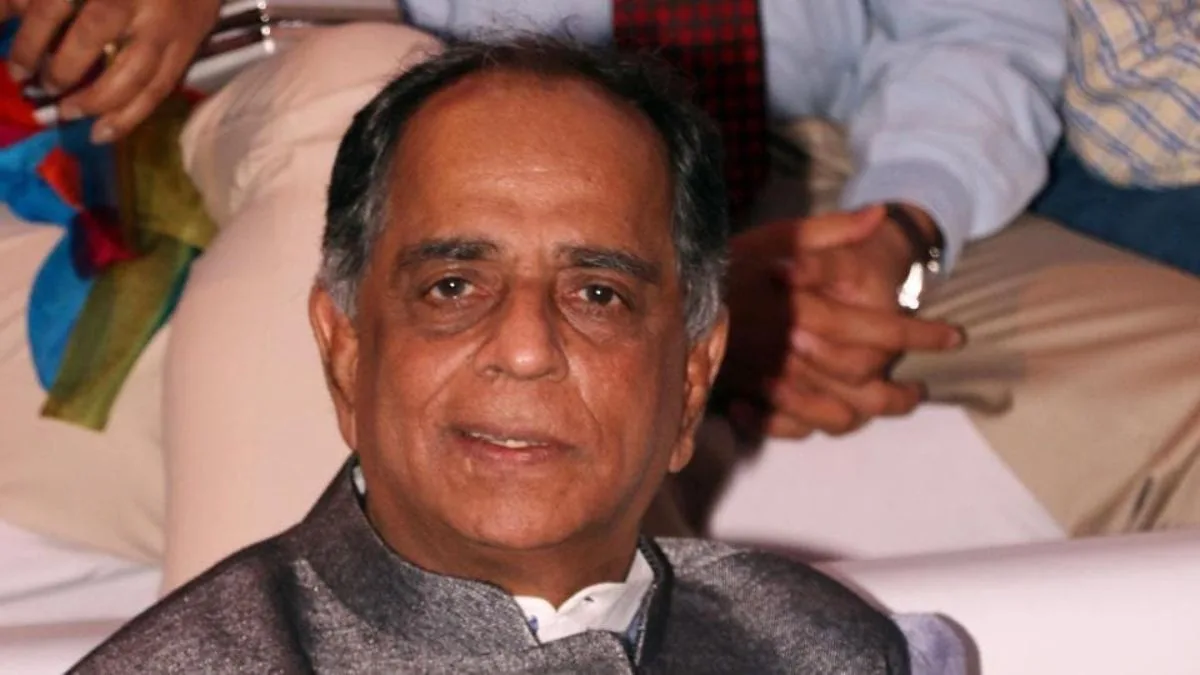
Pahlaj Nihalani, film producer and former chairperson of the Central Board of Film Certification, has died at 76. He had been unwell for some time and was reportedly suffering from liver-related health complications. His death marks the end of a career that stretched across four decades and left a sharp, often divisive imprint on Bollywood and on India’s relationship with film censorship.
A Sindhi family, a Bollywood foothold
Nihalani was born on January 10, 1950. He came from a Sindhi family and grew up with cinema already in his orbit. His elder brother, Govind Nihalani, had established himself as one of the foremost directors of parallel cinema in India, known for films like ‘Aakrosh’ and ‘Ardh Satya’. That connection gave Pahlaj an entry into an industry that is notoriously hard to break into. He did not squander it.
Advertisement
He also had a lesser-known family tie to Bollywood royalty. Shatrughan Sinha’s wife, Poonam Sinha, is a cousin of the Nihalani brothers, making Sonakshi Sinha a maternal niece by relation. These connections placed Nihalani near the centre of the film world long before he produced his first picture.
Building a production house
Nihalani produced his first film, ‘Haathkadi’, in 1982. The cast included Sanjeev Kumar and Shatrughan Sinha. It was a commercially minded action film, and it set the tone for the kind of cinema he would go on to champion: mass-market Hindi films aimed squarely at the paying public.
He followed ‘Haathkadi’ with ‘Aandhi-Toofan’ in 1985. Then came ‘Ilzaam’ in 1986, a film that holds a specific place in Hindi film history. ‘Ilzaam’ was notable for being actor Govinda’s debut. The following year, 1987’s ‘Aag Hi Aag’ served as the debut for Chunky Pandey. Two major careers, launched within twelve months of each other, under the same production banner.
Nihalani went on to produce ‘Gunahon Ka Faisla’ and ‘Paap Ki Duniya’ in 1987 and 1988 respectively. ‘Mitti Aur Sona’ followed in 1989. Through the early 1990s, his output continued at pace. ‘Shola Aur Shabnam’ came in 1992 and ‘Aankhen’ in 1993. ‘Aankhen’ was a significant commercial success. It cemented Govinda as a bankable star and Nihalani as a producer who knew how to read popular taste.
He also developed a close working relationship with Govinda that lasted across many films and spanned decades. That partnership, built on a shared sensibility for commercial Hindi cinema, remained one of the defining professional associations of his career. His bond with Govinda extended to personal friendship and he later tried to produce a film that would launch Govinda’s daughter, Tina Ahuja.
He was also president of the Association of Pictures and TV Programme Producers for 29 years until he resigned in 2009. It was a long tenure in a trade body position, and it reflected his standing within the industry’s institutional structures.
Politics and the Modi video
Before politics formally touched his professional life, Nihalani had already shown an inclination toward it. Before the 2014 general elections, he made a YouTube video called “Har Har Modi, Ghar Ghar Modi”, supporting Narendra Modi. The video spread widely online and signalled his alignment with the BJP’s political project at a pivotal moment.
That alignment had consequences. He took the office of the chairperson of the Central Board of Film Certification on 19 January 2015, roughly a year after Modi became Prime Minister. The timing was significant. Many noted it as a politically motivated placement.
On 10 November 2015, a music video called “Mera Desh Mahaan”, produced by Nihalani as a tribute to Prime Minister Modi, was uploaded to YouTube. A shorter version was played in film theatres during the interval of the film ‘Prem Ratan Dhan Payo’. The video reportedly caused major personal embarrassment for Modi and was criticised by the Information and Broadcasting Ministry, which reportedly called for Nihalani to be sacked from his position. It was a rare instance of a government appointee embarrassing the very administration that had placed him in office.
The Censor Board years: Scissors and controversies
Nihalani’s tenure at the CBFC ran from January 2015 to August 2017. Those two and a half years became the most talked-about period of his life, for almost entirely contentious reasons.
Soon after his appointment, he floated a new set of extremely strict guidelines under which curse words would not be even in the ‘A’ category. He said depiction of violence against women would be discouraged and that no content which might hurt religious sentiments would be allowed.
The controversies multiplied quickly. After kissing scenes in the James Bond film ‘Spectre’ shortened before release, Nihalani attracted criticism on social media. He responded by stating the cuts were within the rules.
The defining battle of his tenure came with ‘Udta Punjab’, the Anurag Kashyap-produced film about drug abuse in Punjab. On 4 June 2016, he became the centre of a national debate on film censorship after placing severe restrictions on the film. The CBFC had suggested 89 cuts. On 13 June 2016, ‘Udta Punjab’ won the case against the CBFC and released with just one cut, upholding freedom of speech.
‘Lipstick Under My Burkha’ fought a long battle with the CBFC to get released. The film was initially refused certification for being too “lady-oriented.” Films like ‘Aligarh’ and ‘Unfreedom’, which dealt with same-sex relationships, received A certificates, drawing criticism from rights groups. In 2017, he disallowed the word “intercourse” in the trailer of ‘Jab Harry Met Sejal’, citing the view that Indian mentality was not ready for such progressiveness. Critics pointed out the irony immediately, noting that he had produced a 1994 film called ‘Andaz’ that contained songs with explicit double meanings about sex.
Nihalani was one of the most controversial censor board chairpersons, running into skirmishes with film producers over cuts, beeps and disclaimers he insisted on. He did not apologise for any of it. He called himself “sanskari” and wore the label with visible pride.
Nihwas sacked on 11 August 2017 and replaced by writer-lyricist Prasoon Joshi. In remarks after his removal, he said he had no regrets and had been preparing for his exit for some time. He also alleged that elements within the CBFC had been working against him since he arrived.
Life after the CBFC
The years after his removal from the censor board saw Nihalani return to filmmaking, though the landscape had changed around him. In 2017, after leaving the CBFC, he became the distributor of the erotic thriller ‘Julie 2’. Many observers noted the irony. The man who had blocked films for suggestive content was now distributing one.
He produced ‘Rangeela Raja’ in 2019 with Govinda in the lead. The film ran into its own certification troubles, with the CBFC’s Examining Committee recommending 20 cuts. Film Certification Appellate Tribunal reduced these to three. The film released in January 2019 and did negligible business at the box office.
In 2021, he was hospitalised for 28 days after a severe health episode. He spoke publicly about vomiting blood at 3 in the morning and described surviving as being rescued from the jaws of death. The episode was linked to a food-related reaction. His health had been a concern in the years since.
He continued to argue, publicly and persistently, for regulation of OTT platforms. He believed streaming services had created an unregulated space where explicit content reached audiences, including children, without any certification check. It was a position consistent with the views he had held throughout his career.