Traditionally, the days following Holi mark a gradual shift in weather as winter gives way to the summer months. Climate change has upended such traditions of slow transition. Already, there are reports that Himachal Pradesh is set to witness a much hotter March in 2026, with minimum and maximum temperatures staying above normal. Further, the state will experience below-normal rainfall. This is part of a consistent trend: In 2025, Himachal Pradesh endured one of its most disruptive climate years.
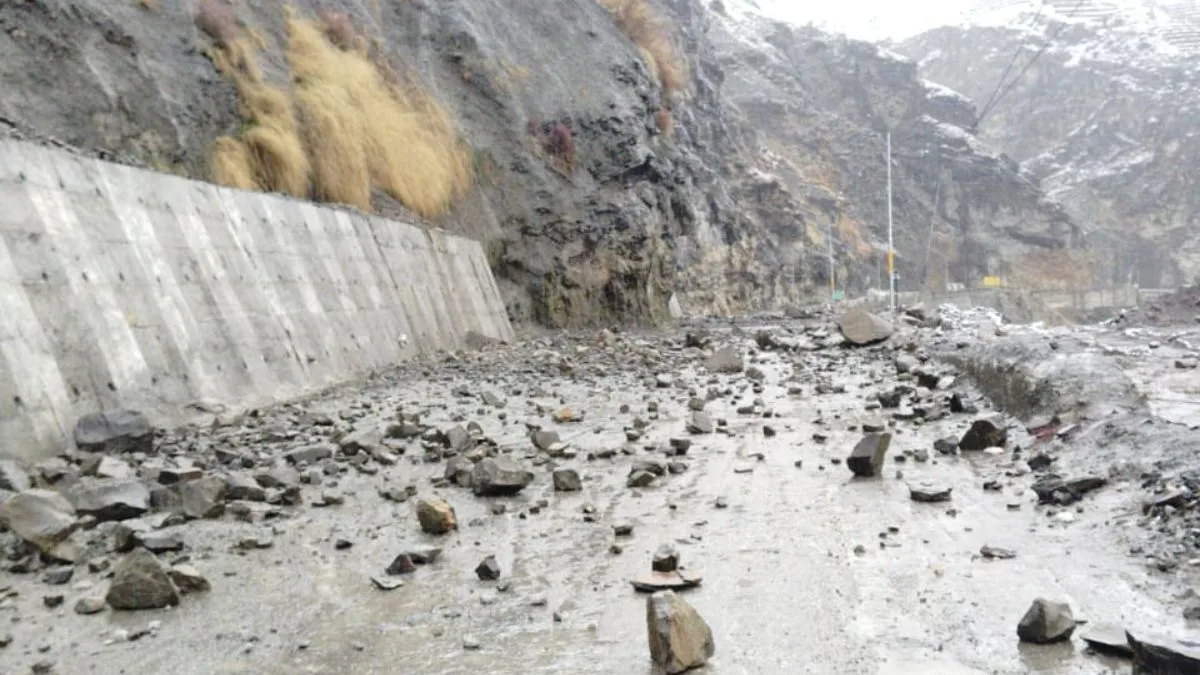
Monsoon rainfall ran nearly 46 per cent above normal. Cloudbursts, floods and landslides claimed over 360 lives and caused losses exceeding Rs 4,000 crore. Months later, December recorded just 0.1 mm of rainfall, the driest in more than a century. Within a single year, the state swung from deluge to drought. For this western Himalayan region, climate extremes are no longer aberrations. They are reshaping fiscal planning, infrastructure design and administrative priorities. The irony? Himachal Pradesh contributes less than 1 per cent of India’s greenhouse gas emissions.
Advertisement
Yet, it absorbs the negative effects of climate change disproportionately. However, such negative effects won’t be limited to just this “mountain state”. Chief Minister Sukhu recently said that any form of disruption to the Himalayas would result in serious consequences for the nation as well. He was speaking on the occasion of a report launch, ‘Scientific Assessment of Tackling Non-CO2 Emissions: Pathways for Himachal Pradesh.’ Focus on non-CO2 emissions such as methane, black carbon and HFCs is in line with policy and governance attention steadily shifting towards ways to achieve faster, near-term mitigation of climate change. Methane and black carbon influence temperature and air quality over shorter timeframes than carbon dioxide. In mountain systems, black carbon deposited on snow reduces reflectivity and accelerates melt.
Methane contributes to near-term warming and to ground-level ozone formation. Much of this pollution travels from outside the state, yet its impacts are intensely local – on crops, hydrology and public health. For Himachal, this linkage is practical rather than abstract. The state has more than 10 GW of installed hydropower capacity. River flows determine electricity output, irrigation supply and household water access. Faster melt alters seasonal flow patterns and complicates reservoir management. Managing non-CO2 emissions therefore connects climate mitigation with water security and energy stability. Sectoral data indicates where action can be embedded within existing policy frameworks. Livestock accounts for the majority of methane emissions, even as animal husbandry anchors rural incomes. Balanced feeding, improved fodder management and breed optimisation reduce methane intensity per unit of milk.
When aligned with milk procurement systems, efficiency gains can raise farm income without expanding herd size. Manure-based biogas systems add another channel: lowering household fuel costs while producing organic fertiliser. In this sector, mitigation and income enhancement reinforce one another. Transport represents a second pressure point. Rapid vehicle growth, tourism mobility and freight movement increase emissions of nitrogen oxides and particulate matter. Steep gradients and congestion amplify per-vehicle emissions in hill towns. Electric buses and fleet renewal programmes are under way, but their impact depends on charging infrastructure, grid reliability and coordinated mobility planning. Industrial activity will expand with economic growth.
Effective enforcement of pollution-control systems, including scrubbers and continuous monitoring can reduce sulphur dioxide, nitrogen oxides and particulate matter even as output rises. Cleaner back-up power through solar and storage reduces reliance on diesel generator sets, which otherwise elevate particulate and black carbon emissions. Waste management presents a targeted opportunity. Emissions are modest in aggregate but concentrated in districts such as Kangra and Mandi. Segregation at source, composting and biomethanation reduce methane while easing landfill pressure. Because these emissions originate from identifiable urban clusters, administrative accountability is feasible. Residential cooking illustrates how transition can work. Expanded LPG access has lowered household particulate exposure.
Sustaining these gains requires refill affordability in cold districts and reliable last-mile delivery in remote terrain. As household emissions decline, policy focus shifts toward transport, industry and diesel backup systems. The challenge now is integration. Livestock reform sits within rural development. Transport electrification falls under mobility and energy departments. Waste management rests with urban local bodies. Yet climate risk cuts across each of these domains. Embedding measurable non-CO2 reduction targets within sectoral planning would align adaptation and mitigation within the same fiscal cycle. The scientific case for this alignment is strengthening.
For example, rising temperatures accelerate ozone formation from nitrogen oxides and volatile organic compounds, intensifying heat–air quality co-exposure in valley regions. Heat stress and pasture decline can also increase methane intensity in livestock systems. Addressing these linked dynamics offers a practical pathway to moderate near-term warming while protecting agricultural productivity. Himachal is absorbing climate shocks despite its limited emissions footprint. Its experience raises a broader national question. Climate policy often measures success through aggregate carbon reduction.
Mountain regions require an additional metric: reduction of near-term warming drivers that intensify glacier melt, disrupt hydrology and degrade air quality within years rather than decades. Himachal cannot control global emissions. But it can influence the pace at which local risk accumulates. Acting on methane and black carbon is one of the few levers capable of delivering climate stability, air-quality improvement and rural income gains within the present decade, a rare convergence in an era of escalating extremes.
(The writers are, respectively, Research and Policy Associate, and Director, Science Programme, IGSD India.)