Jammu and Kashmir: Army’s rescue operation in flood-hit Rajouri saves 11 civilians
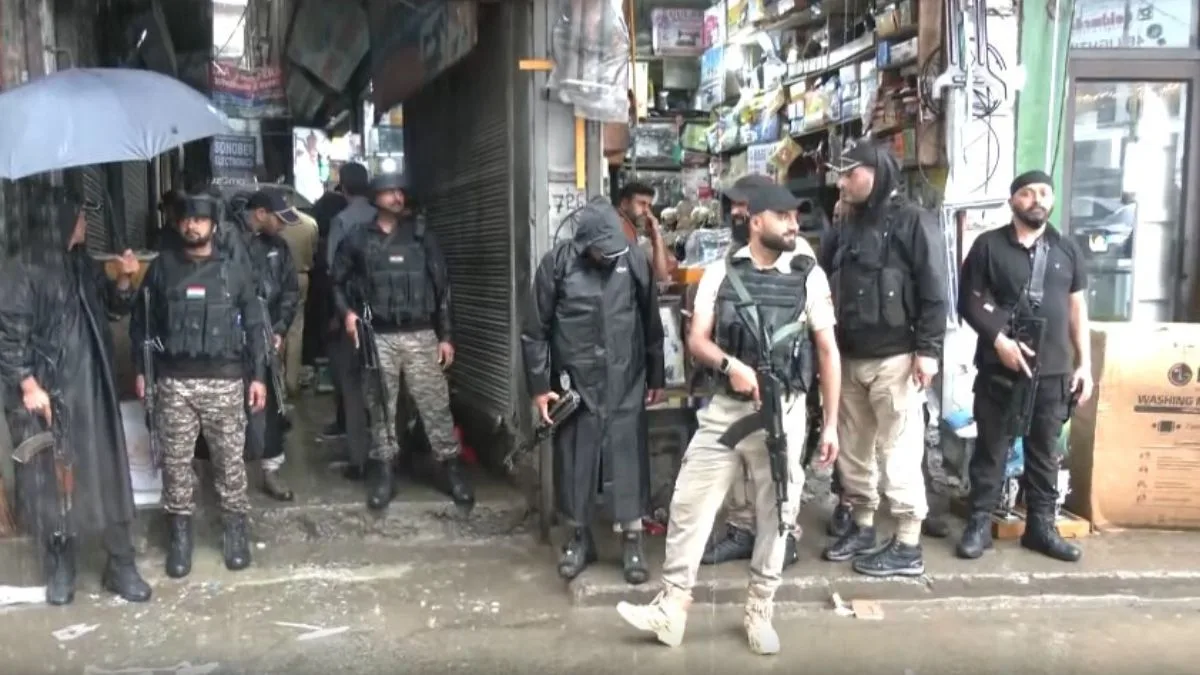
Among the 11 rescued persons, five were children. They were stranded at different places in the flood-affected district following incessant rainfall.
The landing, executed as the day’s light faded, cut the last viable retreat for Pakistani forces falling back on Dhaka, accelerating the collapse of Pakistan’s army in the East, commanded Gen A A K Niaz, and hastening the final fall of Dhaka, five days later.




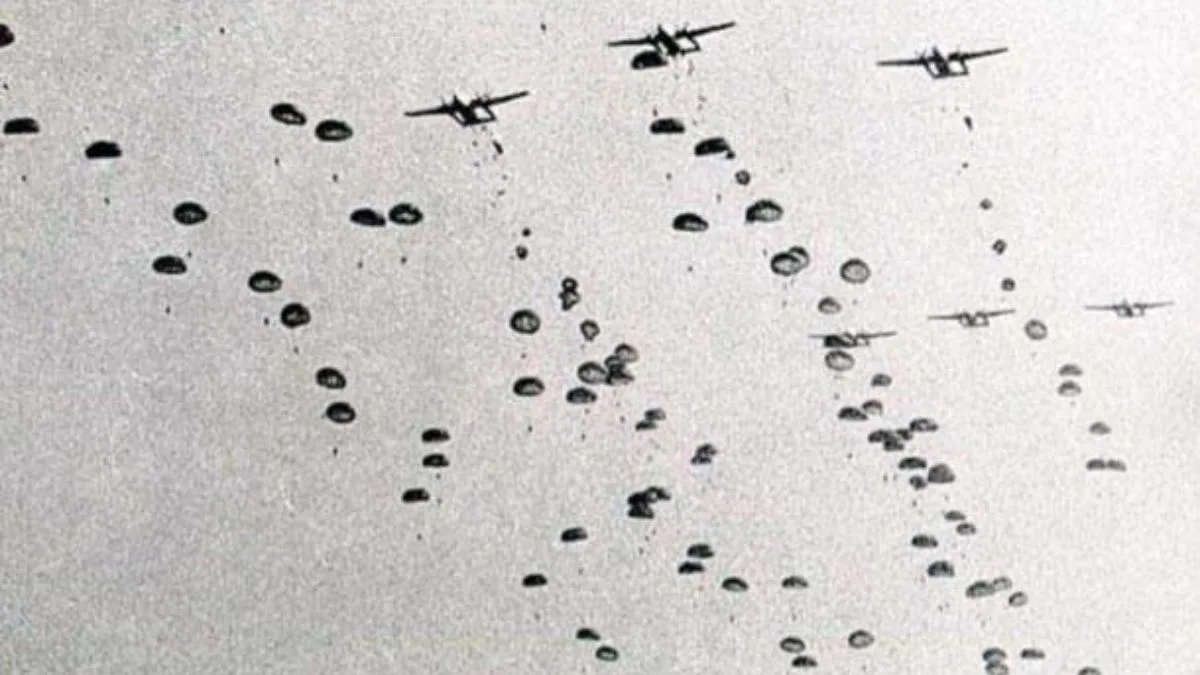
Photo: X/@IAF_MCC
On December 11, 1971, as India’s lightning campaign in the East neared its climax, a parachute battalion dropped into the paddy fields near Tangail, just 56 kms from the final objective – Dhaka.
The landing, executed as the day’s light faded, cut the last viable retreat for Pakistani forces falling back on Dhaka, accelerating the collapse of Pakistan’s army in the East, commanded Gen A A K Niaz, and hastening the final fall of Dhaka, five days later.
Advertisement
Half a century on, the Tangail airdrop is remembered as one of the most audacious airborne operations in South Asian military history.
Less known is the man who prepared the ground for it, Captain Prashanta Kumar Ghosh, a young paratrooper and signals officer, moving under the unlikely codename “Peter”.
Advertisement
Disguised in ‘lungi’ and a torn shirt, carrying a Sten gun and a crystal-tuned radio, Ghosh slipped into East Pakistan weeks before the war formally began.
His task was to find safe landing zones, link up with the Mukti Bahini, sabotage communications, and shepherd the airborne battalion when the moment came.
The operation’s origins lay in early assessments by Indian Army’s Eastern Command that Poongli Bridge was a critical choke point on the Jamalpur–Tangail–Dhaka axis.
Control of this crossing by paratroopers would prevent Pakistani forces falling back from Mymensingh and Jamalpur from regrouping at Dhaka. And Ghosh was chosen for the job of going in, in disguise to guide the commandos in their mission.
In the autumn of 1971, as refugees streamed into India and Delhi contemplated intervention, he was abruptly summoned by Lt Gen JFR Jacob, Eastern Command’s operations mastermind.
Jacob’s reasoning had a brutal logic: “You’re a paratrooper, a signaller, a commando, a Bengali, and you topped your course at joint air warfare school.” The young captain, as he later admitted, had not volunteered at all. He was press-ganged into one of the most daring missions of 1971.
By mid-November, after a series of pre-dawn briefings in Shillong and the Tura Hills, and kitted out by the local sector headquarters, Ghosh was launched across the border, with the army top brass making it clear that once he crossed the border, he was on his own and if caught, India would disclaim all knowledge of his existence.
His companion was a 14-year-old Mukti Bahini trainee named ‘Badshah’, whose grasp of local dialects proved indispensable.
For the next 10 days, “Peter” moved between Mymensingh and Tangail, ambushing convoys with Mukti Bahini commander Abul Kader Siddique’s forces and passing back intelligence to the Indian side.
He identified two suitable drop zones and concluded, quite correctly, that the northern thrust towards Dhaka, unobstructed by major rivers, offered India its best chance of a swift capture of the capital.
The main aim of the air-borne commandos who were to be dropped, was to secure the Poongli Bridge over the Lohajang River, capturing the adjacent ferry crossing, blocking the retreat of Pakistan’s 93 Infantry Brigade, enabling a rapid Indian advance towards Dhaka.
When the 2nd Para Regiment finally parachuted down on the evening of December 11, 1971, Ghosh and roughly 200 Mukti Bahini fighters had already secured the landing area.
He guided the crack battalion to Poongli Bridge, and salvaged heavy stores scattered across the darkness. By midday on the 12th, leading elements of 95 Mountain Brigade had linked up with the paratroopers.
Pakistani troops guarding the bridge withdrew after brief resistance. The battalion then ambushed the retreating 93 Infantry Brigade, inflicting heavy casualties and forcing it back northward.
On December 12, advancing elements of 1 Maratha Light Infantry linked up with the paratroopers, enabling Indian forces to bypass the defended Tongi–Dhaka road and push towards the capital via Manikganj.
The road to Dhaka lay open. It was the beginning of the celebrated “race to the capital,” which 101 Communication Zone forces would win: the Red Berets led the triumphant entry into Dhaka on the morning of December 16.
Deception operations, including publicising old photographs of the entire para brigade being dropped somewhere in central India as part of a training exercise, unnerved Niazi’s command leading them to believe an entire brigade of para-commandos from the west besides Indian infantry and tanks from the north was converging on Dhaka.
Yet Ghosh’s most stinging memory from that mission is not triumph but disappointment.
At the surrender ceremony at the Ramna Race Course, he watched as a naval officer quietly removed Niazi’s black Mercedes staff flag—an unclaimed wartime trophy Ghosh had hoped to secure for his regiment’s mess. “Who says life is fair?” he later remarked, with characteristic wryness.
The Tangail airdrop may have quickened the end of the war, but it was the unseen work of men like “Peter”, moving silently through hostile territory, that made it possible.
Advertisement