U.S. Secretary of State Marco Rubio on Wednesday accused Iran of failing to honour commitments made during diplomatic contacts, warning that Washington remained open to negotiations but would act to protect its interests and those of its allies if Tehran was not “serious about talks.”
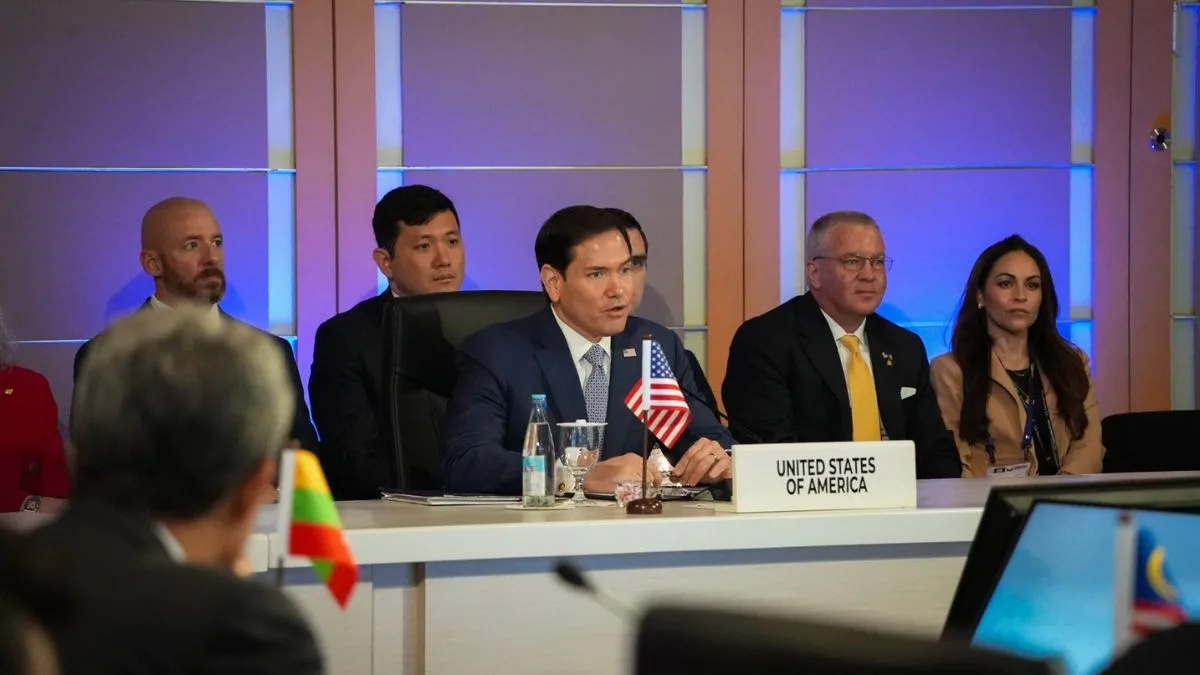
Speaking at the ASEAN Post-Ministerial Conference in Manila, Rubio said Iran had approached the United States through both direct and indirect channels to discuss the escalating crisis in the Middle East, but accused Tehran of failing to follow through on agreements.
Advertisement
“If they’re serious, we’re serious. If they’re not, then we will do what is necessary to protect our interests and also the interests of our allies,” Rubio said.
Rubio said the dispute centred on what he described as Iran’s attempt to assert control over shipping through the Strait of Hormuz, one of the world’s most critical oil transit routes, calling it a threat to the global trading system.
“This is an international waterway,” he said. “If we create a precedent… where a nation state can decide that they are going to control an international waterway, charge a toll, and if you don’t pay them, blow up your ships, we have created a very dangerous precedent.”
He warned that any disruption to freedom of navigation in the Strait of Hormuz would threaten not only regional stability but also the global economy.
“If that is threatened, then I think the global economy is threatened and the rules which have underpinned 150 years of international trade and commerce are also threatened.”
While maintaining a hard line, Rubio reiterated that Washington continued to favour diplomacy.
“The United States remains open and willing to engage in positive, constructive negotiations and talks so long as the commitments that are made are kept.”
Turning to Southeast Asia, Rubio sought to reassure ASEAN members that the region remained central to U.S. foreign policy despite mounting crises elsewhere.
Announcing $2.5 billion in U.S. strategic investments across Southeast Asia, he said Washington would expand support for energy security, digital infrastructure and supply chains, describing the funding as an investment driven by American national interests rather than aid.
“This is not charity… it’s in our national interest. Our partnership with each of your countries and the region at large is in the national interest of the United States, and we will never abandon it.”
Rubio also announced $1.5 billion in new U.S. Development Finance Corporation investments for aviation infrastructure, energy security and secure supply chains, alongside nearly $130 million in regional demining assistance.
Describing Southeast Asia as the defining region of this century, Rubio said the United States intended to remain a long-term strategic partner.
“The future and the story of the 21st century will be written in this region,” he said. “The security and prosperity of the United States and Southeast Asia will always depend on each other.”