A scientific study conducted recently has found that the medicinal plant Tinospora cordifolia, commonly known as Giloy, contains the highest concentration of its important health-promoting compounds during the monsoon season.
This study conclusively establishes scientific evidence for traditional Indian knowledge concerning the seasonal harvesting of medicinal plants, through research by Acharya Balkrishna, Monali Joshi, Meenu Tomer, Pardeep Nain, and Anurag Varshney, published in BMC Plant Biology.
Advertisement
Giloy and its importance in Ayurveda
Giloy is a well-known herb in Ayurveda. It is a Rasayana herb. This means that it improves overall health and thereby enhances vitality. The plant comes in common use in herbal remedies due to its anti-inflammatory action.
Special compounds called phytochemicals confer the therapeutic effects of Giloy. In the current study, the scientists have focused on three major bioactive compounds: cordifolioside A, magnoflorine, and β-ecdysone, responsible for many health benefits associated with Giloy.
Why seasonal study matters
Traditional Ayurvedic literature has always recognized the timing of collection as an important determinant for plant quality. Specific texts explain what part of a plant is collected in which season to procure the right and best medicinal value.
For example, the best time for harvesting roots is during summer or winter, leaves during summer, and stems during the rainy and spring seasons. However, while these traditions are centuries old, scientific validation is very few.
Study design
T. cordifolia stems were collected by the researchers from the herbal garden of Patanjali Research Foundation, Haridwar, over a continuous period of 24 months, from 2022 to 2024. To capture seasonal differences, they have collected every alternate month samples.
The bioactive compounds from the stems were extracted using a hydro-methanol solution; the researchers analyzed these compounds by two advanced laboratory methods: UHPLC-PDA and HPTLC.
These methods enabled them to identify and determine the amounts of cordifolioside A, magnoflorine, and β-ecdysone present in the samples. The study also followed guidelines recognized internationally.
Key findings
The results clearly reflected the seasonal pattern in the levels of the three compounds.
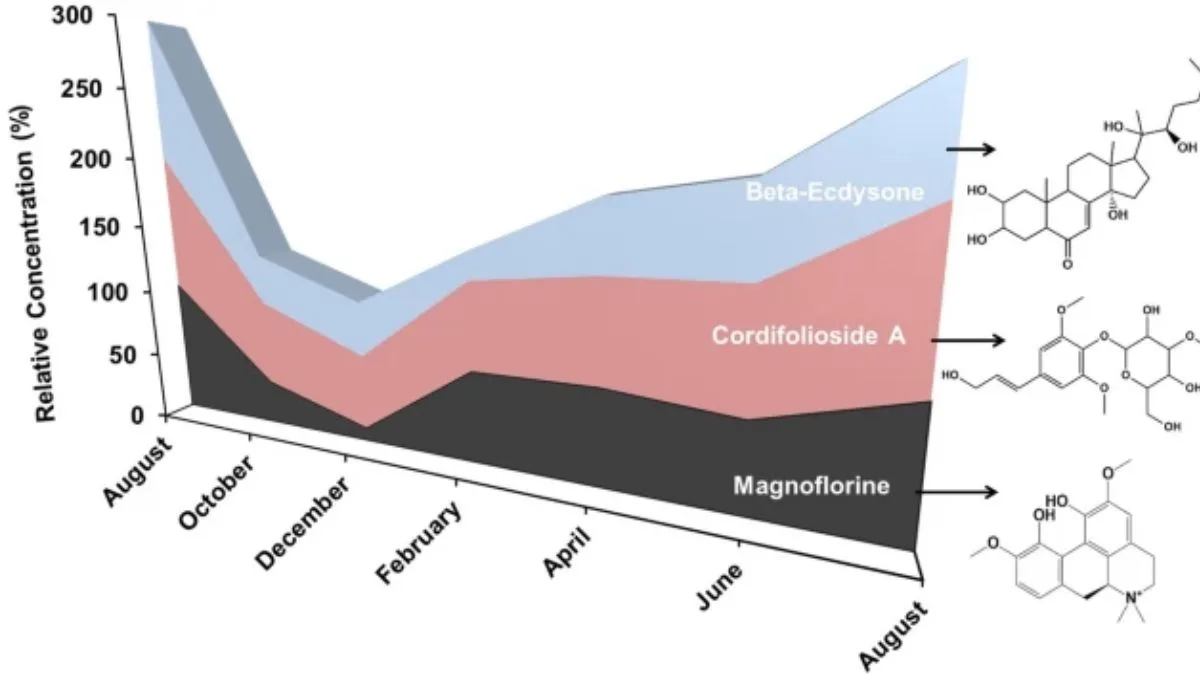
Maximum in monsoon: Cordifolioside A, magnoflorine, and β-ecdysone exhibited maximum values in August, which falls in the peak of the monsoon season in India.
Lowest concentration in winter: During December to February, the levels decreased substantially.
Moderate levels in spring and summer: The months between winter and the monsoon showed moderate concentrations.
Specifically magnoflorine varied from 5.0 to 54.5 ng/mg, β-ecdysone from 5.5 to 28.0 ng/mg and cordifolioside A from 154.0 to 289.0 ng/mg in different months. The peak in the monsoon was 54.5 ng/mg for magnoflorine, 28 ng/mg for β-ecdysone, and 284 ng/mg for cordifolioside A. In contrast during winter, these compounds dropped to their lowest observed values.
Scientific explanation for seasonal variation
The study explains that due to the different environmental conditions, plants synthesize these bioactive principles. This is because during the colder months, plant growth is slow which decreases the rate of synthesis of phytochemicals. Conversely monsoon conditions with increased rainfall and moderate temperatures may stimulate a plant’s defense mechanisms and biosynthesis of secondary metabolites leading to a higher level of medicinal compounds.
Chemical fingerprinting confirms results
Apart from the quantification of compounds, a chemical fingerprint using HPTLC was also prepared where the presence of various compounds in the extract was represented visually. The fingerprints on HPTLC plates showed clear differences between monsoon samples (August) and winter samples (December).
Some compounds appeared only in the monsoon samples and did not appear during winter. This shows the strong impact of seasonal changes on Giloy’s medicinal quality.
Implications for herbal medicine and industry
The outcomes of this study have immense importance for traditional practitioners as well as the manufacturers of herbal products. The collection of Giloy in the monsoon season may offer an opportunity to maximize the concentration of important phytochemicals, which could help to make plant extracts used in medicines, supplements, and wellness products more effective and consistent in quality.
It also supports the sustainable use of herbal resources. Knowing the best time to harvest avoids overharvesting and ensures that plants are collected when they are at their peak in medicinal value.
Comparison with other plants
Similar seasonal patterns have appeared in other medicinal plants. For example Terminalia ivorensis showed higher levels of cinnamic acid during the rainy season. On the other hand, Artemisia afra showed the lowest levels of phytochemicals during the rainy season. It shows that different plants react differently to seasonal changes.
Other plants like Valeriana jatamansi and Senna singueana also exhibited significant seasonal variation in their bioactive compounds. Most importantly, the research concludes that the monsoon is the perfect time for the collection of Giloy stems, ensuring the highest concentration of important medicinal compounds during this season.
It also highlights the wisdom in classical texts with the addition of scientific evidence to establish a link between traditional practices and modern research.
For any person who uses Giloy for health-related purposes, be it traditional Ayurveda or modern herbal supplements and wellness remedies, the best quality stems are those from the monsoon season.