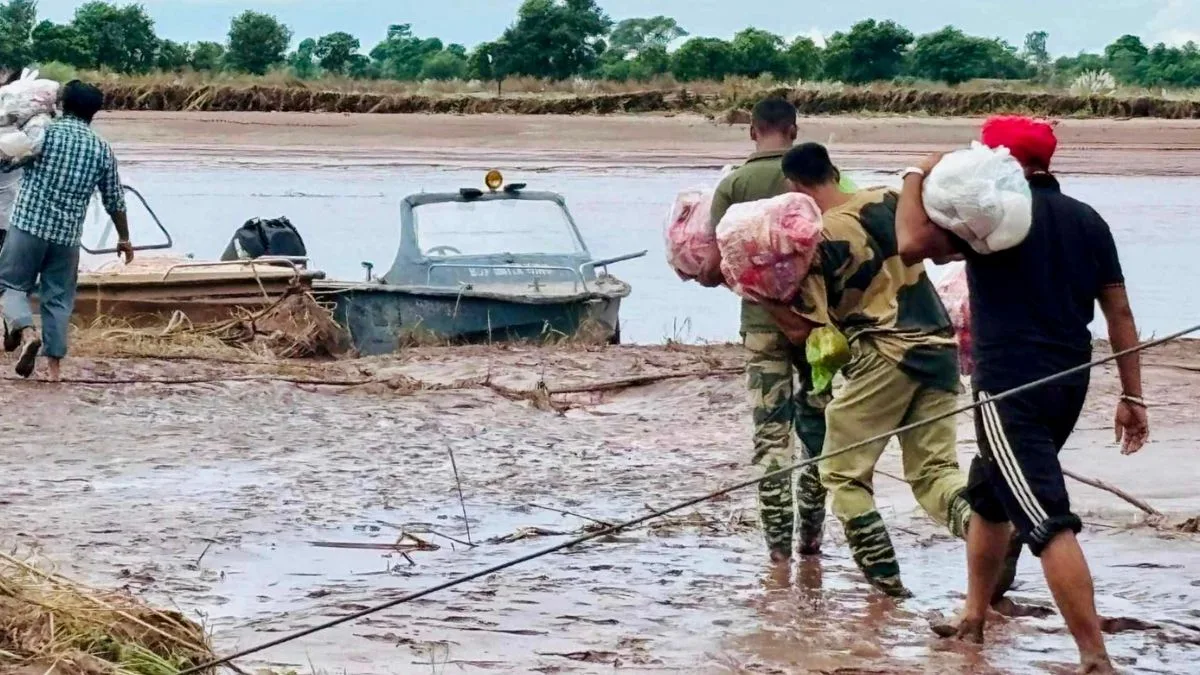
The devastating floods in Punjab and parts of north India are a stark reminder that climate vulnerability is no longer a distant threat but an immediate crisis reshaping lives and economies. With more than 30 lives lost, over 350,000 people displaced or affected, and all 23 districts declared flood-hit, the state is experiencing its worst inundation since 1988. What unfolds in Punjab today should concern not only its residents but the entire nation, for this disaster strikes at the heart of India’s food security.
Punjab is celebrated as the nation’s “food basket,” the land that has for decades produced the wheat and rice that fill Indian plates. Today, nearly 150,000 hectares of fertile land lie submerged, and the crops that once promised sustenance have been swallowed by floodwaters. In a state where a quarter of the population depends directly on agriculture, this is a livelihood catastrophe. Thousands of farmers now face the grim prospect of lost income, mounting debt, and shattered futures.
Advertisement
The scale of response has been enormous. Disaster response teams, backed by the army, air force, and navy, have been deployed with boats and helicopters to rescue families and livestock. Relief camps provide shelter, food, and medicine, but they cannot restore what is irretrievably lost ~ homes destroyed, possessions washed away, and agricultural cycles disrupted. For many families, patching embankments with sandbags and standing vigil by swollen rivers has become the only defence between survival and despair.
While it is tempting to view this as an exceptional calamity, science suggests otherwise. Punjab’s deluge is part of a pattern. Meteorologists attribute the excessive rainfall to the repeated clash of monsoon currents with westerly disturbances, a dynamic that is becoming more frequent as climate change alters weather systems. Extreme rainfall, sudden floods, and overflowing reservoirs are no longer anomalies; they are the new normal.
The adjoining Punjab province across the border in Pakistan faces a similar ordeal, underlining that climate events pay no heed to political boundaries. This crisis forces us to ask difficult questions. Why do we continue to depend on infrastructure that buckles under pressure year after year? Why do we allow unchecked construction along floodplains, knowing the risks?
And why is climate resilience still an afterthought in national planning, when disasters strike with such predictable unpredictability? Punjab’s tragedy must become India’s wake-up call. Central assistance, urgently needed now, should not be limited to relief and compensation. It must translate into long-term investments in river management, resilient cropping systems, insurance mechanisms for farmers, and urban planning that accounts for water. Otherwise, the cycle of devastation and rebuilding will repeat, each time at a greater cost.
Floods may be an act of nature, but the suffering they unleash is compounded by human neglect. If India fails to treat this moment as a turning point, then Punjab’s floodwaters will not just drown crops and homes ~ they will erode confidence in the nation’s preparedness for a climate-shaped future.