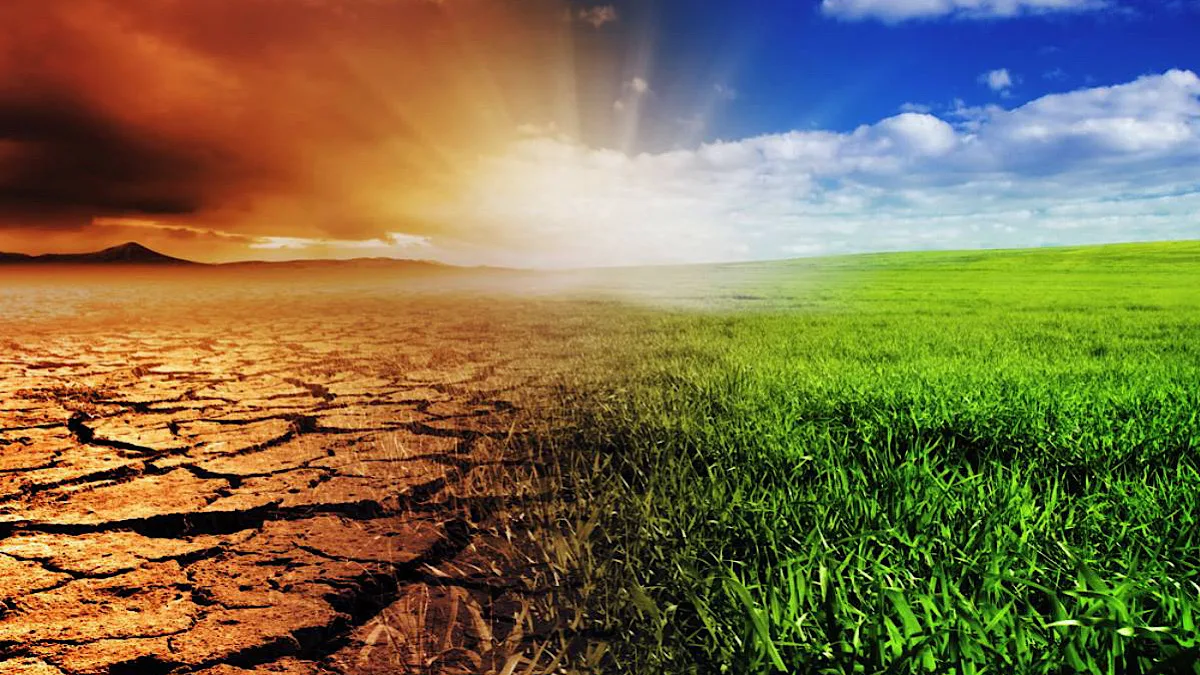
For much of the past three decades, climate change occupied a distinct corner of public policy. It was largely discussed through the lens of environmental conservation, carbon emissions and international climate negotiations. Governments treated it as an ecological challenge while economists, urban planners and public health experts often addressed it separately within their respective domains.
That distinction is no longer sustainable. Climate change has evolved into a systemic risk that increasingly shapes economic growth, public health, national security and social stability. Treating it as a specialised environmental issue understates both its scale and its consequences. The evidence is visible across India. Record-breaking heatwaves, erratic monsoons, flash floods, prolonged droughts and coastal erosion are no longer isolated events but recurring features of an altered climate. Cities from Delhi to Guwahati have experienced extreme rainfall that overwhelms drainage systems, disrupts transport and damages infrastructure.
Advertisement
Himalayan States confront landslides and glacial risks with increasing frequency, while coastal communities face stronger cyclones and rising sea levels. These events are not simply environmental disasters; they impose heavy economic costs and expose the vulnerability of existing development models. Agric ulture illustrates this transformation most clearly. Despite structural changes in the economy, millions of Indians continue to depend directly or indirectly on farming for their livelihoods. Unpredictable rainfall, rising temperatures and changing pest patterns reduce crop productivity and increase uncertainty for farmers. The consequences extend far beyond rural incomes.
Food inflation, supply chain disruptions and fiscal pressures frequently follow climatic shocks, affecting consumers and policymakers alike. Climate resilience has therefore become integral to food security and macroeconomic stability. Urban India faces an equally complex challenge. Rapid urbanisation has expanded economic opportunities but has also increased exposure to climate-related risks. Heatwaves raise electricity demand as cooling requirements grow, placing additional pressure on power systems. Flooding damages transport networks, disrupts businesses and imposes significant repair costs on municipal authorities. Water scarcity threatens both households and industries, while poorly planned construction often amplifies the effects of extreme weather.
Climate resilience can no longer remain an optional consideration in urban planning; it must become one of its central organising principles. Public health presents another compelling reason to rethink climate policy. Rising temperatures increase heat-related illnesses, particularly among children, older persons, outdoor workers and economically vulnerable populations. Air pollution interacts with higher temperatures to ag gravate re spirator y and cardiovascular diseases. Changes in climatic conditions also influence the spread of vector-borne diseases, creating new burdens for healthcare systems already under pressure.
Climate adaptation, therefore, is inseparable from preventive healthcare and public health preparedness. The social consequences of climate change are equally profound. Environmental shocks rarely affect all sections of society in the same way. Small farmers, informal workers, fishing communities, tribal populations and low-income urban households often bear the greatest burden despite contributing the least to global greenhouse gas emissions. Climate change therefore raises questions not only of sustainability but also of equity. Policies that overlook these disparities risk widening existing inequalities and undermining inclusive development.
These realities demand a broader policy response. Mitigation remains indispensable because reducing emissions is essential for limiting long-term warming. Yet adaptation deserves equal priority. India must invest in climate-resilient infrastructure, water conservation, sustainable agriculture and early warning systems that minimise loss of life and livelihoods. Urban development plans should integrate heat-action strategies, flood-resilient drainage, green public spaces and nature-based solutions instead of relying solely on conventional engineering interventions.
Such investments should be viewed not as environmental expenditure but as economic safeguards that reduce future losses. India has already demonstrated leadership in renewable energy and international climate diplomacy. Initiatives such as the International Solar Alliance and the expansion of solar and wind capacity reflect a commitment to balancing development with environmental responsibility. However, climate considerations must now extend beyond the energy sector. Decisions relating to transport, housing, industrial policy, financial regulation, healthcare and disaster management increasingly have climate implications. A whole-of-government approach is therefore essential. The private sector also has a pivotal role.
Climate risks are no longer abstract concerns confined to sustainability reports. They directly affect supply chains, insurance costs, infrastructure, labour productivity and long-term profitability. Businesses that integrate climate resilience into investment decisions are likely to remain more competitive in an increasingly uncertain global economy. Financial institutions must similarly strengthen climate-risk assessment so that capital flows support resilient infrastructure and sustainable economic activity. Equally important is recognising climate change as a governance challenge. Effective adaptation depends upon stronger coordination among the Union, States and local governments.
Municipal bodies require greater technical capacity and financial resources to implement climate-resilient urban planning. Panchayats must be equipped to support local adaptation measures, while scientific institutions should work more closely with policymakers to translate climate projections into practical planning tools. Fragmented responses will prove inadequate against a challenge that cuts across every sector. The debate is often framed as a choice between economic growth and environmental protection. That binary has become increasingly misleading.
Climate resilience is now a prerequisite for sustained economic development. Infrastructure repeatedly damaged by floods, declining agricultural productivity, rising healthcare costs and disrupted supply chains ultimately impose far greater economic burdens than preventive investments ever would. Climate change has outgrown the confines of environmental policy. It now influences fiscal stability, food security, public health, urban governance, infrastructure planning and social justice.
India’s development trajectory will increasingly depend on how effectively these interconnected risks are addressed. The question is no longer whether climate policy deserves a place in economic planning. It is whether economic planning can remain credible without placing climate resilience at its very centre. The writer is a civil engineer, and consultant (invitee) to Rashtriya Raksha University under the Ministry of Home Affairs.
(The views are personal. He can be reached at siddharth001.roy@gmail.com)