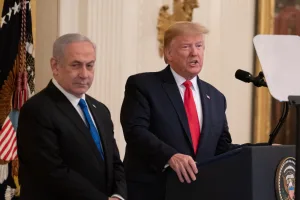
In a dramatic yet not entirely surprising move, President Donald Trump has once again realigned the global tech landscape with the stroke of a pen and the force of rhetoric. His message at the recent AI Summit was unequivocal: American technology companies must hire Americans, build in America, and think American.
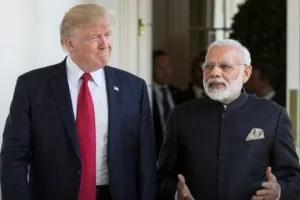
The broader implications for India’s decades-old reliance on US tech outsourcing are significant ~ and sobering. For years, India has played a central role in the global digital economy by supplying cost-effective, highly skilled IT professionals to major American firms. The symbiotic relationship has enriched both economies, with India’s outsourcing sector evolving into a multi-billion-dollar industry and US firms enjoying efficiency and scalability. But Mr Trump’s call to end what he calls a “globalist mindset” may disrupt this equilibrium. His declaration that companies benefiting from American freedoms must now repay that debt by investing at home signals an ideological shift in policy ~ not just a political slogan.
Advertisement
At the heart of Mr Trump’s strategy are three executive orders that reshape the US approach to AI: ramping up domestic infrastructure, demanding political neutrality in government-funded AI, and accelerating the export of US-built AI tools. Each of these directives serves a dual purpose ~ protecting perceived national interests and creating visible job pipelines in the American heartland. But they also imply a future where American firms are discouraged, if not penalised, for relying on talent pools abroad, including India. More concerning is the ideological filter Mr Trump is placing on AI development.
His explicit rejection of “woke” AI and emphasis on neutrality may appeal to a section of his domestic base, but it also introduces an ambiguous compliance burden for any foreign partner or AI vendor serving US clients. For India’s tech sector, which has expanded its footprint in AI services and data solutions, these new conditions could mean navigating a politically charged maze. What makes this pivot different from earlier waves of protectionism is its timing. As global AI ecosystems are maturing rapidly, Mr Trump’s America appears determined to recast the rules just as developing nations are stepping up to participate meaningfully. Indian firms, long accustomed to working around regulatory bottlenecks, may now have to deal with ideological bottlenecks ~ something harder to quantify or forecast.
The message is clear. While there may not be immediate job losses or contract cancellations, the writing is on the wall for Indian IT exporters: a fundamental recalibration is underway. Relying purely on offshore delivery models and legacy outsourcing contracts may no longer suffice. To remain relevant, Indian firms will need to invest more in innovation, build deeper partnerships beyond US shores, and even consider onshore hiring in America as a strategic necessity. This is not the end of India’s tech story, but it may be the end of a chapter that grew too comfortable.