Amidst powder kegs, will peace hold in West Asia?
It is after more than 100 days that both President Donald Trump and Iran have announced a peace deal, much to the world’s relief.
America’s emergency oil stockpile has fallen to its lowest level in more than four decades after continued releases linked to the Iran conflict, raising concerns about future supply disruptions.




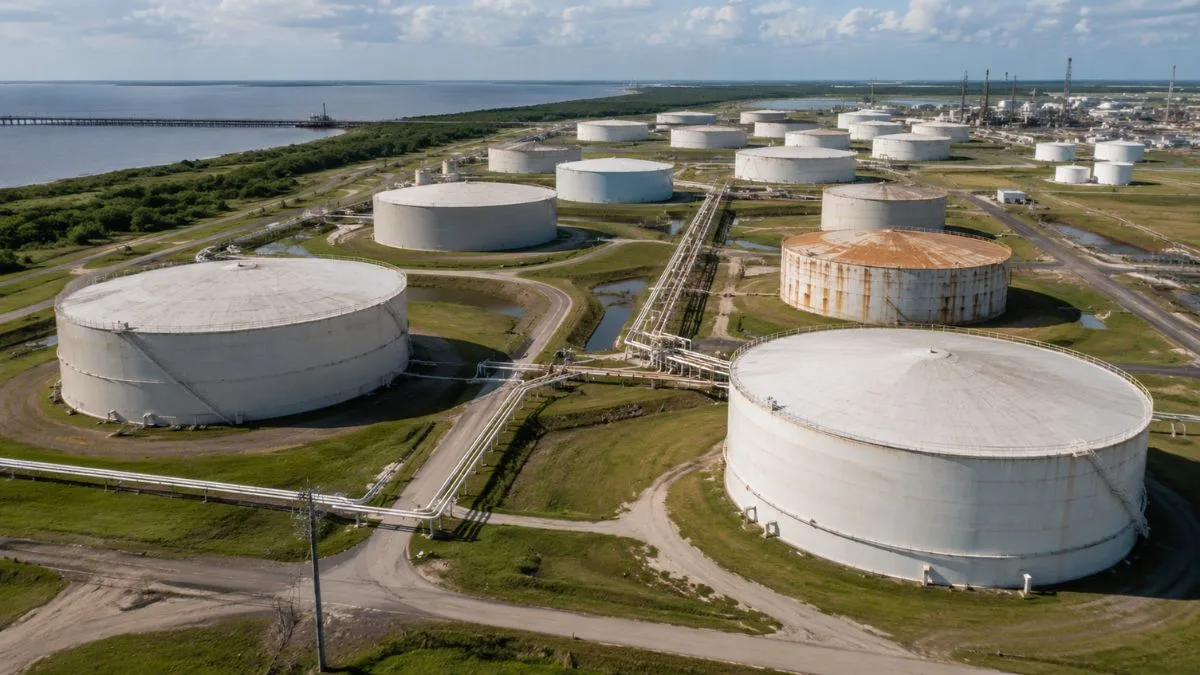
The US Strategic Petroleum Reserve has fallen to its lowest level since 1983 following continued emergency oil releases linked to the Iran conflict.
The US emergency oil reserve has fallen to its lowest level in more than 40 years after the Trump administration released millions of barrels from the stockpile to keep energy prices in check during the ongoing Iran conflict.
Federal data cited by CNN showed the Strategic Petroleum Reserve (SPR) held 340.3 million barrels of crude oil as of June 12, the smallest volume in the reserve since 1983. The decline follows another release of 8.9 million barrels last week and pushes the reserve below the previous record low recorded in July 2023.
Advertisement
The current level is the lowest seen in more than 40 years. The last time the reserve contained less oil was in July 1983, when the administration of former US president Ronald Reagan was still building the stockpile and the American economy was considerably smaller.
Advertisement
The SPR has become a central tool for the Trump administration as it seeks to contain the economic impact of rising fuel prices. Since the outbreak of the Iran conflict in late February, the reserve has declined by about 75 million barrels, representing an 18 per cent reduction.
At present, the stockpile is less than half full.
Energy market analyst Andy Lipow said emergency releases from the United States and other countries have helped prevent a sharper spike in global oil prices.
“The Strategic Petroleum Reserve releases, combined with releases by other governments and China reducing its exports, have prevented the Armageddon scenario of $150 oil from happening to date,” Lipow, president of Lipow Oil Associates, was quoted as saying by CNN.
He cautioned that the shrinking reserve could become a problem if another major supply shock occurs.
“If we were to get a major hurricane in the Gulf of Mexico that shuts production down for several weeks, that buffer would no longer be there,” Lipow said.
He also said the pace of releases may ease after the administration completes the deployment of 172 million barrels that it committed to release in March.
The drawdown has also drawn attention because of Trump’s previous criticism of former president Joe Biden’s use of the reserve.
During his 2022 campaign for the White House, Trump accused Biden of depleting emergency oil stocks ahead of midterm elections following Russia’s invasion of Ukraine. The current administration, however, is releasing oil from the reserve at an even faster rate ahead of this year’s midterms.
Industry officials have also raised concerns about how much further the reserve can be reduced without affecting its emergency role.
“The SPR must be at least 20% full to be operational,” Mike Sommers, chief executive of the American Petroleum Reserve, said during an interview on CNN‘s The Lead last week.
“We’re raising alarm bells right now.”
“We’re getting to levels where we are starting to be concerned,” he added.
The oil released since the start of the Iran conflict will eventually need to be replaced. However, replenishment is not expected before the peak of the Atlantic hurricane season, leaving the United States more exposed to potential weather-related disruptions in energy production and supply.
Advertisement