Jammu and Kashmir: Army’s rescue operation in flood-hit Rajouri saves 11 civilians
Among the 11 rescued persons, five were children. They were stranded at different places in the flood-affected district following incessant rainfall.
What makes this bridge truly special is the groundbreaking “design-as-you-go” strategy adopted by Sitharam and his team from the Indian Institute of Science (IISc).




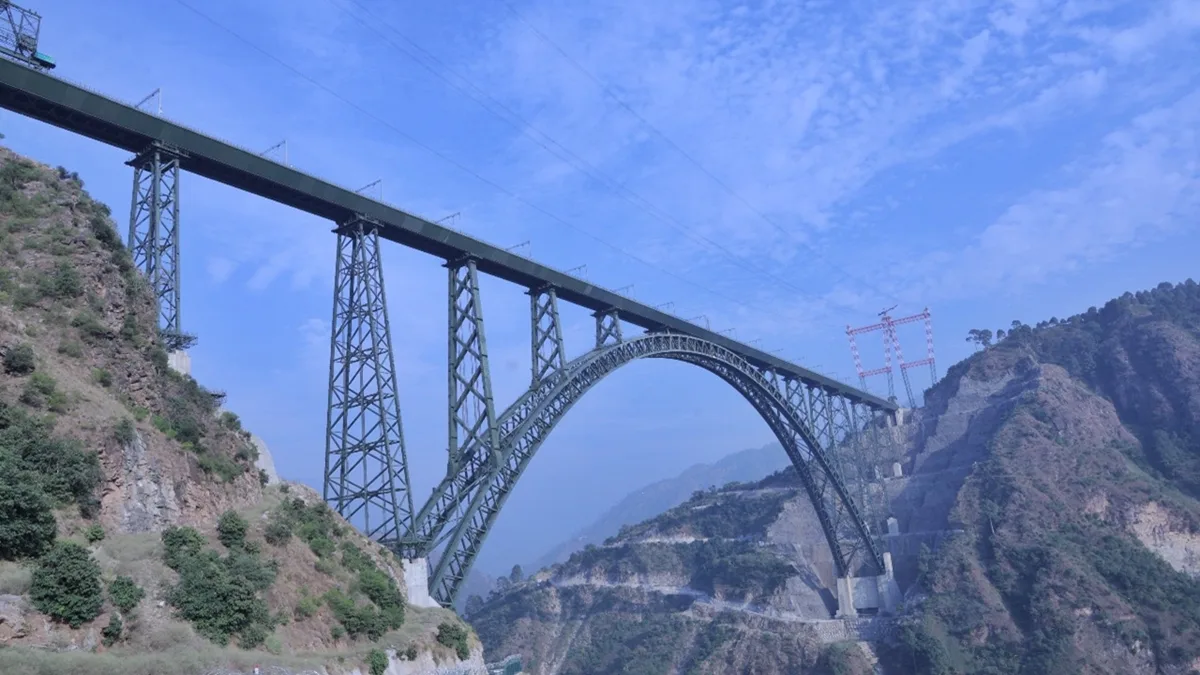
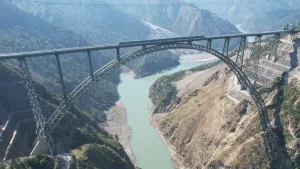
In picture: Chenab Bridge
The Chenab Bridge, which now stands proudly as the world’s highest railway bridge, is not just a structure of steel and concrete. It’s a story of India’s determination and heart. Professor T.G. Sitharam, Chairman of the All India Council for Technical Education (AICTE), who was deeply involved in this colossal project, recently called it “a marvel of New India.”
Speaking at Rail Bhavan in New Delhi, Prof. Sitharam reflected on the extraordinary journey behind the Chenab Bridge, describing it as a “collective national dream.”
Advertisement
He underlined that this was not just the work of engineers and labourers on-site but the outcome of every Indian’s aspiration to connect and grow.
Advertisement
He took a trip down memory lane, recalling his first visit to the Chenab Valley back in 2005. “I didn’t realise then that I was stepping into history,” he said. “The terrain was difficult, the ground unstable, and the stakes incredibly high. But one thing was clear. We weren’t just building a bridge, we were building pride. We were building a lifeline.”
Today, the Chenab Bridge soars 359 metres above the river, standing tall as a global engineering wonder. But this achievement didn’t come easy. It took close to twenty years of persistence, innovation, and teamwork to bring this vision to life.
What makes this bridge truly special is the groundbreaking “design-as-you-go” strategy adopted by Sitharam and his team from the Indian Institute of Science (IISc). This wasn’t your typical blueprint-led construction.
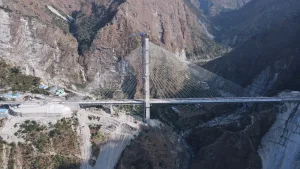
Instead, the team constantly adapted based on live data from the field. They used real-time simulations to make engineering decisions on the spot. This was crucial because the area’s seismic sensitivity and complex geography demanded solutions that could not be pre-planned in full.
“Every part of this bridge, every bolt, every support, was more than just engineering. It was built with belief,” Prof. Sitharam said.
For the youth of India, he had an inspiring takeaway. “Engineering isn’t just something you do inside a lab or classroom. The Chenab Bridge is proof that with dedication, sincerity, and a deep love for the nation, the impossible can become possible. If we can build a bridge here, our young people can build anything, anywhere.”
Advertisement