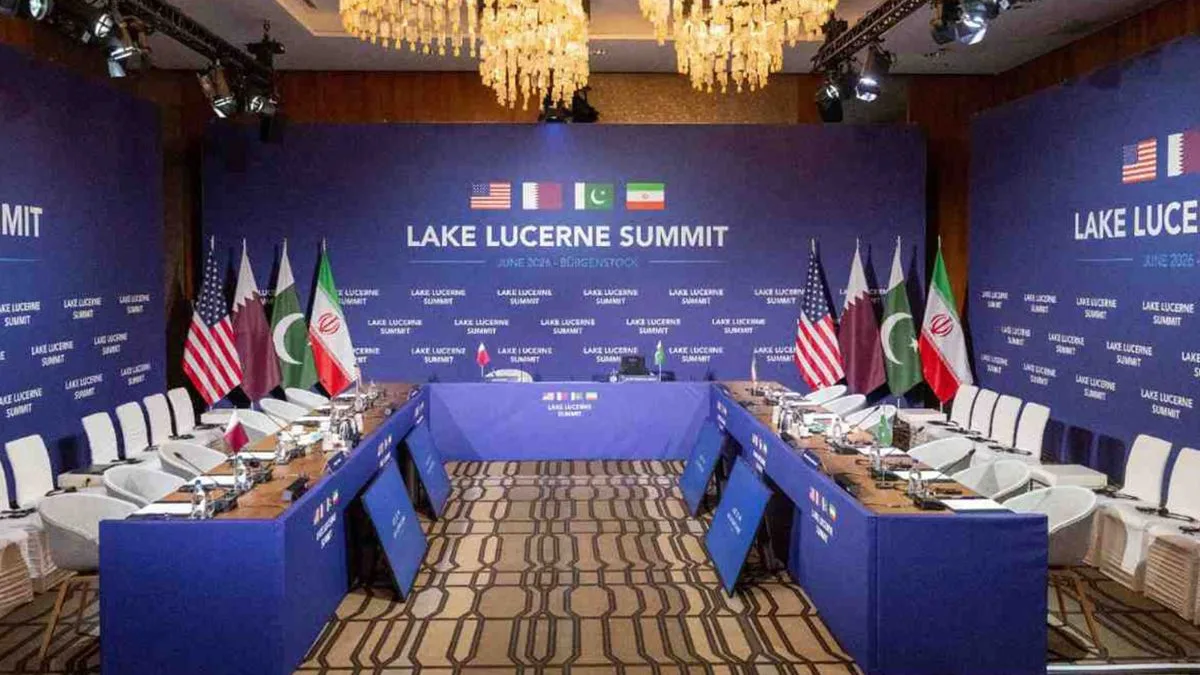
First round of US-Iran diplomatic talks in Switzerland concluded for ‘internal consultations’: Report
The Iranian state media claimed that the discussions on the first day didn't feature Iran's nuclear programme.
A US submarine torpedoed Iran’s frigate IRIS Dena near Sri Lanka after it joined India’s MILAN-2026 naval exercise, prompting strategic concerns over regional security and maritime diplomacy.




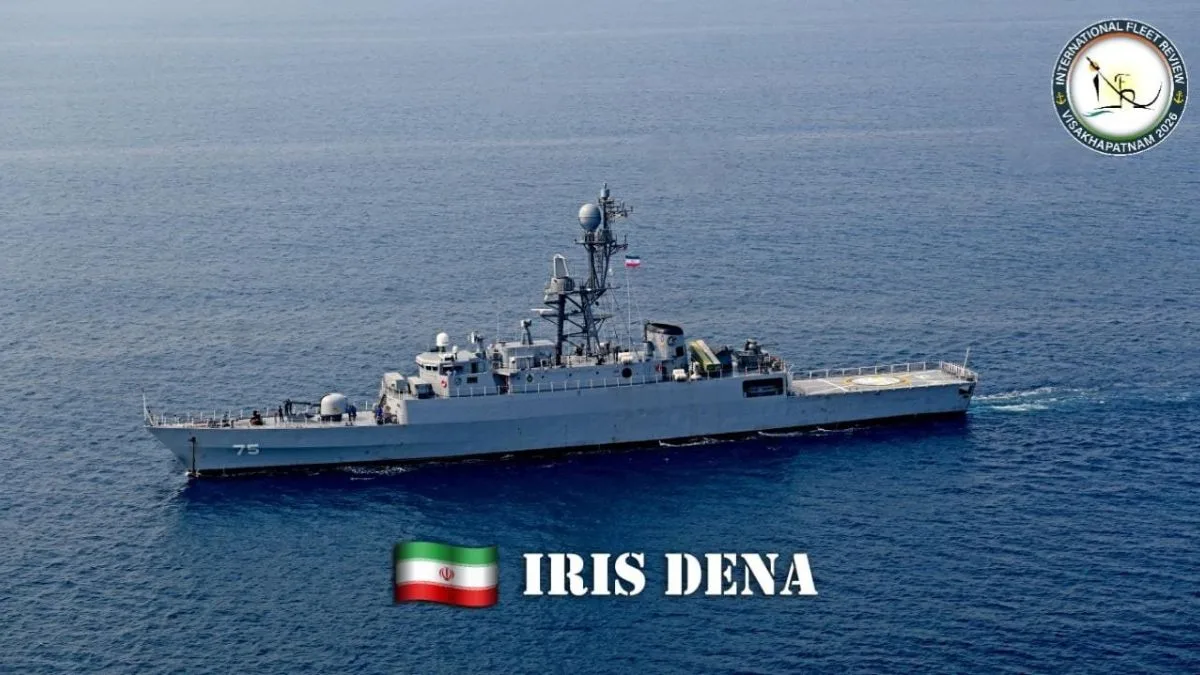
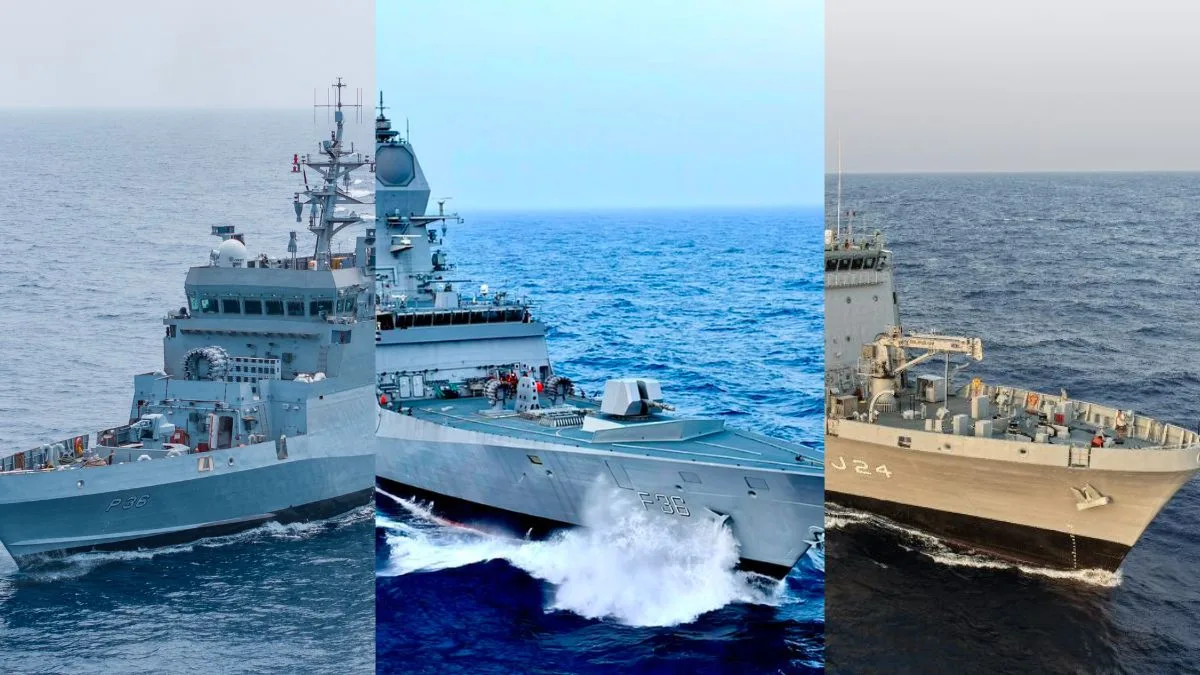
The Iranian frigate IRIS Dena, which had earlier participated in India’s MILAN naval exercise at Visakhapatnam, was later torpedoed by a US submarine near Sri Lanka. | X/@IN_HQENC
A United States submarine has torpedoed an Iranian warship that had recently taken part in India’s multinational MILAN-2026 naval exercise, triggering debate among strategic observers about the implications for India’s regional standing.
Strategic affairs expert Dr Brahma Chellaney said the episode could be viewed as a diplomatic setback for New Delhi. The Iranian vessel, IRIS Dena, had sailed to Visakhapatnam for the Indian Navy’s flagship exercise alongside warships from other countries before heading back into the Indian Ocean.
Advertisement
“The US torpedoing of the Iranian frigate IRIS Dena in India’s maritime backyard is more than a battlefield event; it is a strategic embarrassment for New Delhi”.
Advertisement
According to Chellaney, the strike occurred in what he described as India’s “maritime backyard,” turning waters close to the subcontinent into a zone of active conflict. In his assessment, the timing of the attack, soon after the ship had participated in an Indian-hosted exercise, placed India in an uncomfortable strategic position.
“By sinking a vessel returning from an Indian-hosted multilateral exercise, Washington effectively turned India’s maritime neighborhood into a war zone, raising uncomfortable questions about India’s authority in its own backyard,” Chellaney said in a post on X.
The incident happened roughly 40-44 nautical miles off the coast of Sri Lanka, within Sri Lanka’s Exclusive Economic Zone but beyond its territorial waters.
The target was the IRIS Dena, among the newer ships in Iran’s fleet. The Moudge-class vessel, which Iran refers to as a destroyer, was hit by a Mark-48 heavyweight torpedo fired by a US submarine.
“At a Pentagon briefing, US Defense Secretary Hegseth said the Iranian ship ‘thought it was safe in international waters’, but ‘instead, it was sunk by a torpedo’,” posted Chellaney.
The strike marked a significant escalation in the wider conflict involving Iran and the United States. It is also notable because a US submarine sinking an enemy warship with a torpedo has not happened since the Second World War.
The attack represents one of the first major American strikes on Iranian military assets outside the Middle East since the hostilities began, signalling that the confrontation is expanding geographically.
For India, the development has stirred debate because the Iranian frigate had recently been part of MILAN-2026, the Indian Navy’s large multinational maritime exercise held in Visakhapatnam.
Chellaney argued that striking a ship shortly after it leaves a host nation’s waters can be interpreted as a breach of long-standing naval etiquette.
“Attacking a ship immediately after it leaves a host’s waters is widely seen as a slight to that host,” he said.
He also linked the development to Prime Minister Narendra Modi’s “MAHASAGAR” vision, which seeks to position India as a key security partner in the Indian Ocean region. According to Chellaney, the strike demonstrated that outside powers could still conduct military action in these waters without coordination with New Delhi.
“In one torpedo strike, American hard power has punctured India’s carefully cultivated soft power,” he said.
After the frigate was hit, the vessel sank in the waters south of India. Under the laws of armed conflict at sea, attacking forces are expected, when circumstances allow, to help search for survivors once a ship is sinking.
However, the US submarine left the area after the attack.
The rescue effort was instead carried out by the Sri Lankan Navy, which pulled 32 sailors from the water, all reported to be in critical condition.
The frigate had around 180 crew members on board. The remaining 148 sailors were unaccounted for and presumed lost at sea, according to available details.
Advertisement