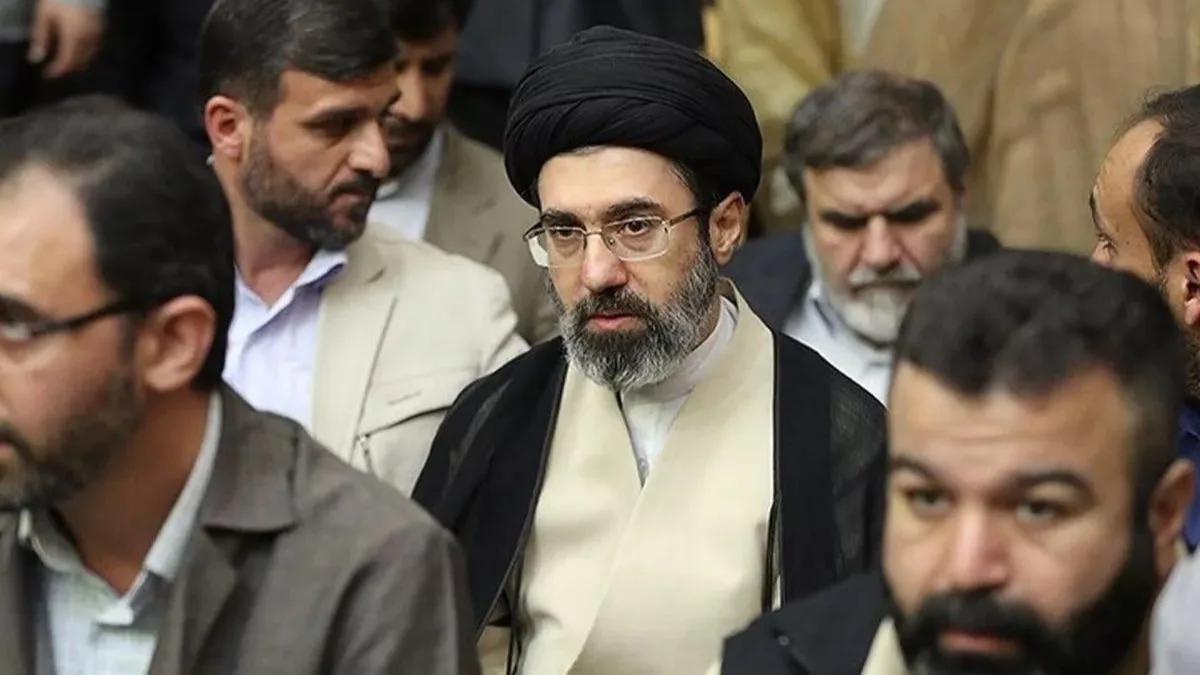
Iran’s new Supreme Leader, Mojtaba Khamenei, is prepared to negotiate with the United States, Israeli newspaper Yedioth Ahronoth reported, citing a conversation between Iranian Foreign Minister Abbas Araghchi and United States intermediary Steve Witkoff that was approved at the highest levels in Tehran.
The report, carried by Arab News, represents the clearest indication yet that back-channel contacts between Washington and Tehran are moving beyond exploratory contacts.
Advertisement
It lands in direct contradiction with Iran’s Foreign Ministry, whose spokesman had said that Tehran had held no negotiations with Washington during the 24 days of what it called an ‘unprovoked’ US-Israel war against the Islamic Republic.
Notably, Mojtaba Khamenei assumed the position of Supreme Leader following the killing of his father, Ayatollah Ali Khamenei, in joint United States-Israeli strikes on February 28.
Meanwhile, Trump, in a post on Truth Social, said the United States and Iran had held “very good and productive conversations” over the past two days, describing them as “in-depth, detailed, and constructive.”
He also announced a five-day pause on strikes against Iranian power plants and energy sites, saying the decision was based on the “tenor and tone” of the discussions.
On those involved in the negotiations on the Iranian side, Trump, while speaking to reporters in Florida, was pointed without being specific. “We’re dealing with some people that I find to be very reasonable, very solid. The people within know who they are, they’re very respected, and maybe one of them will be exactly what we’re looking for,” he said.
Trump also floated a striking vision of what a post-war arrangement might look like, saying the Strait of Hormuz would be “open very soon” and that he and Iran’s new Supreme Leader would jointly manage the critical waterway. “It’ll be jointly controlled. Me and the Ayatollah, whoever the Ayatollah is, whoever the next Ayatollah is,” he said.
The Strait of Hormuz handles roughly 15 million barrels of crude oil and five million barrels of oil products per day in normal times, about 25 per cent of global seaborne oil trade. The waterway has been considered high-risk for transit since the conflict began four weeks ago