From Kolkata to the Cosmos: Science City’s Immersive Voyage to Mars
The occasion marked not merely the unveiling of a film but an invitation to reflect on humanity’s timeless fascination with the cosmos and its next great frontier.
NASA's Mars Reconnaissance Orbiter (MRO) has captured a region of Mars sprayed with mysterious secondary craters. "Secondary craters form from…




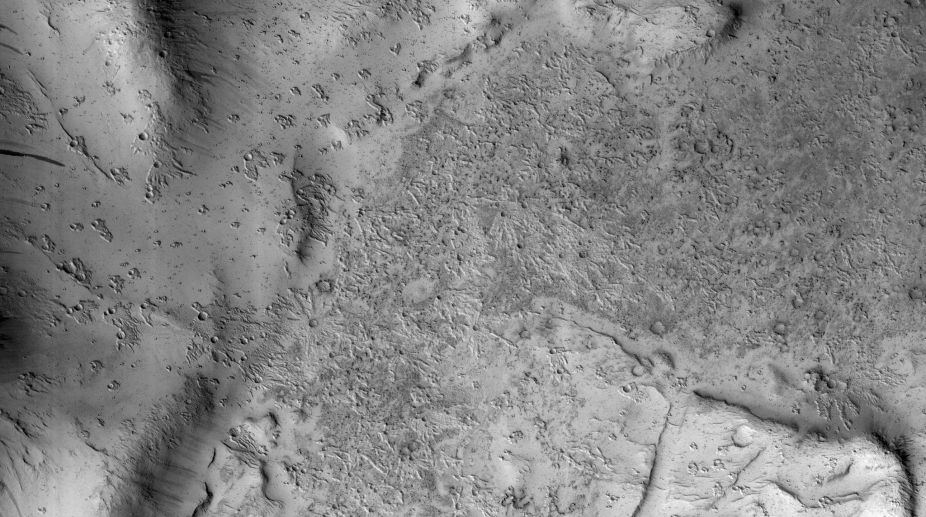
NASA's Mars Reconnaissance Orbiter captured this region of Mars, sprayed with secondary craters from 10-kilometre Zunil Crater to the northwest (Photo: NASA)
NASA's Mars Reconnaissance Orbiter (MRO) has captured a region of Mars sprayed with mysterious secondary craters.
"Secondary craters form from rocks ejected at high speed from the primary crater, which then impact the ground at sufficiently high speed to make huge numbers of much smaller craters over a large region," NASA said in a statement on Tuesday.
Advertisement
"In this scene, however, the secondary crater ejecta has an unusual raised-relief appearance like bas-relief sculpture," NASA added.
Advertisement
So how did that happen?
One idea is that the region was covered with a layer of fine-grained materials like dust or pyroclastics about one to two metres thick when the Zunil impact occurred (about a million years ago), and the ejecta served to harden or otherwise protect the fine-grained layer from later erosion by the wind, NASA scientists said.
Advertisement