Opsonins and the Opsonocytophagic Reaction
Opsonins are antibodies found in normal and immune sera which alter microorganisms and prepare them for more intensive phagocytosis.
Lysins are specific antibodies that cause the dissolution of bacteria, plant, and animal cells.




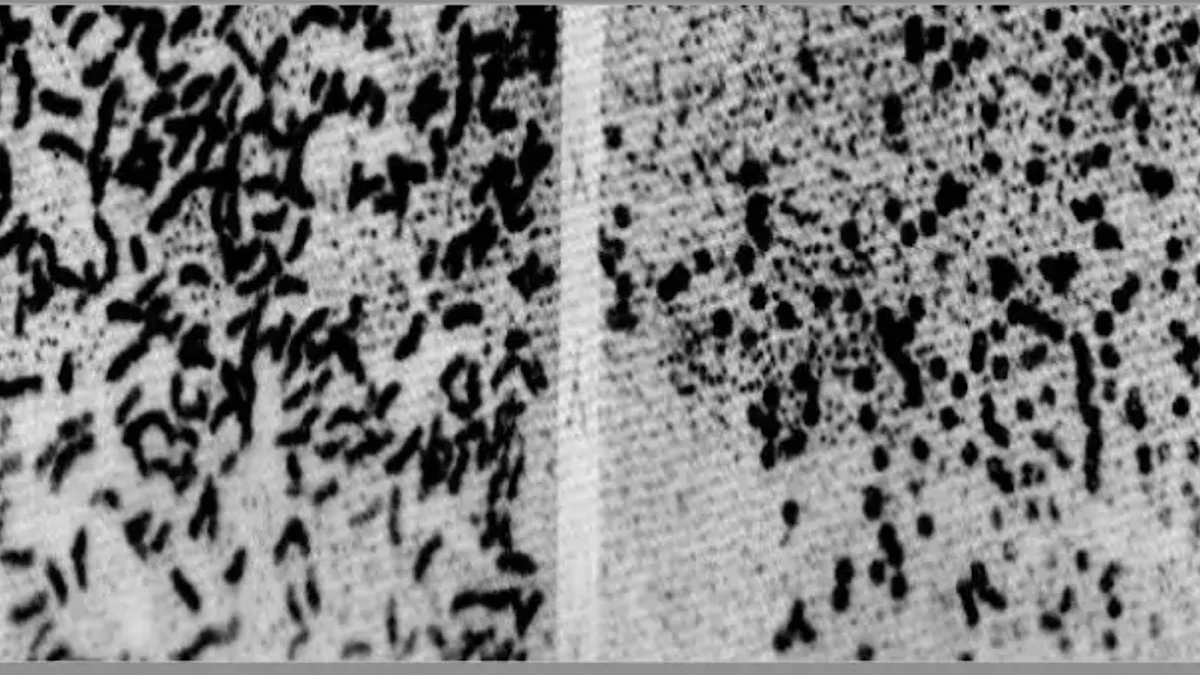
Photo:SNS
Lysins are specific antibodies that cause the dissolution of bacteria, plant, and animal cells. Under the influence of antibodies and a substance contained in normal serum called complement, the dissolution of microbial cells (bacteriolysis) takes place, or a bactericidal action occurs, accompanied by the destruction of microbes without any noticeable morphological changes.
In 1884, V. Gromann established the bactericidal action of normal serum on anthrax microbes. Later research revealed antibodies (bacteriolysins) that dissolve bacteria in the blood of immune animals. The Isayev-Pfeiffer phenomenon may be reproduced in guinea pigs actively or passively immunized against cholera. When a culture of cholera vibrios is injected into the peritoneal cavity of an immunized guinea pig, the bacteria lose their motility fairly rapidly, swell, become spherical, turn granular, and then finally completely disappear and dissolve.
Advertisement
The same phenomenon is observed during the simultaneous injection of live cholera vibrios and anticholera serum into a guinea pig. J. Bordet established that bacteriolysis can be observed outside the body by adding fresh immune serum to a bacterial suspension. Later investigations established that bacteriolysis depends not only on the antibody that appears under the influence of immunization, but also on a thermolabile substance (complement) found in all types of fresh serum, which is inactivated by heating at 56°C for half an hour.
Advertisement
Thus, bacterial lysis takes place with the participation of two components: a specific antibody contained in the immune serum, and a non-specific substance found in any normal or immune serum complement. The antibody which, together with complement, causes bacterial lysis was named a ‘sensitizer’ by J. Bordet and an ‘amboceptor’ by P. Ehrlich. In modern immunology, these are recognized as complement-fixing antibodies (primarily IgG and IgM) and are historically referred to as lysins such as bacteriolysin and haemolysin. Lysins are capable of dissolving bacteria, Treponema, and Leptospira, as well as profoundly impairing the membrane structure of erythrocytes, leukocytes, and other cells.
They are characterized by all the main properties of antibodies, with the distinct difference that the antigen is acted upon in the presence of complement. Complement is a system of enzymes contributing to the lysis of cells (haemolysis, bacteriolysis, and cytolysis) after they bind with specific antibodies. Complement consists of nine distinct primary protein fractions: C1, C2, C3, C4, …, C9. A central component is C3; it is inactivated at 37°C in the presence of zymosan, as a result of which the complement cascade loses its activity. Complement interacts with a special area on the antibody molecule the Fc fragment; this binding leads to conformational changes in the immunoglobulin.
The complement fractions sequentially bind and activate within the classical pathway complex in the following order: C1 � C4, C2 � C3 � C5, which then recruits C6, C7, and C8. Finally, multiple C9 fractions polymerize to form the Membrane Attack Complex (MAC), which is necessary for creating the transmembrane pores that drive cell lysis and bacteriolysis. The complement system is highly sensitive to heat and disintegrates at 56°C in half an hour. It also degrades during long-term storage, prolonged shaking, and under the influence of ultraviolet rays and chemical substances.
Complement is easily adsorbed onto the surface of various substances aluminium hydroxide, kaolin, animal charcoal, bacterial suspensions, erythrocytes, etc. Due to the lability of complement, methods have been devised for its storage. Preservation of complement (usually guinea pig serum) is carried out by adding either a 10 percent concentration of sodium chloride, 4 percent boric acid, or 5 percent sodium sulphate, or by freeze-drying (lyophilization) at a low temperature in a vacuum. The Haemolysis Reaction During the immunization of rabbits with a suspension of sheep erythrocytes, antibodies capable of altering the erythrocytes accumulate in the blood.
Upon binding, these antibodies activate the complement cascade to form Membrane Attack Complexes, which perforate the lipid bilayer of the cell. This disrupts the osmotic equilibrium of the erythrocyte, causing it to swell and rupture. The haemoglobin easily passes out of the erythrocytes into the surrounding fluid, coloring it pink. Heating the immune serum at 56°C for 30 minutes is accompanied by a loss of haemolytic properties due to the disintegration of the complement. The addition of fresh animal serum, even non-immune serum, restores the haemolytic properties of the immune serum.
If haemolytic serum (antibody), sheep erythrocytes (antigen), and complement are placed in a test tube in precise quantitative proportions, a change will take place in the mixture within a few minutes. It changes from turbid red to translucent pink (lacquered) as a result of haemolysis (haemoglobin escaping the ruptured plasma membrane of the erythrocytes).The haemolysis reaction has a strictly defined specificity. It is used as a component part for carrying out the complement-fixation reaction.
(THE AUTHOR IS AN ASSOCIATE PROFESSOR (RETD.) AND FORMER HEAD, DEPARTMENT OF BOTANY, ANANDA MOHAN COLLEGE.)
Advertisement