Exercise in Futility
When the Supreme Court of India recently dismissed a petition to ban Salman Rushdie’s The Satanic Verses, it sent out a powerful message: book banning is a relic of the past.
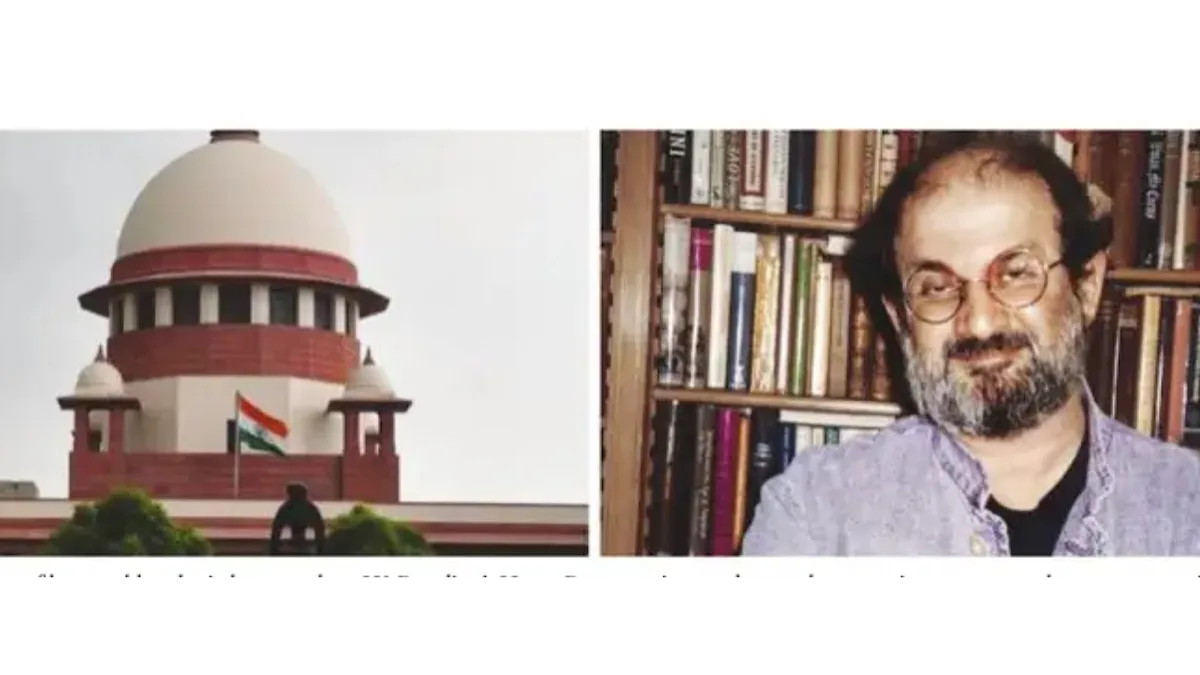
When the Supreme Court of India recently dismissed a petition to ban Salman Rushdie’s The Satanic Verses, it sent out a powerful message: book banning is a relic of the past.

A jury in western New York convicted Hadi Matar, a 27-year-old from New Jersey, of attempted murder for the stabbing of Indian-born British author Salman Rushdie, The New York Times reported.

Renowned author Salman Rushdie has backed US Vice President Kamala Harris for the presidential elections, saying it is great to see a "black and Indian" woman running for the White House.

The book will be out in April 2024 and is billed to be gripping, intimate, and ultimately life-affirming meditation on life, loss, love, art—and finding the strength to stand up again.

You may say that Islam, Christianity, or any other religion is abominable, but you may not insult an individual for his or her belief.

Hadi Matar, 24, appeared at a Thursday afternoon hearing at Chautauqua County Court after being indicted by a grand jury, reports dpa news agency.
Hadi Matar, 24, said Rushdie, 75, was "someone who attacked Islam" but did not confirm that his actions were driven by a fatwa issued by Iran in the 1980s, reports dpa news agency.
The Indian-born Briton, whose novel "The Satanic Verses" led to death threats from Iran in the 1980s, was about to deliver a lecture in New York state on Friday, when he was attacked.

Taking to Twitter, Sullivan posted: "The attack on Salman Rushdie is appalling. We're all praying for his speedy recovery. And we're thankful to good citizens and first responders for helping him so swiftly."
On Friday Salman Rushdie was stabbed in the neck and abdomen at a literary event in New York, US. He is presently on a ventilator. Law enforcement officials have identified the attacker as a 24-year-old Hadi Matar, who is reportedly from New Jersey.