Bengal’s chance to plant a new tree
In O. Henry’s The Last Leaf, ailing Johnsy clings to life because one painted leaf refuses to fall. Such is the power of optimism; it does not need to be certain to be effective.
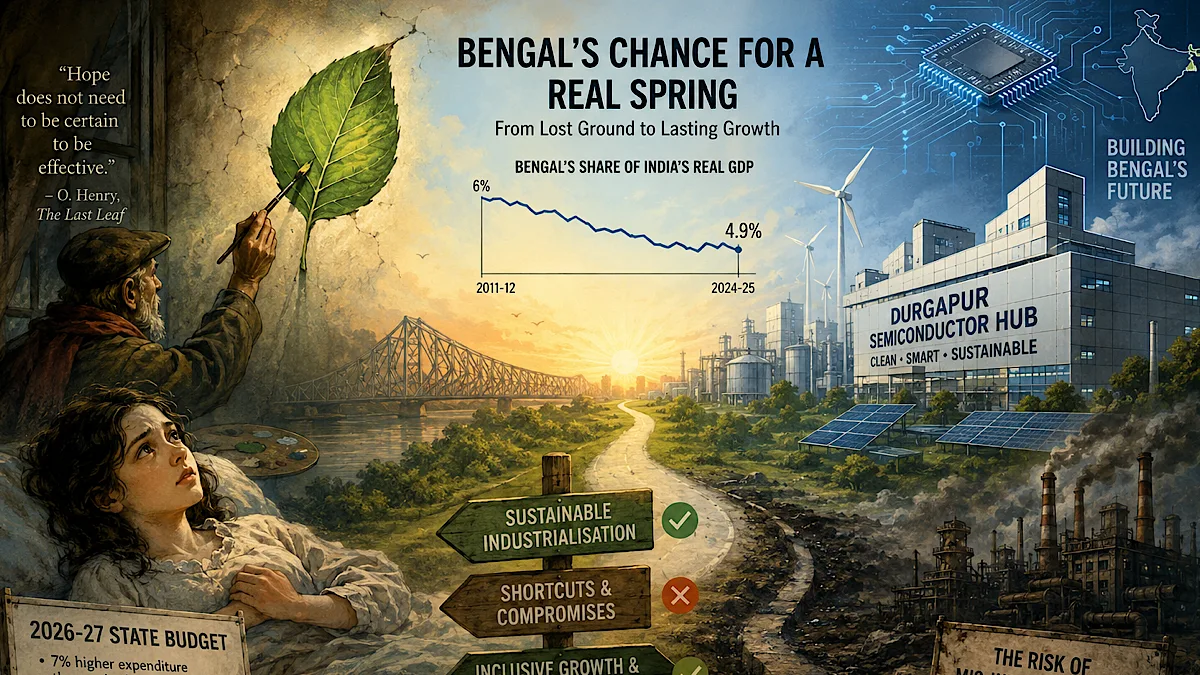
In O. Henry’s The Last Leaf, ailing Johnsy clings to life because one painted leaf refuses to fall. Such is the power of optimism; it does not need to be certain to be effective.

S&P Global Ratings cut India's GDP growth to 6.6 per cent in the current fiscal year, driven by energy stress, a sub-par monsoon and slowing global growth.
India's Gross Domestic Product (GDP) is set to grow at 6.6 per cent in the current fiscal as compared to 7.7 per cent in FY26, said BMI, a Fitch group company, citing weaker investments and consumption growth and trade shocks from the West Asia crisis.
India’s current account surplus moderated to $7.1 billion, or 0.7 per cent of GDP, in the fourth quarter (January-March) of financial year 2025-26, compared with $13.7 billion in the same period a year ago, according to the Reserve Bank of India’s latest Balance of Payments data.
Prime Minister Narendra Modi on Friday welcomed India’s latest GDP data, calling it proof of economic resilience, reform impact and the hard work of 140 crore Indians.
It cautioned that overly aggressive targets beyond these could adversely affect India's economic growth.
On the sharp fall in gross domestic product (GDP) growth in the second quarter of the current financial year, Chief Economic Advisor (CEA) V Anantha Nageswaran said ''we should not throw the baby out with the bathwater''.
India’s recent GDP figures reveal a slowdown that raises serious concerns about the country’s economic trajectory. At 5.4 per cent year-on-year growth for the July September quarter, this marks the slowest expansion in seven quarters.
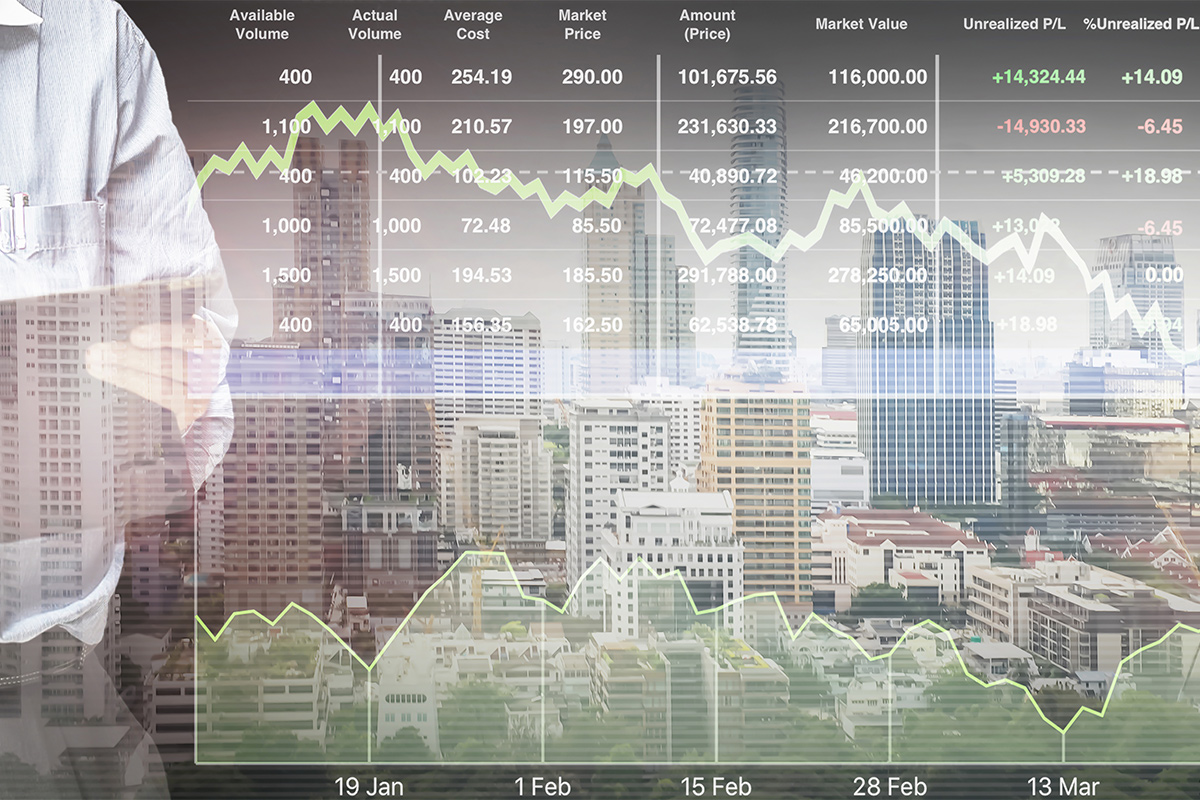
The Indian real estate sector is set to cross $4.8 trillion in market size by 2047, contributing over 18 per cent to the projected $26 trillion GDP target for the year, according to a joint report by real estate body CREDAI and Ernst & Young released on Tuesday.

It forecast India's headline inflation at 4.2 per cent (average) in 2025 with food inflation at 4.6 per cent.