The Sweetest Ping: When a Simple ‘Hi’ Means Everything
India’s growing reservoir crisis is Receiving a simple "Hi" from children living in the US is a universal milestone for Indian parents.
Swami Vivekananda (1863-1902) was born on 12 January 1863, 163 years ago. He left at the age of 39, on 4 July 1902. By then he had spread spiritual fire in Chicago, America, at the World’s Parliament of Religions, on 11 September 1893.




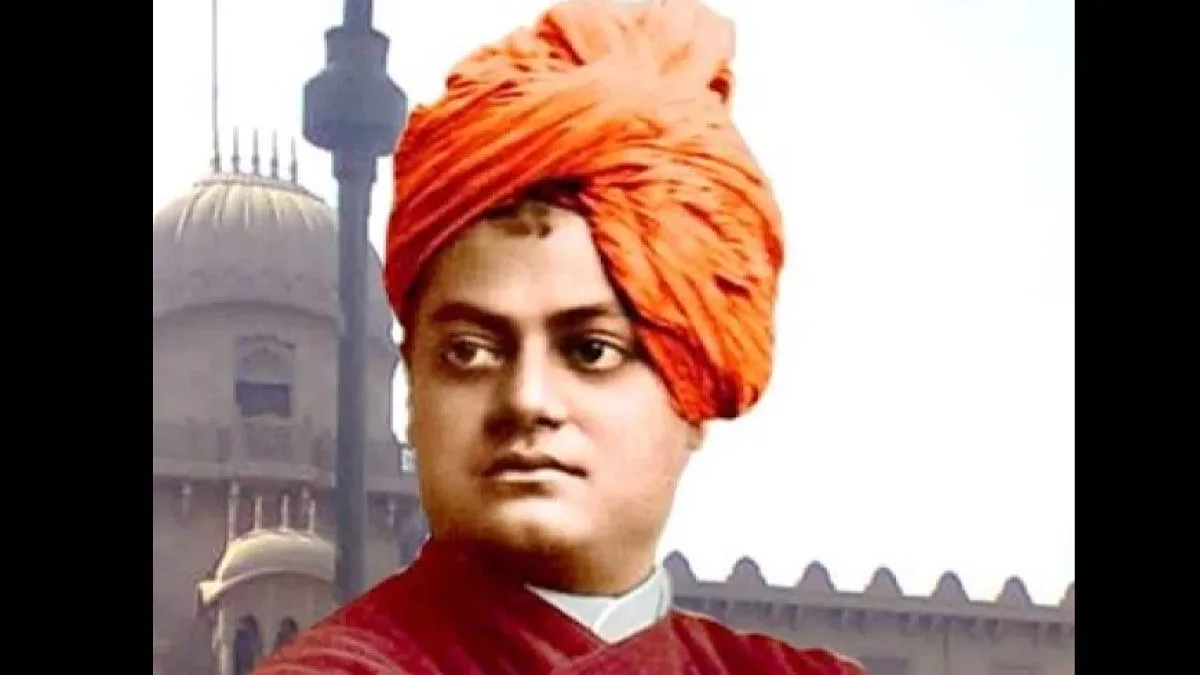
Swami Vivekananda
Swami Vivekananda (1863-1902) was born on 12 January 1863, 163 years ago. He left at the age of 39, on 4 July 1902. By then he had spread spiritual fire in Chicago, America, at the World’s Parliament of Religions, on 11 September 1893. That fire continues to spread and is unextinguishable.
Though Swami Vivekananda (referred to hereinafter as “Swamiji”) has been one of the greatest spiritual leaders of the world, it is not widely known that he had contributed significantly towards India’s independence, possibly because he left 45 years before India achieved her independence. India’s independence movement received a massive fillip from Swamiji. The Father of the Nation, Mahatma Gandhi (1869-1948), acknowledged that Swamiji’s teachings intensified his spiritualism, patriotism, self-reliance and the right means to achieve ends. Even the world poet Rabindranath Tagore (1861-1941), who was a freedom fighter through his writings, reverentially said: “If you want to know India, study Vivekananda”. Tagore had deep respect for Swamiji. Tagore was also greatly influenced by Swamiji’s philosophy and ideals of life.
Advertisement
Netaji Subhas Chandra Bose called Swamiji his “guru” and the “maker of modern India”. Netaji felt Swamiji’s teachings shaped his life and India’s freedom movement. Bal Gangadhar Tilak (1856-1920), had deep respect for Swamiji, and called him the “second Shankaracharya”. In 1892, Swamiji stayed at Tilak’s home in Pune and both jointly decided to work towards India’s glory. Sri Aurobindo (1872-1950), while in Alipore jail Kolkata (1908-1909), acknowledged that Swamiji’s spirit visited him in jail. While in jail for a year, on a charge of sedition slapped by the British Crown, Sri Aurobindo imbibed spiritualism from Swamiji’s teachings. He relinquished politics thereafter and became a great spiritual leader.
Advertisement
Bhagat Singh (1907-1931) was also deeply influenced by Swamiji. Singh imbibed fearlessness, self-sacrifice and duty to humanity from Swamiji. He acknowledged having learnt from Swamiji’s teachings on inner strength and national pride. Swamiji further influenced Hemchandra Ghosh (1884-1980), a freedom fighter, and advised him that India’s freedom was the only dharma needed then. Swamiji advocated that India’s youth should rise against British rule and spiritual strength must yield political liberation. He told Ghosh categorically: “Strike down the looters with all your strength”. This was in 1901, months before Swamiji cast off his body like a worn-out garment in Belur Math, West Bengal. Thus, Swamiji’s contribution towards India’s quest for freedom was pre cious.
His overriding considerations have always been nation building, love, affection, compassion, and strength of character. Swamiji preached that it is character which cleaves its way through the adamantine wall of all difficulties. Today, across the world, amid sectarianism, bigotry, fanaticism leading to blood baths and destruction, Swamiji’s teachings, particularly on Vedanta Philosophy, assume critical importance. Swamiji championed Vedanta Philosophy. He summed it up thus: each soul is potentially divine. The goal is to manifest the divinity within by controlling nature, external and internal. This can be done by work or worship, psychic control, or philosophy and by being free. Mark the words: “be free” – freedom! This is the whole of religion. Doctrine or dogmas or rituals or books or temples or forms are only secondary details.
The first Vedanta Society outside India was established by Swami Vivekananda in New York in 1894. Its San Francisco Centre was founded in 1900. Swami Nikhilananda (1895-1973), a noted Hindu monk, and a direct disciple of Sri Sri Sarada Devi, acknowledged America’s contribution towards Swamiji’s achievements in these glowing terms: “it is one of the outstanding traits of Americans to draw out the latent greatness of other people. America discovered Vivekananda and made a gift of him to India and the world.” Alas, the USA’s recent actions bely Swamiji’s teachings. What a fall from 1893 to 2026! Not only the USA, the entire world today is undergoing a metamorphosed degeneration of bigotry. No one is prepared to give freedom to others.
Netaji’s freedom slogan: “give me blood I’ll give you freedom” is haunting us today. Swami Vivekananda said: “All our struggle is for freedom. We seek neither misery nor happiness but freedom, freedom alone”. How profound! An ideal soul is one who gives freedom to others! This is also the surest path towards achieving eternal freedom, Nirvana, the ultimate goal of Vedanta Philosophy, was taught by Swamiji Vivekananda. (The writer is Senior Advocate, Supreme Court of India and ex-Additional Solicitor General of India.)
Advertisement