Bengal’s chance to plant a new tree
In O. Henry’s The Last Leaf, ailing Johnsy clings to life because one painted leaf refuses to fall. Such is the power of optimism; it does not need to be certain to be effective.
Political history is too important to be left either to political memory or to political mythology. Its first obligation is historical explanation.




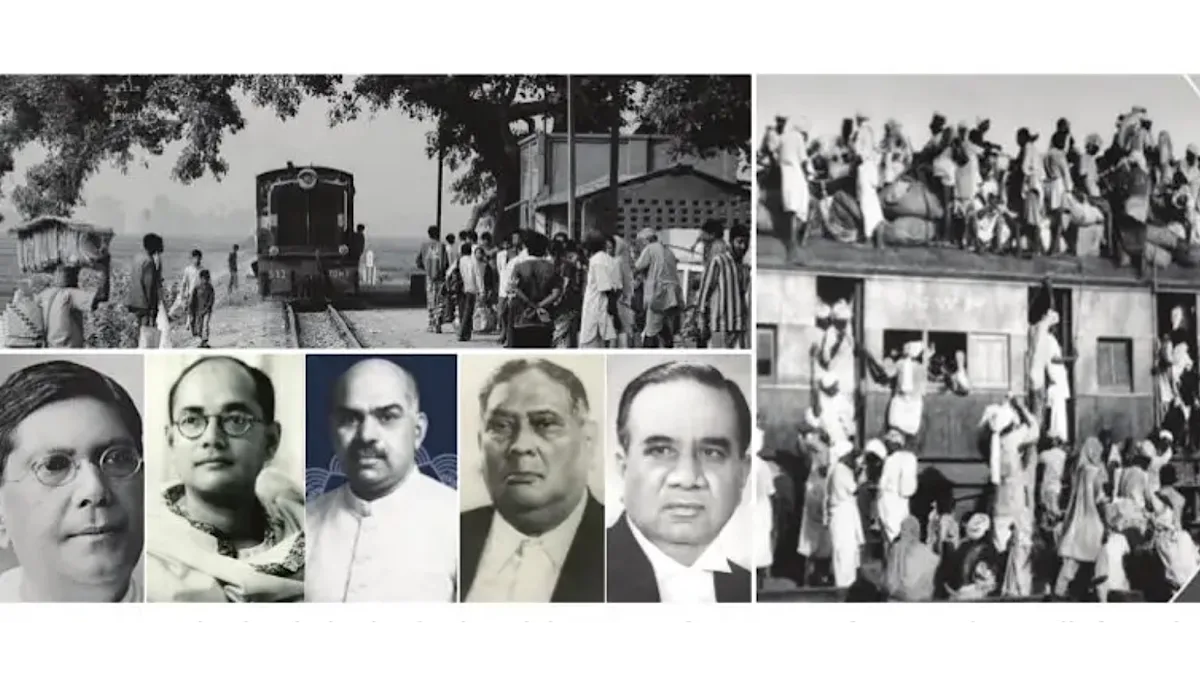
Photo:SNS
‘Misunderstanding of the present is the inevitable consequence of ignorance of the past. But a man may wear himself out just as fruitlessly in seeking to understand the past if he is totally ignorant of the present.’ ~ Marc Bloch, The Historian’s Craft
Political history is too important to be left either to political memory or to political mythology. Its first obligation is historical explanation. Few regions of modern India have generated as rich and diverse a historiography as Bengal. Over the last century, historians have examined its intellectual awakening, nationalism, revolutionary politics, agrarian movements, communal relations and Partition from a variety of perspectives. Nationalist, Marxist, Subaltern and more recent scholars have all enlarged our understanding of Bengal’s past. Their contributions remain indispensable.
Advertisement
Yet historical inquiry advances not only because new evidence is discovered but because historians learn to ask new questions of familiar evidence. The purpose of this essay is not to challenge the achievements of earlier scholarship but to suggest that one important dimension of Bengal’s political history deserves greater analytical attention. The dominant narratives of late colonial Bengal have generally been organised around nationalism, communalism, class and Partition. These themes remain fundamental. They explain much of Bengal’s extraordinary political experience during the first half of the twentieth century. Yet they do not fully explain how politics itself changed.
Advertisement
It should be said now that late colonial Bengal should also be understood through the constitutional transformation of politics. Between the Morley-Minto reforms of 1909 and the Partition of 1947, representative institutions progressively reshaped political life. Constitutional reforms altered electoral competition; electoral competition redefined political organisation; and changing ideas of representation transformed the way communities imagined political authority, democratic legitimacy and constitutional security. This process did not replace ideology.
It reconfigured the arena within which ideology operated. Viewed from this perspective, Bengal appears not merely as the province that experienced Partition but as the principal laboratory in which modern India confronted some of the most difficult constitutional questions of democratic politics: how should political representation be organised in a deeply plural society? Could numerical majority alone provide political legitimacy? How should regional identity, minority confidence and democratic government be reconciled within a single constitutional framework? These questions shaped every major political controversy in Bengal from the 1920s onwards.
They influenced the Bengal Pact, the debates over communal representation, the elections of 1937, the constitutional crises of the 1940s and the competing proposals for Bengal’s future in 1947. They also shaped the political calculations of leaders as different as Chittaranjan Das, A. K. Fazlul Huq, Subhas Chandra Bose, H. S. Suhrawardy, Syama Prasad Mookerjee and others. To recognise this constitutional dimension is neither to reject existing historiography nor to minimise the importance of ideology. It is simply to suggest that constitutional change deserves to occupy a more central place in our understanding of Bengal’s political evolution. History advances not by replacing one narrative with another but by enlarging the range of questions through which the past is understood.
The constitutional transformation of Bengal did not occur suddenly. It unfolded through a series of reforms that gradually altered not only the institutions of government but also the very language of politics. Their cumulative significance was greater than any single reform. Between 1909 and 1935 Bengal witnessed the emergence of a representative political order in which questions of constitutional design increasingly shaped political behaviour.
The Morley-Minto reforms of 1909 marked the first decisive step. Their importance lay not simply in introducing separate electorates but in redefining the principle of political representation itself. Constitutional politics now required communities to think of themselves as representative constituencies. Political legitimacy increasingly depended upon the ability to speak on behalf of organised electoral interests rather than merely articulate broad nationalist aspirations. The reforms of 1919 accelerated this transformation.
As representative institutions expanded and provincial legislatures acquired greater significance, constitutional politics moved closer to the centre of public life. At almost the same historical moment, Gandhi’s leadership transformed Indian nationalism by bringing millions of ordinary Indians into politics. Historians have rightly emphasised this democratic revolution. Yet its constitutional implications deserve equal attention. Mass politics and representative institutions evolved together. One broadened participation; the other structured participation through electoral and legislative processes. Nowhere did this interaction acquire greater significance than in Bengal.
The province’s demographic composition, its powerful urban middle class, its politically conscious landed society, its increasingly mobilised peasantry and the commanding position of Calcutta ensured that constitutional reform carried unusually far-reaching consequences. Representative government immediately raised difficult questions. Could majority rule alone ensure political legitimacy? How could democratic representation be reconciled with minority confidence? Would provincial autonomy strengthen a common Bengali political identity or encourage competing political loyalties?
These questions were neither abstract nor academic. They shaped every major constitutional controversy during the following quarter century. The first sustained attempt to answer them came with the Bengal Pact of 1923. Conceived under the leadership of Chittaranjan Das, the Pact represented something more significant than a political compromise between communities. It was an attempt to create a constitutional basis for cooperation within Bengal’s distinctive social and demographic realities. Das recognised that representative government in Bengal could not succeed unless political confidence accompanied numerical representation. The Pact therefore sought to reconcile democratic principles with the practical requirements of a plural society.
Although it ultimately failed to command lasting acceptance, its historical significance lies elsewhere. It demonstrated that Bengal’s political leadership had already begun to recognise that constitutional accommodation, rather than ideological assertion alone, would determine the future stability of provincial politics. This insight deserves greater attention than it has generally received. The Bengal Pact was not an isolated episode. It anticipated many of the constitutional dilemmas that would dominate Bengal’s politics over the next two decades. Questions concerning representation, power-sharing and political confidence would repeatedly reappear in different forms, even as political alignments changed and ideological conflicts intensified.
(The writer is Professor of History, Rabindra Bharati University)
Advertisement