Strategic signals
Republic Day has never been only about remembrance. It is also about projection ~ about how India chooses to present itself to the world at a given moment.
As the Republic Day parade drifts from solemn military tradition toward mass spectacle, serious questions arise about dignity, purpose, and discipline.




Jai Hind!
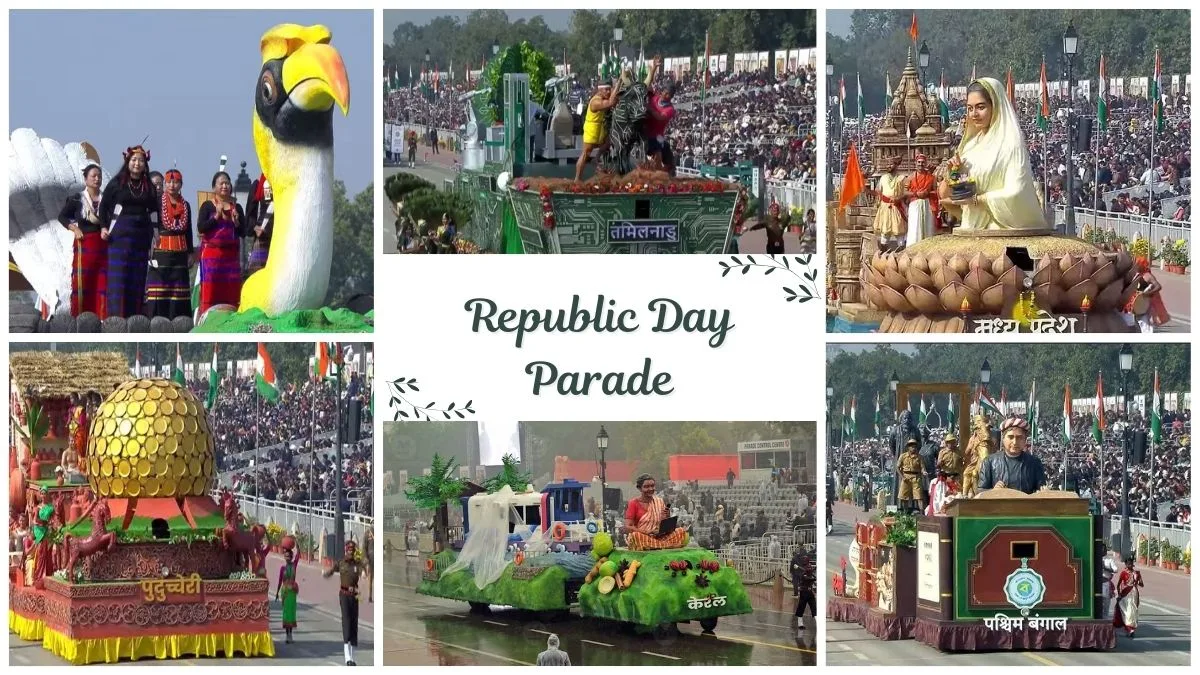
The Republic Day parade in India holds a venerable and distinguished tradition. When it started in 1950 one of its main objectives was to solemnly commemorate the inauguration of the Republic and, in the immediate aftermath of Independence, to powerfully project the foundational national concept of unity in diversity. Consequently, the occasion served not merely as a platform to honour the nation’s martyrs, recognize acts of bravery, and showcase the military prowess of the nascent Republic, but equally as a celebration of its inherent cultural and regional diversity. To this end, the procession incorporated both the martial parade, comprising disciplined marching contingents from the armed forces and security agencies along with their equipment, and a significant cultural component through the inclusion of thematic tableaus representing various states and performances by artistes and school children
Over the years, the nature of the parade has demonstrably undergone substantial transformation. While positive changes aimed at improvement are welcome, the increasing trend to transform this national celebration into a spectacle designed primarily for mass entertainment is a cause for concern. There is no quarrel on the inclusion of elements that highlight the country’s multifarious progress – be it in technological, defense, or cultural spheres in the celebration of the Republic but the question which begs consideration is whether all of it must necessarily be a part of the parade?
Advertisement
Is it appropriate or essential for professional soldiers of the nation’s armed forces to engage in complex acrobatic displays such as balancing precariously on motorcycles or revolving in ‘formation’ on fabricated contraptions attached to them? While such displays of skills may appeal to a certain section of the audience and be suitable in informal settings they appear profoundly discordant with the solemnity of the Republic Day parade, an event broadcast globally and watched by millions worldwide. Far from inspiring the intended sense of awe and military confidence, such theatrical performances by soldiers regrettably tends to generate widespread social media ridicule and memes, an outcome that is wholly counterproductive and easily avoidable.
Advertisement
Similarly, the necessity of presenting ‘despatchers’ in the manner that they were or the need of displaying animals utilized by the armed and security forces across the country, marching in stylized formations, is debatable. It is acknowledged that every global military force employs diverse resources and that its personnel possess a wide array of specialized skills but is the display of all these operational elements in the parade necessary?
To maintain the sanctity and dignity of the parade, and simultaneously ensure its relevance to the needs of a Republic that is now over 75 years old, a judicious balance must be struck between the military parade and the cultural components. This necessary segregation could be effectively achieved by detaching all cultural elements from the parade and designating a separate, dedicated national Cultural Celebration of the Republic. This event could be formally scheduled for January 27, hosted at a suitable venue such as the National Stadium and graced by the President, the Prime Minister, and other national dignitaries, alongside the public. It would provide a fitting and focused platform to showcase the nation’s cultural diversity, talent, and skills and can be executed on a much larger and grander scale. Consequently, the state tableaus, cultural performances, and all other non-military displays could take place on this day.
Furthermore, it would allow military personnel involved in these cultural presentations to perform without the constraints of uniform if their participation is necessary. This restructuring would achieve two key objectives: firstly, it would substantially reduce the excessive length of the parade on January 26; and secondly, it would create the vital opportunity to incorporate a greater number of marching contingents and display more sophisticated military equipment, thereby projecting a more substantive and contemporary image of the country’s military strength.
The entirety of the Commemoration of the Republic could then formally and traditionally culminate on January 29 with the ‘Beating the Retreat’ ceremony. Historically, the ‘retreat’ bugle call was a time-honored military convention, marking the moment when fighting ceased, colours were lowered, and military forces withdrew from the battlefield to return to their respective barracks or stations. The ‘Beating the Retreat’ ceremony, therefore, signifies the official and ceremonial conclusion of the Republic Day events. It is a tradition which is meticulously performed to precise, martial marching beats, demanding and retaining a solemn, dignified, and disciplined character. It is crucial that the essential nature of this ceremony is not misunderstood or, worse, deliberately diluted.
While the exceptional musical talent and versatility of the armed forces bands including their ability to flawlessly execute everything from classical compositions to contemporary, even Bollywood-inspired, numbers, is acknowledged, the ‘Beating the Retreat’ ceremony is fundamentally the wrong occasion for such a display. The very essence of the ceremony is discipline and military rigour. Soldiers march, execute intricate drill formations, and play on instruments to time-honored martial beats and ruffles. It is these rhythms which are the soundtrack of military life, and not tunes which remind one of R D Burman or the drumming in of popular numbers like ‘O Haseena Zulfon Wali’ or ‘My Name Is Lakhan.’ To introduce such elements risks trivializing the event.
Furthermore, the personnel involved in the ceremony – the drummers and musicians – are military men and women executing a formal drill. They are not intended to perform the role of dholis at a Punjabi wedding, playing tunes to vigorously encourage the audience to join a spontaneous dance, nor are they the percussionists of a garba ceremony. While these forms of vibrant cultural display have their rightful place within the broader national celebrations, they too can be reserved for the Cultural Celebration of the Republic. There is a genuine risk that in our zeal to project a modern, all-encompassing image of nationalism, we might inadvertently ‘tinker’ with the basic nature and fundamental purpose of this time-honored ceremony and reduce a military ritual into nothing more than a high-profile, public performance by the bands of the armed forces.
Today, we must introspect and ask ourselves: What should be the desired purpose of our National Commemorations? Do we seek a solemn and powerful Republic Day parade that unequivocally projects the nation’s disciplined strengths, military might, and makes us proud of our armed forces and martial traditions along with a cultural display which puts every other ceremony to shame? Or, are we content to allow the function to devolve into a chaotic and contradictory mix of a school’s annual day celebration, a cultural fair, a martial parade, and a circus, all awkwardly rolled into a single event which has something for everyone? And while we introspect on this can someone please stop the theatrics undertaken by the BSF at Attari?
(The writer is a lawyer-turned-entrepreneur and can be reached at amitkrishankanpaul@gmail.com. He is the author of ‘Meghdoot: The Beginning of the Coldest War’ which tells the story of the race to Siachen between India and Pakistan.)
Advertisement