Sectarian Fallout
Sectarian divisions along the Shia-Sunni divide have long been a defining feature of the Middle East.
The week-long state funeral for Ayatollah Ali Khamenei is being viewed across the world as the end of an era.




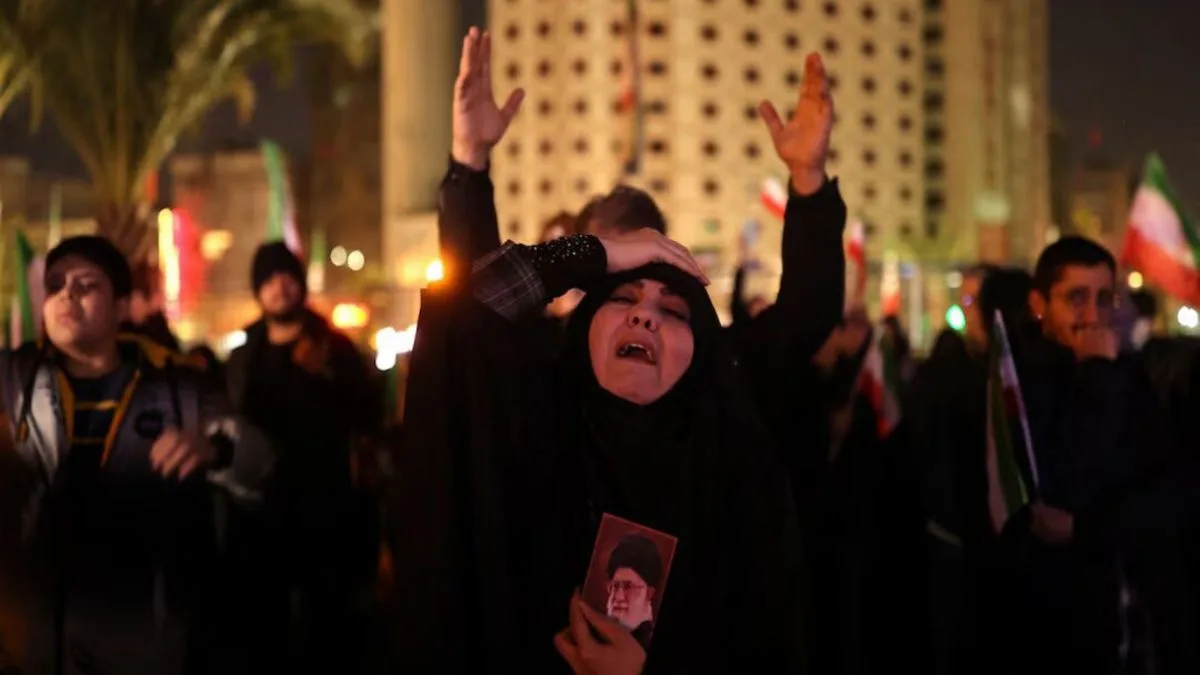
Mourners gathered in Tehran ahead of the week-long funeral ceremonies for late Iranian Supreme Leader Ayatollah Ali Khamenei. (Photo: Reuters via ANI)
The week-long state funeral for Ayatollah Ali Khamenei is being viewed across the world as the end of an era. Yet the greater significance lies not in the passing of a man, but in the emergence of a different political order in Iran. Those expecting the death of the Islamic Republic’s most enduring leader to trigger institutional collapse may have misread the nature of the Iranian state.
What has unfolded instead is a rapid transfer of power to a younger leadership that appears less bound by revolutionary nostalgia and more driven by strategic calculation. The temptation in the West is to interpret every upheaval in Iran through the prism of regime change. That assumption has repeatedly proved misleading. Iran’s clerical establishment, the Revolutionary Guard and the country’s security architecture have demonstrated precisely a capacity for continuity. The question now is not whether the regime survives, but what kind of regime emerges from the trauma of war. The new leadership inherits a country scarred by conflict, economic sanctions and domestic discontent.
Advertisement
Yet it also inherits a strategic lesson. Military confrontation with the United States and Israel did not end with Tehran’s capitulation, nor did it produce the popular uprising that many external observers had anticipated. Instead, the conflict reinforced the importance of deterrence, regional leverage and national resilience in the thinking of Iran’s governing elite. That could produce a more assertive Iran abroad even as it becomes more pragmatic at home. Pragmatism need not imply liberalisation. It may instead reflect a recognition that preserving the state requires selective flexibility.
Advertisement
Easing some social restrictions, seeking sanctions relief through negotiations and restoring economic stability are not necessarily signs of ideological retreat. They are instruments of political survival. For the Gulf monarchies, this transition introduces fresh uncertainty. Many have invested heavily in American security guarantees while simultaneously attempting to improve relations with Tehran. If Iran’s new leadership proves more predictable in diplomacy but more willing to employ military pressure when necessary, regional capitals will continue pursuing a delicate balance rather than choosing between Washington and Tehran.
The United States also faces a more complicated challenge than before. Decapitating a leadership is easier than reshaping the political system beneath it. Diplomacy conducted with a younger, security-conscious establishment may prove both more difficult and more productive. Such leaders are likely to negotiate from hard-headed national interest rather than revolutionary symbolism. Ultimately, Iran stands at an inflection point. The funeral ceremonies mark the closing chapter of the revolutionary generation that founded the Islamic Republic.
What follows will not be a return to the past, nor necessarily a democratic transformation. It is more likely to be the evolution of a state that has learned painful lessons about war, survival and power. Whether that evolution delivers greater regional stability or merely prepares the ground for future confrontation will depend less on personalities than on the choices made in Tehran, Washington and the rest of West Asia in the months ahead.
Advertisement