Prime Minister Narendra Modi’s visit to China has attracted a lot of strategic significance not because of the SCO summit meeting taking place in Tianjin but because of his scheduled meetings with Chinese President Xi Jinping in an effort to recalibrate the frosty relations between the two countries. These meetings on the margins of the multilateral summit are significant. Such meetings provide opportunities for an interaction between and among world leaders to discuss bilateral issues which the format of the multilateral meeting does not permit.
Such meetings are increasingly assuming great significance in terms of strategic communication especially when there is a political or military impasse between two countries. Summit meetings and structured dialogues between leaders are, at times, difficult to work out due to paucity of time and the nitty-gritty they involve. It is in this backdrop that side-line meetings create the atmospherics for a closer interface and interaction between leaders. Take for example the Bangkok BIMSTEC meeting between Prime Minister Narendra Modi and Bangladesh leader Mohammad Yunus which took place in April this year.
Advertisement
Although there was media speculation about such a bilateral meeting, neither side made it public that it was to take place, even though much diplomatic activity must have preceded it given the frosty relationship between the two countries. In a thoughtful gesture, Mr Modi who is an excellent communicator smartly greeted Mr Yunus on Eid ahead of his departure to Bangkok in spite of the latter’s cosying up to China and describing China as the “guardian of the ocean” and urging it to manage its trade ties with India’s north-east by using Bangladesh ports. In a swift damage control exercise Dhaka said that the statement was unintentional and bereft of any mala fide intent. Professor Yunus was also mindfully prepared for the unstructured bilateral meeting while presenting the Indian Prime Minister a framed photograph of Modi presenting him a gold medal in January 2015 at the Indian Science Congress in Mumbai.
Notwithstanding the continuing impasse in the bilateral relationship between the two countries, the value of the side-line meeting at BIMSTEC between the two leaders cannot be underestimated. These symbolic gestures break jarring logjams. Diplomacy is an art of the possible. The way India is gaining the lost diplomatic space in Maldives after the ‘India Out’ tirade is a pointer to the stasis in the present state of India-Bangladesh relations. It is equally true of the Prime Minister’s persistent diplomatic outreach to both Sri Lanka and Nepal. China’s money cannot buy India’s cultural, civilizational and spiritual connection with the countries in its neighbourhood.
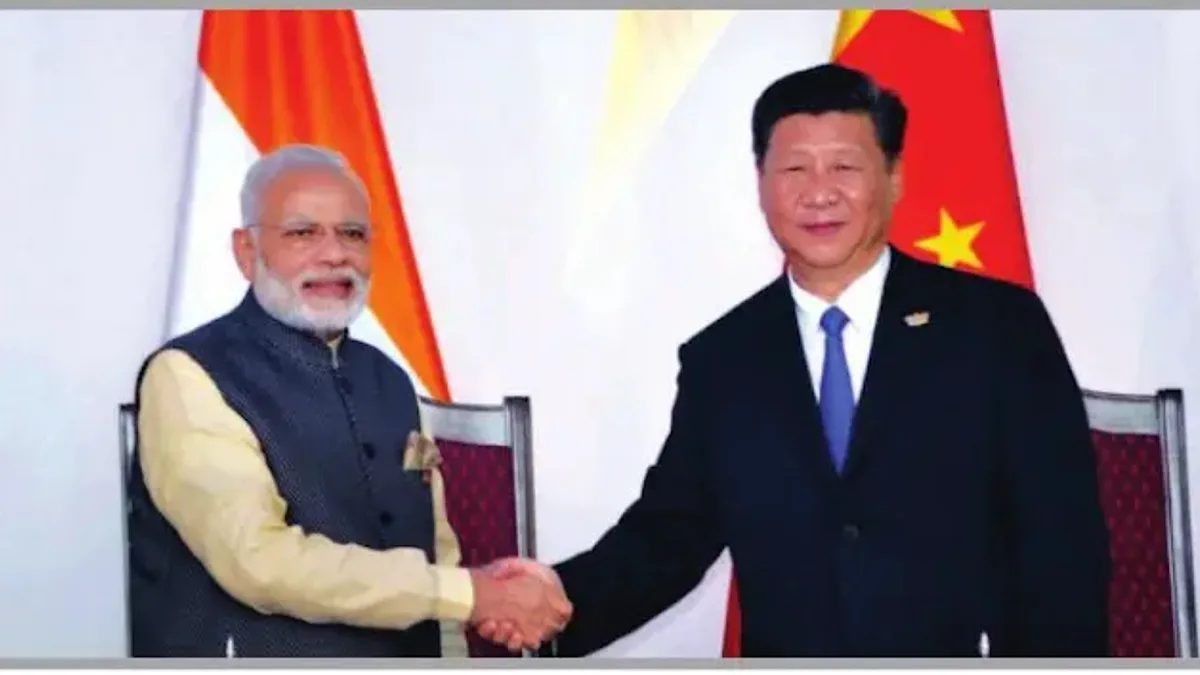
Over the years, the side-line meetings at multilateral groupings like the G-20 Summit, the BRICS summit and SCO meetings have been fruitfully availed by both India and China to diffuse tensions between the two neighbours. In another instance of the utility of such meetings, Mr Modi met Mr Xi on 23 October last year on the margins of the BRICS summit in Kazan, Russia. Although the two leaders had earlier had fleeting encounters, the Kazan meeting was where the two agreed for a reset in the bilateral relationship after the Galwan skirmish in June 2020. It is also instructive to recall that earlier the two leaders had met on the side-lines of the SCO meeting in Astana on 9 June 2017 amidst the stalemate in the India-China border. Mr Modi sprang a surprise when he reached out to Mr Xi in a ‘pull aside’ meeting. The Ministry of External Affairs had then tweeted that a “range of issues” were discussed between the two leaders.
The niceties of diplomatic protocol suggests that it could not have been an impromptu meeting. The presence of a Chinese-speaking Indian diplomat to translate the conversation and vice versa suggests that the two sides had already thoughtfully worked out the possibility of a conversation. Later, when the External Affairs Ministry spokesperson was asked to elaborate, he replied that a picture speaks more than a thousand words. The picture of the meeting which the Ministry of External Affairs tweeted exuded the chemistry between the two leaders.
The meeting that lasted about seven minutes was extensively reported in the Indian media along with photographs of the two leaders shaking hands. Earlier both the Chinese and Indian media had reported that the situation was not right for a meeting of the two leaders. The Indian media also reported that such a meeting was not sought. The leaders of two countries often meet on the side-lines of multilateral meetings not only to exchange pleasantries, but also to discuss serious bilateral issues. The side-line meetings in the past have broken the logjam in bilateral relations between India and China in the past. Now, therefore, there will be much interest in the interaction between the two leaders on the side-lines of the SCO meeting.
(The writer is a former senior fellow of Manohar Parrikar Institute for Defence Studies and Analyses and also Indian Council of Social Science Research. Views are personal.)