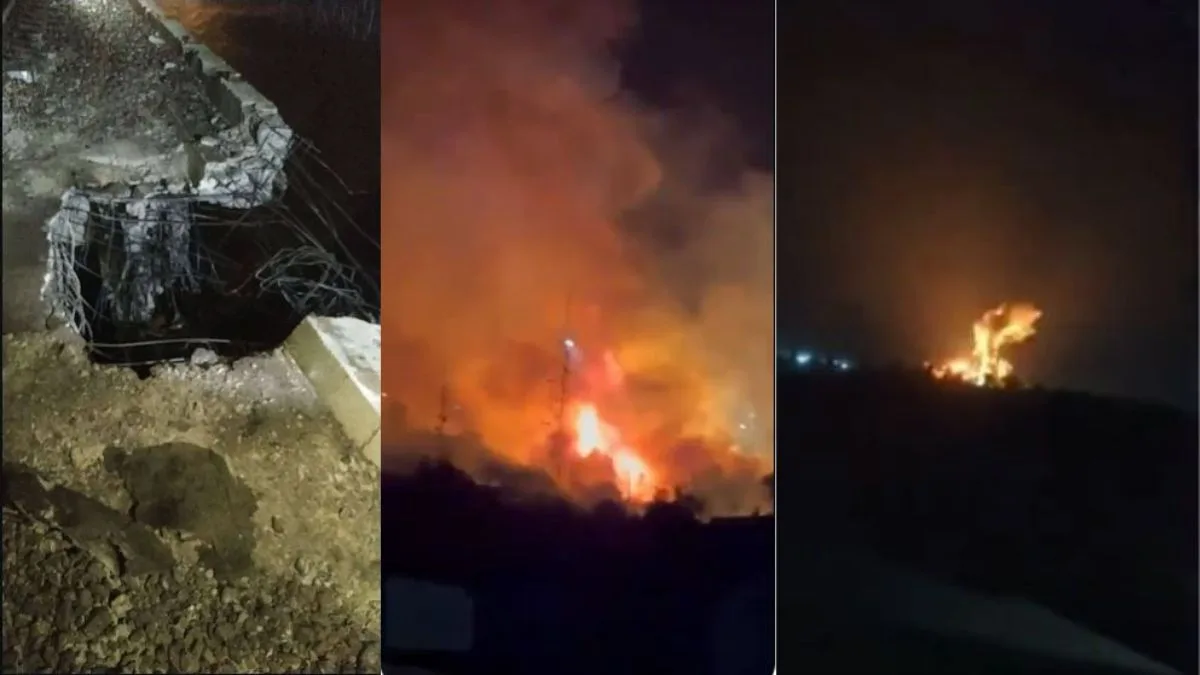
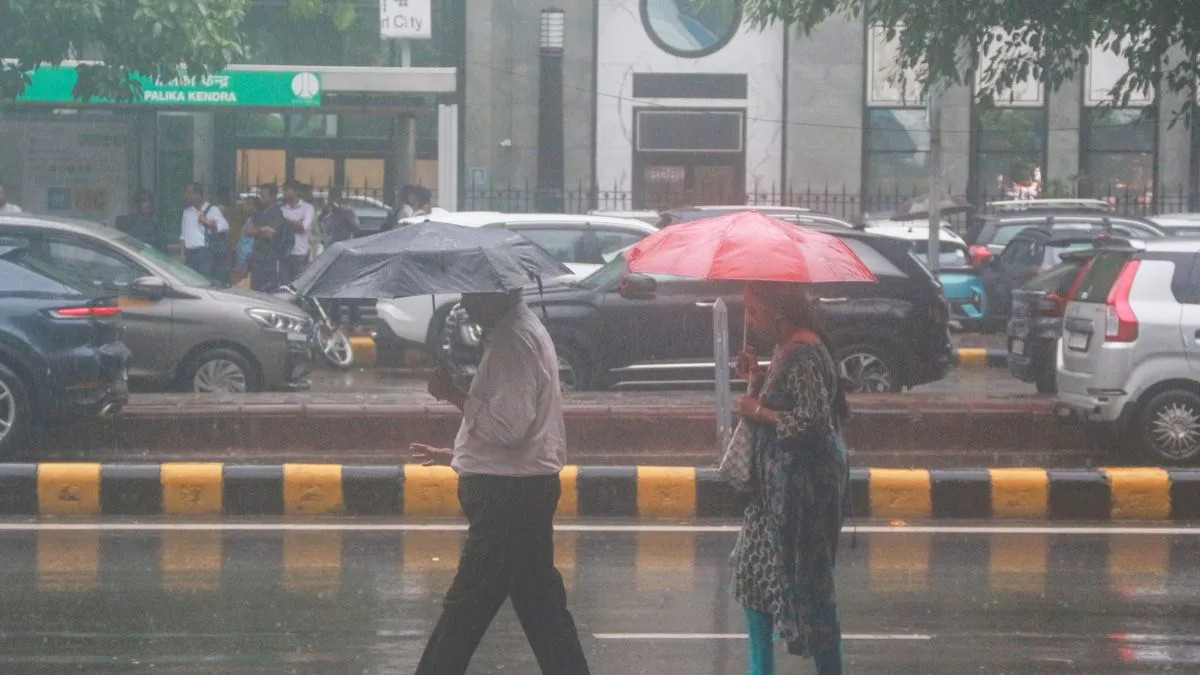
Floods have ravaged the states of Punjab, Himachal Pradesh, Assam, Uttarakhand and many more. From unusual rain patterns, upstream dam releases, to sheer heavy monsoon ~ the flooding and the accompanying devastation have been back-breaking for so many citizens. With politicians blaming each other, institutions responsible for safeguarding and rehabilitation failing in their duties, and the usual bureaucratic apathy, there is only one institution that has silently been aiding the relief and protection missions successfully ~ the Indian Armed Forces.
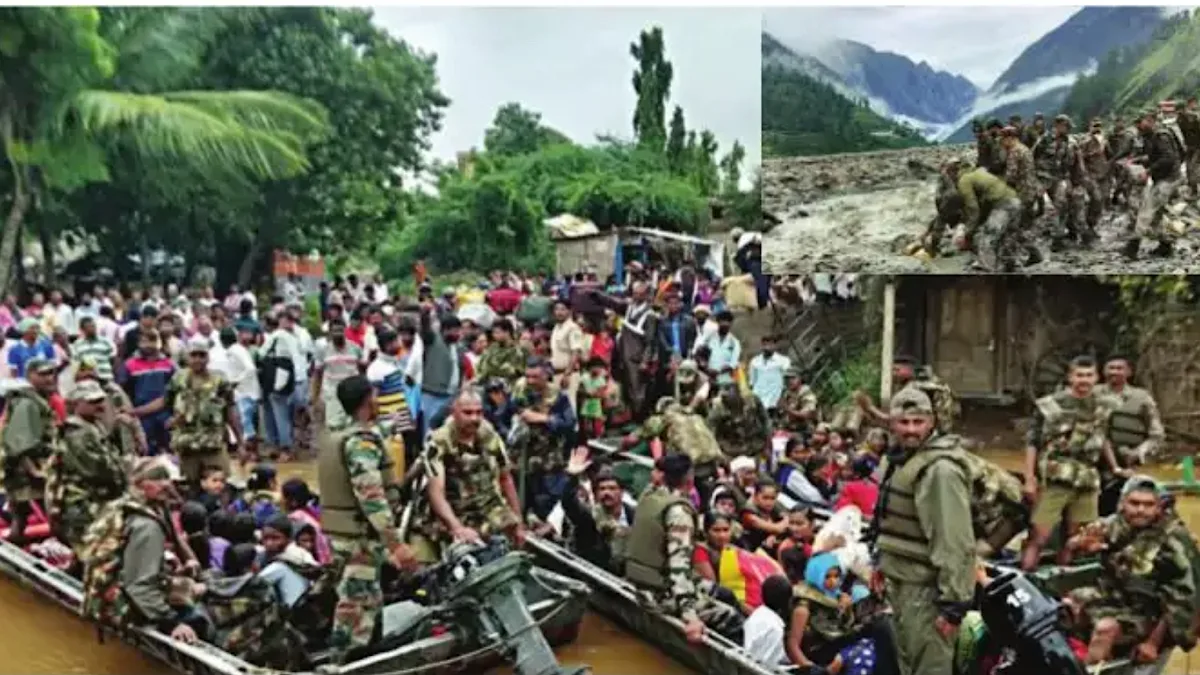
Images of daredevil Indian Army soldiers wading through neck-deep waters, to that of helicopters involved in daring rescue and lift missions have emerged yet again. As an example, the Indian Army’s Western Command launched massive Humanitarian Assistance and Disaster Relief (HADR) missions, executing 82 relief missions, evacuating over 6,000 people dangerously caught in flooded areas and delivering essential supplies to the affected communities. Just under this Command’s operations, another 13,000 people are believed to have received emergency medical assistance and facilitation (including air dropping) of nearly 50 tons of rations.
Advertisement
The Army Command’s Engineer detachment worked against odds to repair damaged infrastructure (including restoring critical bridge links), strengthened flood defenses, and laid optical fiber cables to reinstate mobile connectivity. Just another crisis facing the nation and yet another show of resilience, courage and commitment by India’s “sword arm” ~ not just to defend the territorial integrity and dignity of the sovereign, but even to defend its citizens within, when all other ostensible institutions of managing internal affairs (including relief and rehabilitation works, planning and administration) have melted into the oblivion.
The nameless, faceless and often forgotten (once the purpose or perceived utility is served) “Indian Soldier” rises to the occasion. The institution is trained to answer the call of any civilian requisitioning, without ever seeking to appropriate any claim or recognition for the tireless work it does. It does not care which government is at the Centre or in the State where the devastation has taken place, as these governments are busy blaming each other with whataboutery, while the citizens are hanging on to dear lives in the hope someone would come to their rescue. Increasingly that someone to the rescue (without any biases or taking sides from a political, ideological or partisan prism) is the institution of the proudly apolitical “Indian Soldier”.
It is little wonder that every time a survey on the most respected Indian professional is carried out, the “Indian Soldier” always tops the list while the infamy of the most distrusted and disrespected profession is consistently the Indian politician, the one who preaches about most nationalism, national sacrifices, and commitment to society. All national and regional political parties (without any honourable exception since Independence) are guilty of preaching one thing publicly, and doing the exact opposite in practice.
Therefore, the more the “distance” that any institution can manage with the political classes, the more credibility, professionalism and efficaciousness it demonstrates in real life. The closer it gets to the eyes, ears and minds of the political classes, the more biased, corrupted, and shamefully obsequious it gets in its conduct. History is witness that the more a politician claims to be god-fearing, in service of society, and “nationalistic”, the guiltier he/she has always been of attempting to control the narrative undemocratically, and misuse its accompanying institutions of governance.
However, not all in security related “Uniforms” have been able to maintain the required “distance”, and therefore many have lost their perception of apolitical independence, trust, and reputation of conduct. Some “uniforms” like that of the Police personnel tend to evoke a combination of dread, corruption and excess. The reputation has got far worse for the investigative agencies like the Investigation Bureau (IB), Enforcement Directorate (ED), Central Bureau of Investigation (CBI) etc., who can potentially lend invaluable (though unconstitutional) service to the political masters as a form of quid pro quo, thereby risking the unbiased conduct.
Whereas another set of investigative agencies which do not catch the eye, imagination or even utility (beyond a point) like the Research and Analysis Wing (RAW), National Cyber Coordination Centre (NCCC) or the Defence Intelligence Agency (DIA) are able to maintain professional output without any interference or “tilt” to the detriment of professionalism, relatively. The recent incident of a Deputy Superintendent of Police-level woman Police Officer getting publicly slammed by a sitting Deputy Chief Minister of a State as she was undertaking her duties, explains the institutional pressures, morass, and therefore the consequential public perception.
When someone openly gives illegal orders (without even being on the site and on the basis of partisan hearsay), intimidates an officer on duty, and throws rank (in this case, Deputy Chief Minister!), it is unsurprising that many would rather succumb then offend their political masters for fear of vengeance. Perhaps the most telling part of emasculating a “uniform” was by the incredulous query of the clearly entitled Deputy Chief Minister when he asked, “Itna aapko daring hua hai kya” (literally, how could you become so daring). Instead of lauding the fearless woman officer who was standing tall against complaints of illegal excavation, the shocking question asked was as to why she was so fearless.
As is the normal sequence in such events, the Deputy Chief Minister offered a condescending, mealy-mouthed, and insincere explanation and it was followed by deafening silence by his party and coalition colleagues, the Central government, and also unsurprisingly, by the comity of her professional colleagues from the police services. So now whenever the policing services fail (be it the State Police, Central Armed Police Forces or even Specialist Forces), be it in the internal strife in Manipur, J&K or natural disasters like the recent flood situation ~ it is always the institution with a healthy “distance” from the politicians, i.e. the Armed Forces (whose mandate is to be external facing) that comes to the rescue, as the proverbial “last resort”.
The lesson for the larger citizenry and institution themselves is to try and maintain the mandated “distance” from the political classes and to not allow or encourage usurpation, misuse, or even appropriation, of these institutions by the politicians. These institutions have survived not because of these politicians, but despite them.
(The writer is Lt Gen PVSM, AVSM (Retd), and former Lt Governor of Andaman & Nicobar Islands and Puducherry)