Satluj Review: It is 1995. Punjab’s fields are heavy with ripe crops, and life appears calm, slow, and steady. The sound of Gurbani and chants of Waheguru fills the air, creating the image of a land at peace. But that is only what is visible on the surface.
Beneath this quiet landscape lies a story of fear, loss, and a generation scarred by the consequences of politics and insurgency. A chapter that continues to haunt the state’s collective memory. Satluj is not just a film that revisits this period of history. It tells the story of a generation that had to endure its consequences, reminding us of the human cost behind every conflict.
Advertisement
Originally slated to release as Punjab 95, the film was eventually renamed Satluj. It took four years to reach audiences, and just days after its release, it was pulled from ZEE5 following a censorship dispute. While these are facts that will continue to be debated, what matters more is what the film brings to the screen. What is it about Satluj that has drawn so much attention across the world? What happened in Punjab in 1995 that left a scar on the state’s history that still refuses to fade? And above all, who was Jaswant Singh Khalra?
Post Independence, Punjab was one of the states that struggled to find lasting peace as extremism and the demand for a separate Khalistan gained ground among militant groups. The events of 1995 cannot be understood in isolation. Their roots lie in the years of insurgency that preceded them.
The events of 1984, including Operation Blue Star and the assassination of then Prime Minister Indira Gandhi, plunged the nation into turmoil. Punjab and its people bore the brunt of the violence that followed. In the years after, the state’s primary objective became clear: to curb the insurgency and eliminate militant groups. The administration responded with an aggressive crackdown that would shape Punjab’s history for years to come.
But what began as an effort to eliminate insurgents and restore peace gradually took a darker turn. Allegations of unlawful killings, enforced disappearances, and human rights violations began to emerge, leaving countless families searching for answers.
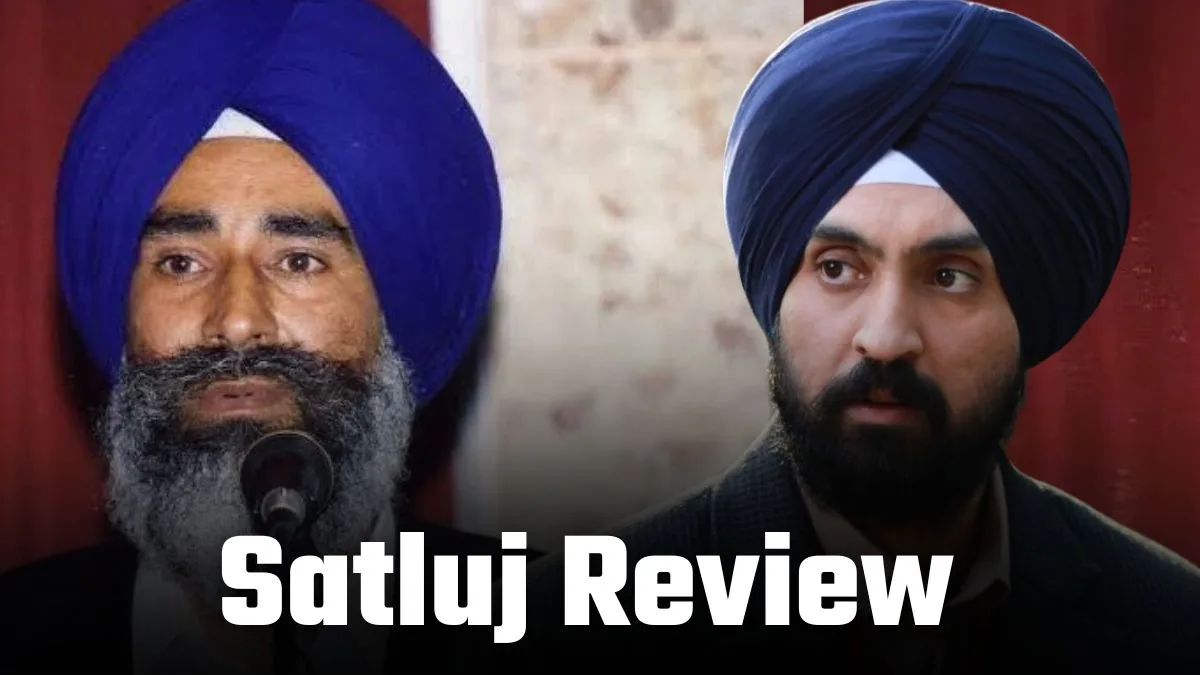
Satluj is built around this painful chapter, with Diljit Dosanjh portraying Jaswant Singh Khalra, the human rights activist who brought these allegations to national and international attention.
The film follows an ordinary man living a quiet life with his family until he uncovers evidence suggesting that thousands of people had allegedly been killed after being labelled as militants, with many of their bodies never returned to their families. Determined to uncover the truth, Jaswant Singh chooses to stand up against the system and becomes the voice of those who could no longer speak for themselves.
His findings are denied, those in power try to silence him, and the very people entrusted with maintaining law and order face allegations of the abuses he seeks to expose. Fear and the threat of retaliation keep many from asking questions. But Jaswant Singh refuses to back down. He chooses to fight not with weapons, but with documents, evidence, and an unwavering belief in the power of truth and non-violence.
The story does not end there because Satluj is not built around fiction. It draws from a painful chapter of history where truth came at a heavy price. As the film unfolds, it explores the consequences of speaking against those in power and the fear that surrounded those who dared to ask questions. Diljit Dosanjh’s restrained performance as Jaswant Singh Khalra captures the quiet determination of a man who refused to look away.
With every passing scene, the film leaves the audience grappling with questions that continue to linger even today. Themes of human rights, justice, and state accountability remain at the heart of the narrative. A man who tried to expose alleged wrongdoing is silenced in broad daylight, while those around him are left wondering whether the truth will ever prevail.
Arjun Rampal also delivers a convincing performance, adding another layer to the story. His character reminds us that even in the darkest moments, there were people who believed that the truth would eventually find its way to the surface.
What stands out the most about Satluj is its simplicity. It does not rely on loud dialogues, exaggerated background music, or manufactured thrills to make its point. Instead, it allows the story and its characters to do the talking. There is an honesty in the way the film unfolds, making it feel less like a dramatized retelling and more like a window into history. Its slow and measured pace quietly builds a sense of unease, and by the time the film reaches its most emotional moments, the weight of its story is impossible to ignore.
After watching Satluj, I was left with many thoughts, but what stayed with me the most was Jaswant Singh Khalra’s unwavering belief in justice and the courage with which he fought for the families of thousands whose lives and disappearances had gone unnoticed. He became a voice for people who had been silenced and brought attention to one of the darkest chapters in Punjab’s history.
The film also raises a difficult question about who ultimately bears the cost of political conflict and insurgency. More often than not, it is ordinary people who suffer the most. Many lost not only their lives but also their identities, while their families were left searching for answers.
Satluj reminds us that behind every political narrative are human lives that cannot be reduced to statistics or forgotten with time.
Satluj is not just a film about Punjab’s past. It is a story about truth, courage, and the people who refused to stay silent. Simple in its storytelling and powerful in its impact, the film stays with you long after it ends and reminds us why such stories should never be forgotten.